

8 Types of Stretch Wrapping Machines:Complete Classification&Selection Guide 2026
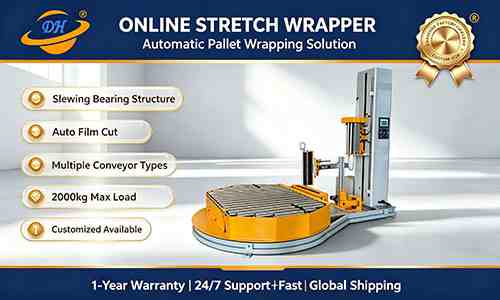
A stretch wrapping machine is an automated or semi-automated packaging device that applies stretch film around palletized loads or linear products to secure them for storage,transportation,and handling.These machines are classified into 8 major types based on their wrapping mechanism:turntable,rotary arm,horizontal(orbital),online(inline),rotary ring,robotic(mobile),straddle,and luggage wrappers.Each type serves distinct load profiles,throughput requirements,and facility constraints.
Choosing the wrong type leads to wasted film,damaged loads,and bottlenecks.This guide breaks down every machine type with real specifications,so you can match the right equipment to your operation—whether you run 15 pallets per day or 200.
Why Machine Type Matters More Than Brand or Price
Before comparing specific models,you need to understand which category of machine fits your operation.Here's why:
Load stability:Fragile or top-heavy loads can topple on a turntable but wrap safely on a rotary arm
Throughput gap:Semi-automatic turntables handle 20–30 pallets/hour,while rotary ring systems exceed 120 pallets/hour—a 4x difference
Space constraints:Turntables need a compact footprint;horizontal wrappers require linear floor space for conveyor integration
Product geometry:Standard pallets need pallet wrappers;long profiles(pipes,aluminum,lumber)need horizontal/orbital wrappers
Key insight:The machine type determines 80%of your operational fit.Brand and price only matter after you've narrowed down the correct type.
Type 1:Turntable Stretch Wrappers
How They Work
The pallet sits on a motorized rotating platform while a film carriage mounted on a vertical mast moves up and down,wrapping film around the load as the turntable spins.
Key Specifications
|
Parameter |
Typical Range |
|
Turntable diameter |
1,200–1,650 mm(47"–65") |
|
Load capacity |
1,000–2,500 kg |
|
Max wrap height |
1,600–2,100 mm |
|
Throughput(semi-auto) |
20–30 pallets/hour |
|
Throughput(auto) |
30–45 pallets/hour |
|
Pre-stretch ratio |
200%–300% |
|
Price range |
$3,000–$25,000 |
Pros
Most cost-effective entry point into automated wrapping
Simple operation—minimal training required
Compact vertical footprint
Available in semi-automatic and fully automatic configurations
Cons
Load rotates during wrapping—not suitable for fragile,light,or unstable loads(centrifugal force can shift or topple product)
Turntable rotation limits maximum weight capacity
Slower than rotary arm or inline systems
Best For
Manufacturing plants wrapping 20–80 pallets/day with stable,uniform loads(boxes,bags on firm bases,shrink-bundled cases)
Distribution centers with standard 1,200×1,000 mm or 48×40 inch pallets
First-time buyers upgrading from hand wrapping
Type 2:Rotary Arm Stretch Wrappers
How They Work
The pallet stays stationary on the floor while a rotating arm(cantilever)swings 360°around the load.The film carriage travels up and down on the arm's mast,applying film without any load movement.
Key Specifications
|
Parameter |
Typical Range |
|
Arm rotation speed |
10–15 rpm |
|
Load capacity |
Up to 3,000+kg(no turntable weight limit) |
|
Max wrap height |
1,800–2,400 mm |
|
Throughput |
40–60 pallets/hour |
|
Pre-stretch ratio |
200%–300% |
|
Price range |
$15,000–$45,000 |
Pros
Zero load movement—ideal for unstable,fragile,or very heavy pallets
Higher throughput than turntable machines
No weight limit from turntable rotation
Better wrap consistency for tall loads with high centers of gravity
Cons
Higher upfront cost than turntable wrappers
Larger footprint required for the rotating arm clearance
More complex mechanics=slightly higher maintenance requirements
Requires higher ceiling clearance
Best For
Chemical industry wrapping heavy drum pallets(200L/55-gallon drums)
Building materials with tall,unstable loads(insulation panels,window frames)
Food&beverage with lightweight,top-heavy cases
Operations needing 50+pallets/hour with mixed load types
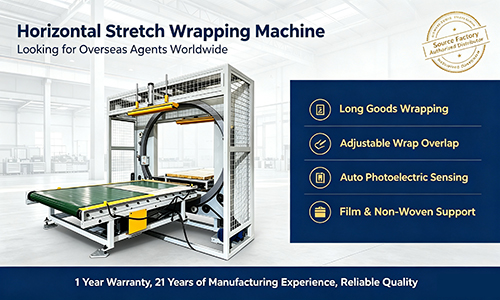
Type 3:Horizontal(Orbital)Stretch Wrappers
How They Work
Product passes through the center of a rotating ring on a conveyor.The ring holds a film roll and rotates around the product,applying spiral wraps of stretch film horizontally.Unlike pallet wrappers,these machines wrap long,linear products that cannot be pallet-wrapped.
Key Specifications
|
Parameter |
Typical Range |
|
Ring diameter |
400–1,500 mm |
|
Max product width |
200–1,200 mm |
|
Conveyor speed |
5–20 m/min(adjustable) |
|
Wrapping method |
Spiral/helical |
|
Throughput |
Depends on product length and conveyor speed |
|
Price range |
$8,000–$35,000 |
Pros
Wraps long products that cannot be handled by pallet wrappers
Provides full 360°surface protection for linear products
Can be integrated into production lines
Prevents surface scratches and abrasion during transport
Cons
Not suitable for standard pallet loads
More complex setup and changeover between product sizes
Narrower range of applications than pallet wrappers
Best For
Aluminum profile manufacturers and steel pipe mills
Furniture and door producers
Building materials(aluminum windows,curtain wall panels,PVC pipes)
Any long,linear product requiring full circumferential protection
Type 4:Online(Inline)Stretch Wrapping Systems
How They Work
Fully integrated into production or distribution conveyor lines.Pallets automatically enter the wrapping zone via powered conveyor,get wrapped(typically by a rotary arm or turntable-with-conveyor),and exit to the next station—all without forklift handling.
Key Specifications
|
Parameter |
Typical Range |
|
Integration type |
Conveyor-coupled(infeed+outfeed) |
|
Throughput |
20–40pallets/hour |
|
Automation level |
Fully automatic(PLC-controlled) |
|
Load capacity |
1,500–3,000 kg |
|
Sensors |
Photoelectric pallet detection |
|
Price range |
$35,000–$80,000+ |
Pros
Highest throughput for high-volume operations
Complete automation—minimal operator intervention
Synchronized with upstream/downstream equipment
Consistent wrap quality at high speed
Cons
Highest capital investment
Requires conveyor infrastructure and floor space
Complex installation and commissioning
Less flexible for layout changes
Best For
Large distribution centers processing 200+pallets/day
3PL warehouses with continuous throughput requirements
Manufacturing plants with dedicated end-of-line packaging stations
Any operation where forklift-based wrapping creates a bottleneck
Type 5:Rotary Ring Stretch Wrappers
How They Work
A large rotating ring carries the film carriage and travels up and down around a stationary pallet.The ring spins at high speed to apply film,then raises to the next position.This combines the load-stability advantage of rotary arm(stationary load)with much higher speed.
Key Specifications
|
Parameter |
Typical Range |
|
Ring diameter |
1,600–2,200 mm |
|
Load capacity |
Up to 3,000 kg |
|
Film control |
Precision tensioning with servo drive |
|
Automation |
Fully automatic with conveyor integration |
|
Price range |
$50,000–$120,000+ |
Pros
Highest speed among all stretch wrapper types
Stationary load—no centrifugal force
Superior film control and wrapping consistency at speed
Ideal for heavy industrial loads and fast-moving consumer goods
Cons
Premium price point—highest capital cost
Large physical footprint
Requires dedicated installation with safety guarding
Overkill for low-volume operations
Best For
High-volume production lines where every second counts
Beverage and food plants with tight takt times
Heavy industrial operations needing 100+pallets/hour
Facilities replacing multiple slower wrappers with one high-speed unit
Type 6:Robotic(Mobile)Stretch Wrappers
How They Work
A self-navigating mobile robot travels to the pallet location and wraps it in place.The robot circles the stationary load,dispensing film from its onboard mast.No fixed station,no conveyor,no turntable needed.
Key Specifications
|
Parameter |
Typical Range |
|
Throughput |
20–30 pallets/hour |
|
Battery life |
8–12 hours(lithium-ion) |
|
Navigation |
Autonomous(laser/visual guidance) |
|
Load compatibility |
Any size—no physical dimension limits |
|
Price range |
$30,000–$70,000+ |
Pros
Maximum flexibility—robot travels to the load,not vice versa
Handles oversized,irregular,or extremely heavy loads without moving them
Eliminates forklift repositioning traffic
Ideal for multi-location wrapping in large warehouses
Cons
Lower throughput than fixed machines
Higher per-unit cost
Battery management required
Not suited for high-speed dedicated wrapping stations
Best For
Large warehouses with wrapping needs scattered across multiple zones
Operations handling oversized or non-standard loads that exceed fixed machine limits
Overflow areas where a permanent wrapper station isn't practical
Facilities prioritizing flexibility over pure speed
Type 7:Straddle Stretch Wrappers
How They Work
A frame straddles the conveyor lane.The film carriage is mounted on the overhead frame and rotates around each pallet as it passes through on the conveyor.This enables continuous in-line wrapping without stopping the conveyor.
Key Specifications
|
Parameter |
Typical Range |
|
Throughput |
20–40 pallets/hour |
|
Conveyor compatibility |
Online(powered roller or chain) |
|
Load capacity |
Up to 2,500 kg |
|
Wrap pattern |
Programmable spiral/top/bottom |
|
Price range |
$30,000–$65,000 |
Pros
Continuous in-line operation—no conveyor stop required
High throughput with consistent quality
Can be paired with inline scales,print-and-apply systems,and corner board applicators
Cons
Requires conveyor infrastructure
Large overhead structure needs adequate ceiling height
Less flexible than standalone machines
Higher installation complexity
Best For
High-output facilities with steady SKU families
Operations integrating wrapping into a full end-of-line packaging system
Plants requiring 60+pallets/hour with continuous flow
Type 8:Luggage(Airport)Stretch Wrappers
How They Work
A specialized turntable-based system designed to wrap individual luggage,suitcases,and travel bags with stretch film for protection during air travel.The operator places luggage on the turntable,and the machine wraps it with multiple layers of film.
Key Specifications
|
Parameter |
Typical Range |
|
Load capacity |
50–100 kg |
|
Wrap cycle time |
15–30 seconds |
|
Film type |
Transparent printed or colored |
|
Price range |
$2,000–$8,000 |
Pros
Purpose-built for airport and travel retail environments
Fast cycle time—high throughput for passenger traffic
Compact footprint fits airport counters
Low operating cost
Cons
Very narrow application(luggage only)
Low load capacity compared to industrial wrappers
Not suitable for pallet wrapping
Best For
Airport luggage wrapping services
Travel retail and duty-free zones
Cargo protection for individual packages
Complete Comparison Table:All 8 Types
|
Machine Type |
Throughput(pallets/hr) |
Load Stability |
Footprint |
Capital Cost |
Best Application |
|
Turntable |
20–40 |
Good(stable loads only) |
Compact |
$3K–$25K |
Standard loads,first automation |
|
Rotary Arm |
40–60 |
Excellent(fragile/heavy) |
Medium |
$15K–$45K |
Fragile,tall,heavy loads |
|
Horizontal/Orbital |
Varies by product |
N/A(non-pallet) |
Linear |
$8K–$35K |
Long profiles,pipes,furniture |
|
Online/Inline |
20–40+ |
Excellent |
Large |
$35K–$80K+ |
High-volume distribution |
|
Robotic/Mobile |
20–30 |
Excellent(any load) |
Minimal fixed |
$30K–$70K+ |
Flexible multi-location |
|
Straddle |
60–100 |
Excellent |
Overhead |
$30K–$65K |
Continuous inline flow |
|
Luggage |
40–100 bags/hr |
N/A(non-pallet) |
Compact |
$2K–$8K |
Airport/travel retail |
How to Choose the Right Stretch Wrapping Machine Type:5-Step Decision Framework
Use this framework to narrow down the correct machine type for your operation:
Step 1:Count Your Daily Volume
<20 pallets/day→Semi-automatic turntable
20–80 pallets/day→Automatic turntable or rotary arm
80–200 pallets/day→Rotary arm or online/inline system
200+pallets/day→Rotary ring or straddle system
Step 2:Assess Load Characteristics
Stable,uniform,well-stacked→Turntable works fine
Fragile,tall,top-heavy,or unstable→Rotary arm(zero load rotation)
Extremely heavy(>2,000 kg)→Rotary arm(no turntable weight limit)
Oversized or irregular→Robotic/mobile wrapper
Step 3:Check Product Geometry
Standard pallets→Turntable,rotary arm,inline,or ring
Long/linear products(pipes,profiles,lumber)→Horizontal/orbital wrapper
Individual luggage/bags→Luggage wrapper
Step 4:Evaluate Facility Constraints
Limited floor space→Turntable(compact vertical design)
Existing conveyor line→Online/inline or straddle system
Multiple wrapping locations→Robotic/mobile wrapper
High ceiling→Rotary arm or ring(need overhead clearance)
Step 5:Set Your Budget
Under$10,000→Semi-automatic turntable or luggage wrapper
$10,000–$30,000→Automatic turntable or horizontal wrapper
$30,000–$60,000→Rotary arm,online system,or robotic wrapper
$60,000+→Rotary ring system or fully integrated inline line
Frequently Asked Questions(FAQ)
Q:What is the difference between a turntable and a rotary arm stretch wrapper?
A:The fundamental difference is what moves during wrapping.On a turntable,the load rotates on a spinning platform while the film carriage stays fixed vertically.On a rotary arm,the load stays stationary while the film arm rotates around it.This means turntables create centrifugal force(risky for fragile or top-heavy loads),while rotary arms eliminate load movement entirely.Turntables cost less($3K–$25K vs.$15K–$45K)and have a smaller footprint,but rotary arms handle heavier,taller,and more fragile loads with higher throughput.
Q:Which stretch wrapping machine type is best for a small warehouse?
A:For a small warehouse wrapping fewer than 30 pallets per day with standard,stable loads,a semi-automatic turntable stretch wrapper is the best choice.It offers the lowest entry cost($3,000–$12,000),compact footprint,simple operation,and sufficient throughput(20–30 pallets/hour).If your loads are fragile or unstable,upgrade to a semi-automatic rotary arm instead.
Q:How many pallets per hour can a stretch wrapper handle?
A:Throughput varies significantly by machine type:semi-automatic turntables handle 20–30 pallets/hour;automatic turntables reach 30–45 pallets/hour;rotary arm machines achieve 40–60 pallets/hour;The actual number depends on load size,film pattern,and pre-stretch settings.
Q:What type of stretch wrapper is needed for long products like pipes or aluminum?
A:Long,linear products such as pipes,aluminum profiles,lumber,and furniture require a horizontal(orbital)stretch wrapper.Unlike pallet wrappers that wrap vertically around a stationary or rotating pallet,horizontal wrappers pass the product through a rotating ring that applies film in a spiral pattern along the product's length.Ring diameters range from 400 mm for small profiles to 1,500 mm for large assemblies.
products
Horizontal Stretch Wrapping Machine SP1000 for Pipes
view more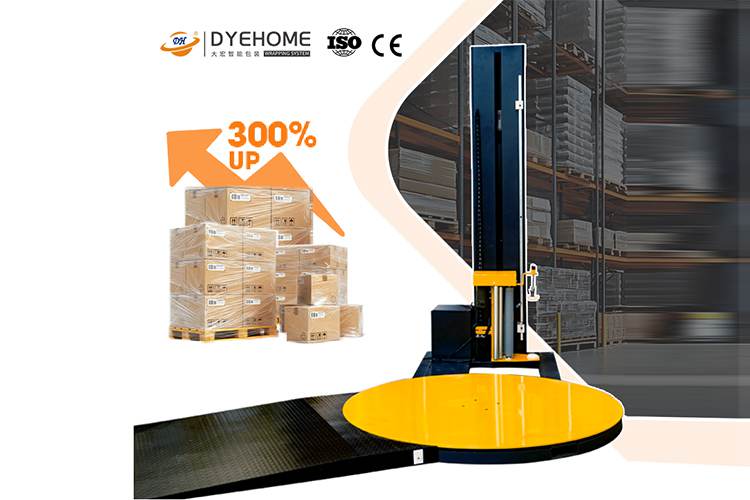
Pallet Stretch Wrapping Machine
view more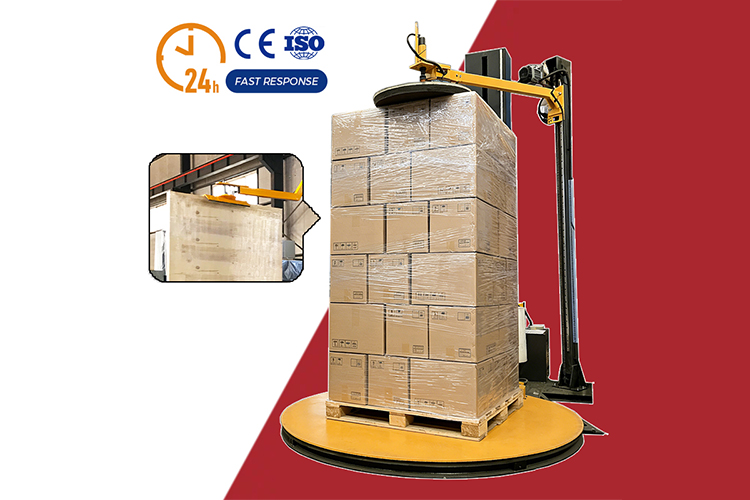
Top Press Pallet Stretch Wrapping Machine
view more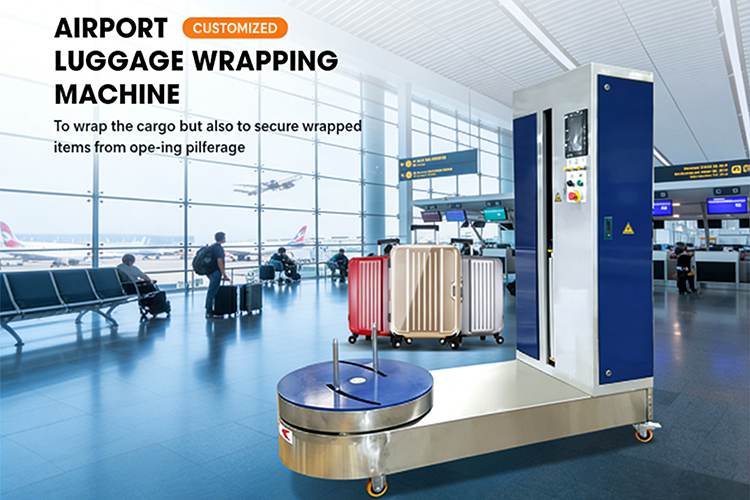
Luggage Wrapping Machine for Airports
view more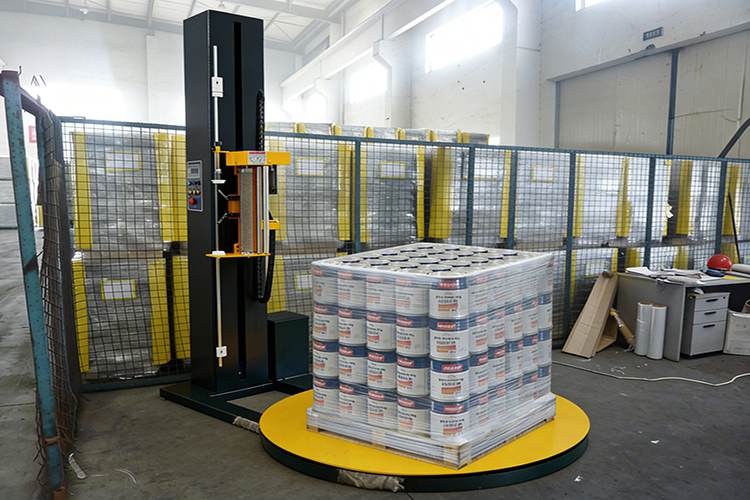
Pallet Stretch Wrapping Machine for Canned Goods
view more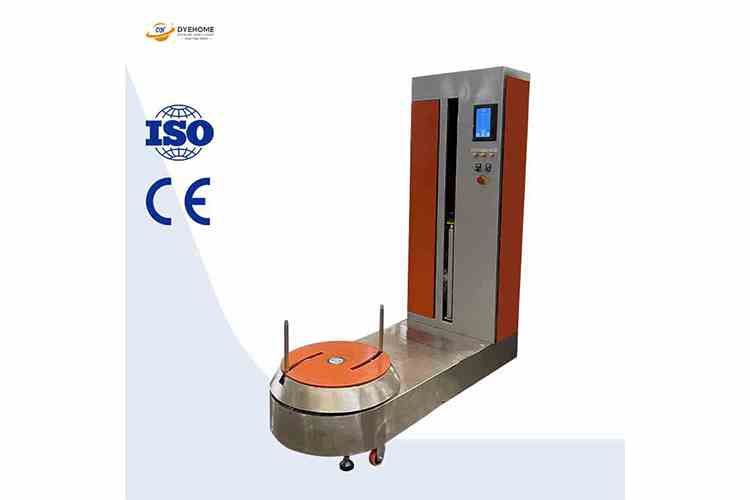
Airport Self-Service Luggage Wrapping Machine
view more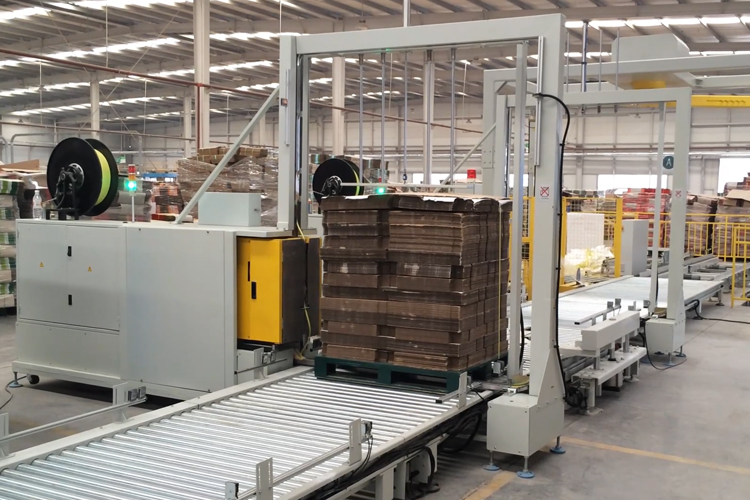
Automated film wrapping and packaging equipment
view more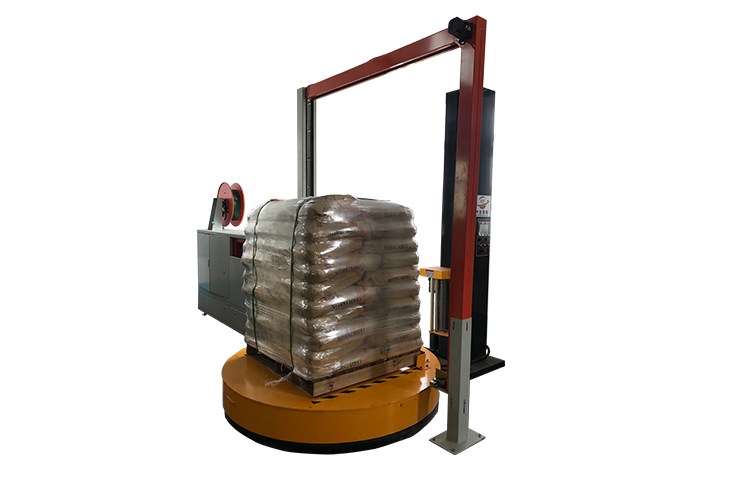
Sword-piercing baler and wrapping machine
view more
 Shandong Dyehome Intelligent Equipment Co.,Ltd
Phone:0086-17362172587
Whatsapp:+8617362172587
Email:machinedyehome@gmail.com
Add:Building 62, 3000 Meili East Road, DmiPark, Wujiapu Street, Huaiyin District, Jinan City,Shandong Province
Jinan Jiasen Packaging Equipment Co., LtdPhone:0086-15665802370
Add:High-end Equipment Manufacturing Industrial Park, East Industrial New Town, Ancheng Town, Pingyin County, Jinan City, Shandong Province
Shandong Golden Pack Intelligent Equipment Co.,LtdPhone:0086-15662690213
Add:High-end Equipment Manufacturing Industrial Park, East Industrial New Town, Ancheng Town, Pingyin County, Jinan City, Shandong Province
YoursIndustry
OurSolutions
OurServices
OurInformation