

Airport Luggage Wrapping Machine Why are more airports installing luggage wrapping machines?
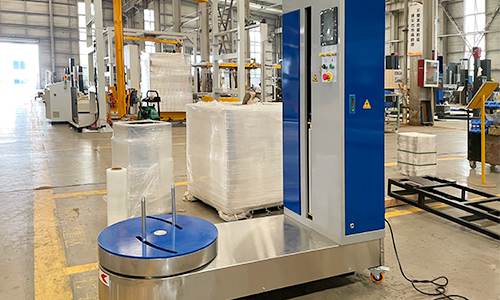
Nowadays, many travelers choose to wrap their luggage before boarding flights or trains. What was once considered an “extra service” is now seen as necessary protection.
During baggage handling, suitcases often go through multiple loading, unloading, and conveyor transfers. Without protection, luggage can easily get scratched, damaged, or even opened.
Why luggage wrapping is becoming necessary
Many passengers only realize the importance of luggage protection after experiencing damage.
During international flights or long-distance transfers, luggage goes through:
- Conveyor transport
- Manual handling
- Storage stacking
- Long-time transit
Without protection, problems may occur such as:
- Surface scratches
- Broken zippers
- Scattered contents
- Contamination
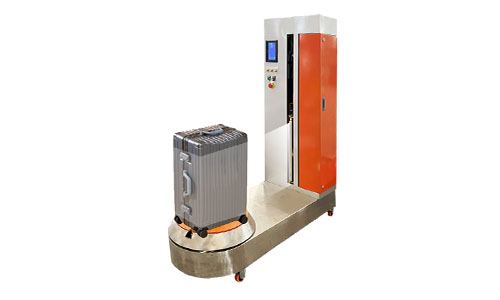
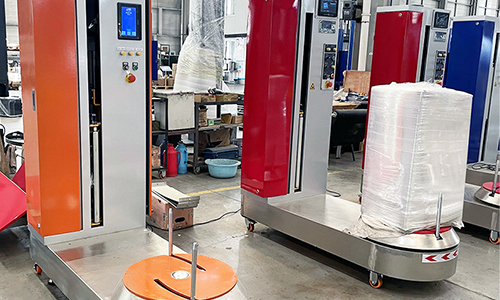
The luggage wrapping machine applies stretch film around the suitcase, forming a protective layer that reduces these risks.
Why it fits public service environments
Compared with manual wrapping, automatic machines are more efficient.
Operators only need to place luggage on the platform, and the machine completes wrapping automatically.
During peak travel seasons, automation helps reduce waiting time and improve passenger flow.
Why small luggage wrapping machines are popular
Compact models like LP600S are widely used because of:
- Small footprint
- Simple operation
- Easy maintenance
- Suitable for continuous operation
These factors make them ideal for airports, stations, and tourist facilities.
Application scenarios
Besides airports, luggage wrapping machines are also used in:
- Railway stations
- Bus terminals
- International logistics centers
- Tourist attractions
- Ports and cargo hubs
Why it is becoming a standard facility
As passengers become more concerned about luggage safety, wrapping machines are becoming more common.
They not only improve efficiency but also enhance service quality, making them a standard part of modern transportation hubs.
-
 Shandong Dyehome Intelligent Equipment Co.,Ltd
Phone:0086-17362172587
Whatsapp:+8617362172587
Email:machinedyehome@gmail.com
Add:Building 62, 3000 Meili East Road, DmiPark, Wujiapu Street, Huaiyin District, Jinan City,Shandong Province
Jinan Jiasen Packaging Equipment Co., LtdPhone:0086-15665802370
Add:High-end Equipment Manufacturing Industrial Park, East Industrial New Town, Ancheng Town, Pingyin County, Jinan City, Shandong Province
Shandong Golden Pack Intelligent Equipment Co.,LtdPhone:0086-15662690213
Add:High-end Equipment Manufacturing Industrial Park, East Industrial New Town, Ancheng Town, Pingyin County, Jinan City, Shandong Province
-
YoursIndustry
-
OurSolutions
-
OurServices
-
OurInformation