

End-of-Line Packaging Automation Complete Guide (2026): From Manual to Fully Automated
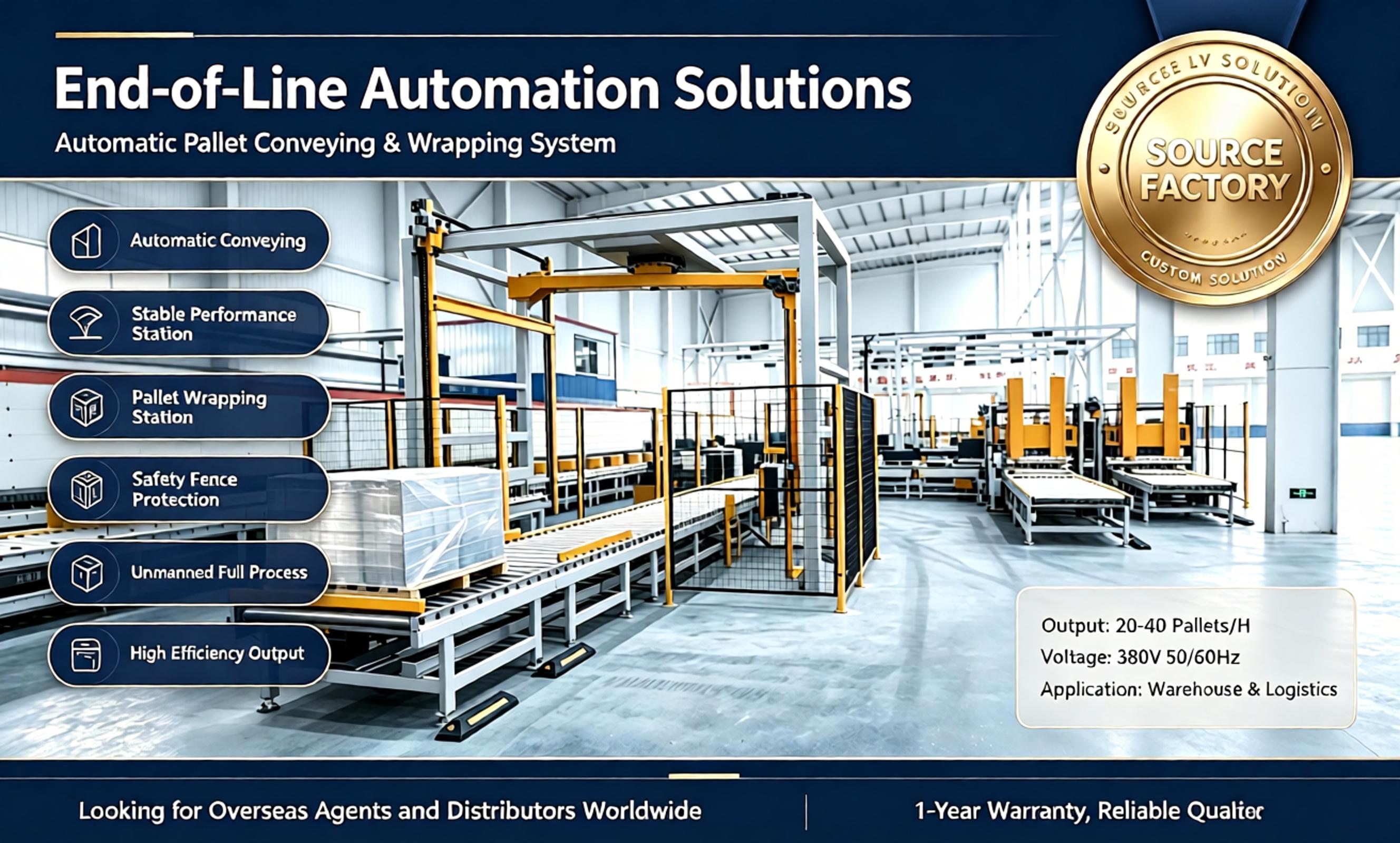
The Hidden Bottleneck at the End of Your Production Line
You've invested in automated production. Your assembly line runs 24/7. Your output has never been higher.
But then it all hits a wall — at the packaging station.
Products pile up. Workers scramble to box, seal, stack, and wrap. Mistakes happen. Damaged goods get returned. And when someone calls in sick? The whole line backs up.
This is the end-of-line problem. It's the most common bottleneck in manufacturing and warehousing — and also the most overlooked.
The numbers tell the story:
End-of-line packaging typically accounts for 30-40% of total labor costs in a typical factory
Manual packaging lines have an average error rate of 2-5% (wrong items, damaged packaging, unstable pallets)
A single manual packaging station costs $60,000–$90,000/year in labor (one shift)
Automated end-of-line systems can reduce packaging labor by 60-80%
The good news: automation has never been more accessible. What used to require a seven-figure investment can now be done for the cost of one or two workers' annual salaries.
This guide covers everything you need to know — from understanding the equipment to calculating ROI to avoiding the most common mistakes.
What Is End-of-Line Packaging Automation?
End-of-line (EOL) packaging is everything that happens after your product is made and ready to ship:
Case erecting — Opening and forming cardboard boxes
Case packing — Putting products into boxes
Case sealing — Taping boxes shut
Palletizing — Stacking boxes onto pallets
Stretch wrapping — Securing pallets with stretch film
Strapping — Adding strapping bands for extra security
Labeling & coding — Printing and applying shipping labels
End-of-line automation means replacing manual labor at one or more of these stations with machines.
It doesn't have to be all-or-nothing. Most factories start with one or two stations and expand over time.
Why Automate? The 6 Problems Automation Solves
1. Labor Costs Keep Rising
Every year, labor gets more expensive and harder to find. Entry-level packaging jobs have high turnover — 30-50% annually in many regions.
|
Cost Factor |
Manual Packaging (1 shift) |
Semi-Automated (1 shift) |
|
Base wages (2 workers) |
$70,000 |
$25,000 (1 part-time) |
|
Benefits & insurance |
$21,000 |
$7,500 |
|
Training & turnover |
$8,000 |
$1,000 |
|
Total annual |
$99,000 |
$33,500 |
Annual savings: $65,500 from just semi-automating one packaging station.
2. Consistency and Quality
Manual packing varies from person to person (and even hour to hour as workers get tired). Automated systems do the exact same thing, every single time.
Real example: A Dyehome customer in the chemical industry was dealing with 12-15 damaged pallets per month from inconsistent manual wrapping. After automating with a TP1650F stretch wrapper:
Damaged pallets dropped to 0-1 per month
Saved $18,000/year in replacement goods and shipping costs
Customer complaint rate dropped 87%
3. Throughput and Speed
Manual packaging caps out at about 10-15 cases per minute per worker, and 20-30 pallets per day per wrapper.
Automated systems handle:
Case erectors: 30-60 cases/minute
Case sealers: 40-80 cases/minute
Automatic stretch wrappers: 60-100+ pallets/day
If your production line can make it faster than you can pack it, automation is the answer.
4. Worker Safety
Packaging stations are among the most injury-prone areas in a factory:
Repetitive stress injuries from lifting and stacking
Back injuries from heavy lifting
Cuts from box cutters and sharp edges
Slip-and-fall accidents near wrapping stations
Automation eliminates these risks entirely.
5. Material Savings
Automated systems use materials precisely:
Stretch film: Automated pre-stretch uses 30-50% less film than manual wrapping
Carton sealing tape: Consistent taping uses 15-20% less tape
Strapping: Automated tension control means no over-tightening waste
For a 100-pallet/day operation, film savings alone can reach $8,000–$15,000/year.
6. Scalability
Need to ramp up for peak season? With manual labor, you need to hire and train temporary workers — a process that takes weeks and often results in lower quality.
With automation? You just turn the speed up.
Core Equipment: What Does an Automated End-of-Line Look Like?
Here are the key pieces of equipment in a modern end-of-line packaging system:
Case Erectors
Automatically form and bottom-tape cardboard boxes. Replace 1-2 workers whose entire job is folding boxes.
Speed: 30-60 cases/minute
Cost range: $15,000–$50,000
ROI timeframe: 12-24 months
Case Sealers
Top-tape boxes automatically. Available in uniform (fixed box size) and random (adjusts to box size) models.
Speed: 40-80 cases/minute
Cost range: $5,000–$25,000
ROI timeframe: 6-18 months
Case Packers
Put products into boxes — either robotic or mechanical. The most complex and expensive EOL station.
Speed: 20-80 cases/minute
Cost range: $50,000–$200,000+
ROI timeframe: 24-36 months
Palletizers
Stack boxes onto pallets in precise patterns. Robotic palletizers are the fastest-growing segment, thanks to falling robot prices.
Speed: 200-500 cases/hour (robotic), 600-1,200 (conventional)
Cost range: $80,000–$300,000+
ROI timeframe: 18-36 months
Stretch Wrappers
Automatically wrap pallets with stretch film for secure shipping. The single most common first automation step.
Speed: 30-100+ pallets/day
Cost range: $5,000 (semi-auto) – $40,000+ (fully automatic)
ROI timeframe: 3-12 months
Dyehome recommendation for first-time automators: Start with a stretch wrapper. It's the lowest cost, fastest ROI, and easiest to implement. Our TP1650F-L turntable wrapper typically pays for itself in 4-6 months from labor + film savings.
products
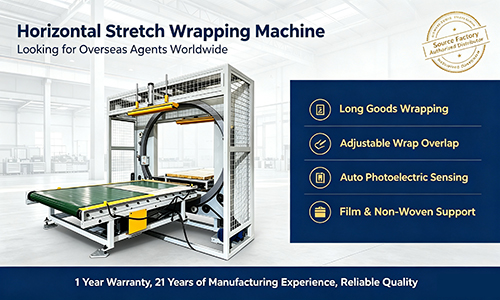
Horizontal Stretch Wrapping Machine SP1000 for Pipes
view more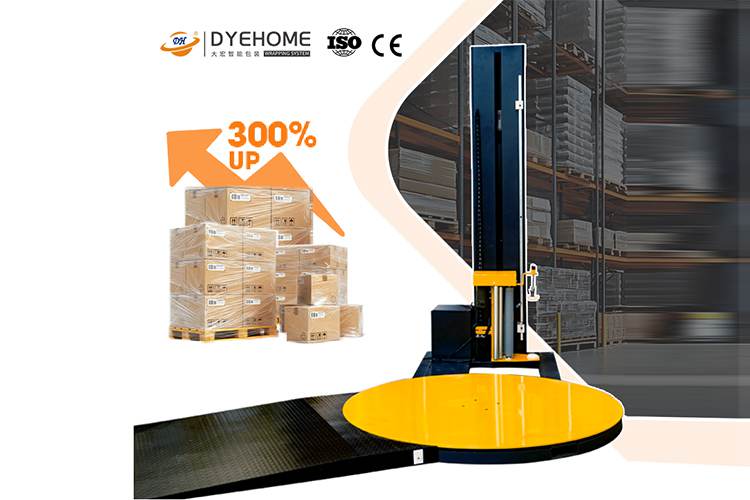
Pallet Stretch Wrapping Machine
view more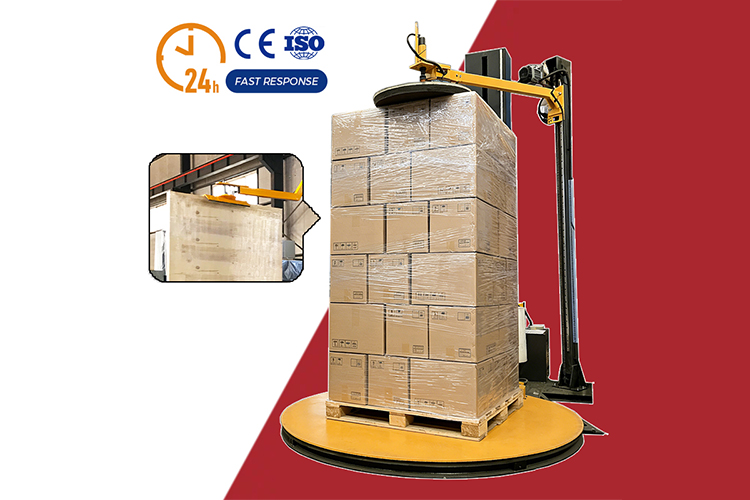
Top Press Pallet Stretch Wrapping Machine
view more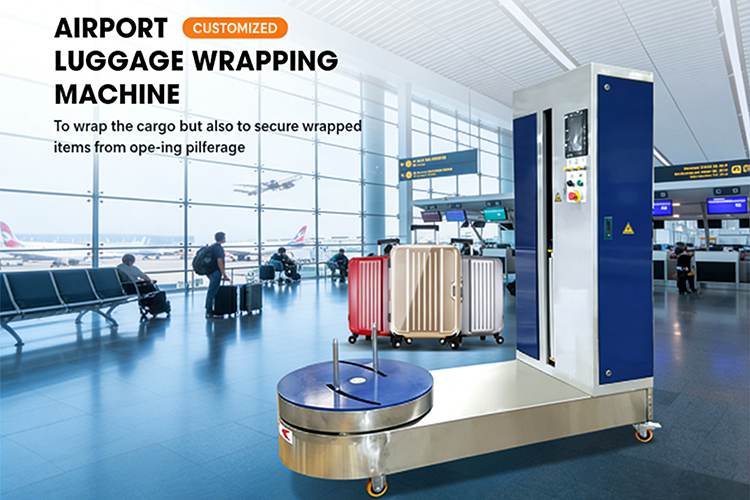
Luggage Wrapping Machine for Airports
view more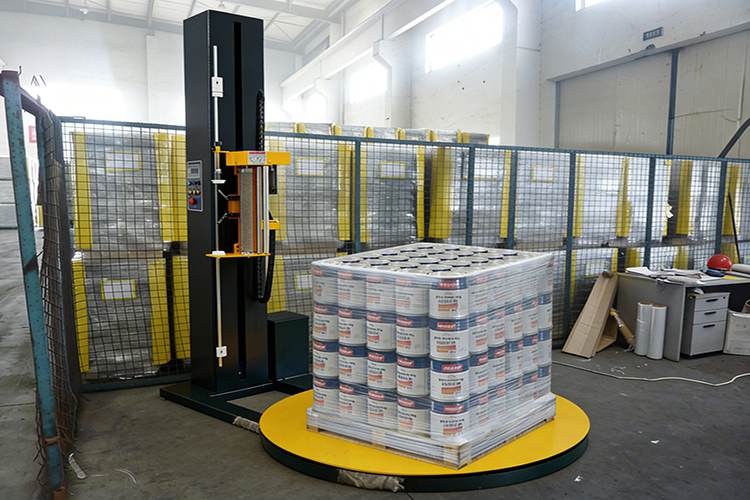
Pallet Stretch Wrapping Machine for Canned Goods
view more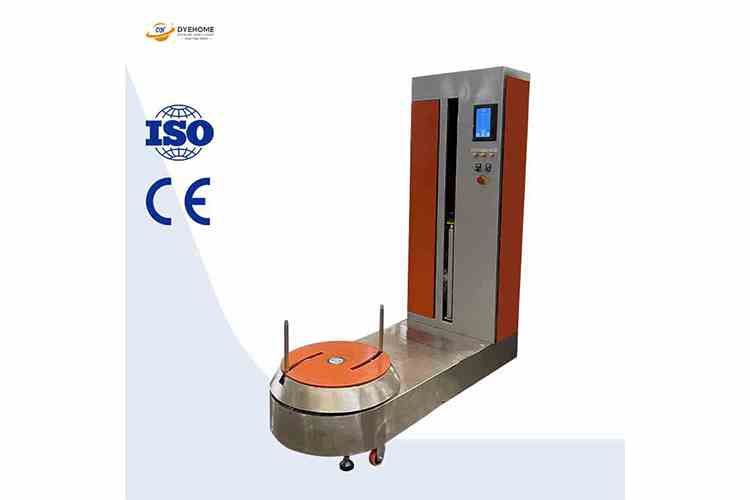
Airport Self-Service Luggage Wrapping Machine
view more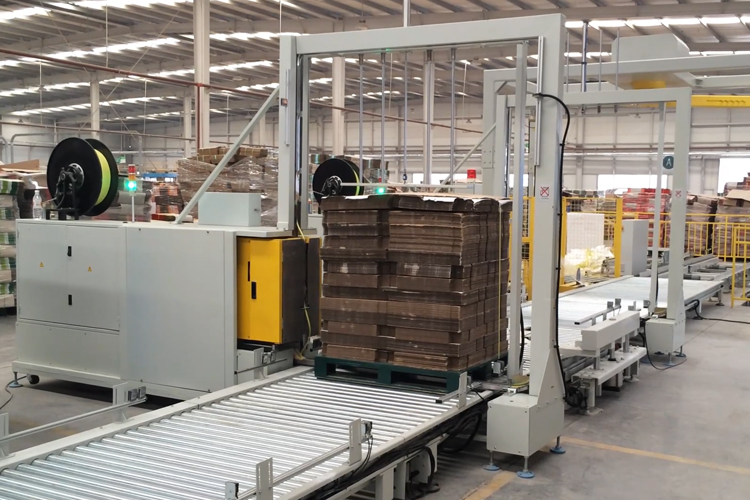
Automated film wrapping and packaging equipment
view more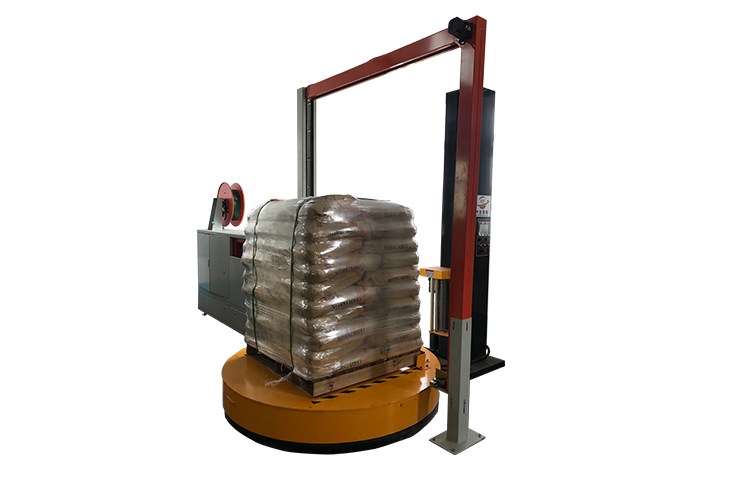
Sword-piercing baler and wrapping machine
view more
 Shandong Dyehome Intelligent Equipment Co.,Ltd
Phone:0086-17362172587
Whatsapp:+8617362172587
Email:machinedyehome@gmail.com
Add:Building 62, 3000 Meili East Road, DmiPark, Wujiapu Street, Huaiyin District, Jinan City,Shandong Province
Jinan Jiasen Packaging Equipment Co., LtdPhone:0086-15665802370
Add:High-end Equipment Manufacturing Industrial Park, East Industrial New Town, Ancheng Town, Pingyin County, Jinan City, Shandong Province
Shandong Golden Pack Intelligent Equipment Co.,LtdPhone:0086-15662690213
Add:High-end Equipment Manufacturing Industrial Park, East Industrial New Town, Ancheng Town, Pingyin County, Jinan City, Shandong Province
YoursIndustry
OurSolutions
OurServices
OurInformation