

End of Line Packaging Machine: Complete Selection Guide 2026
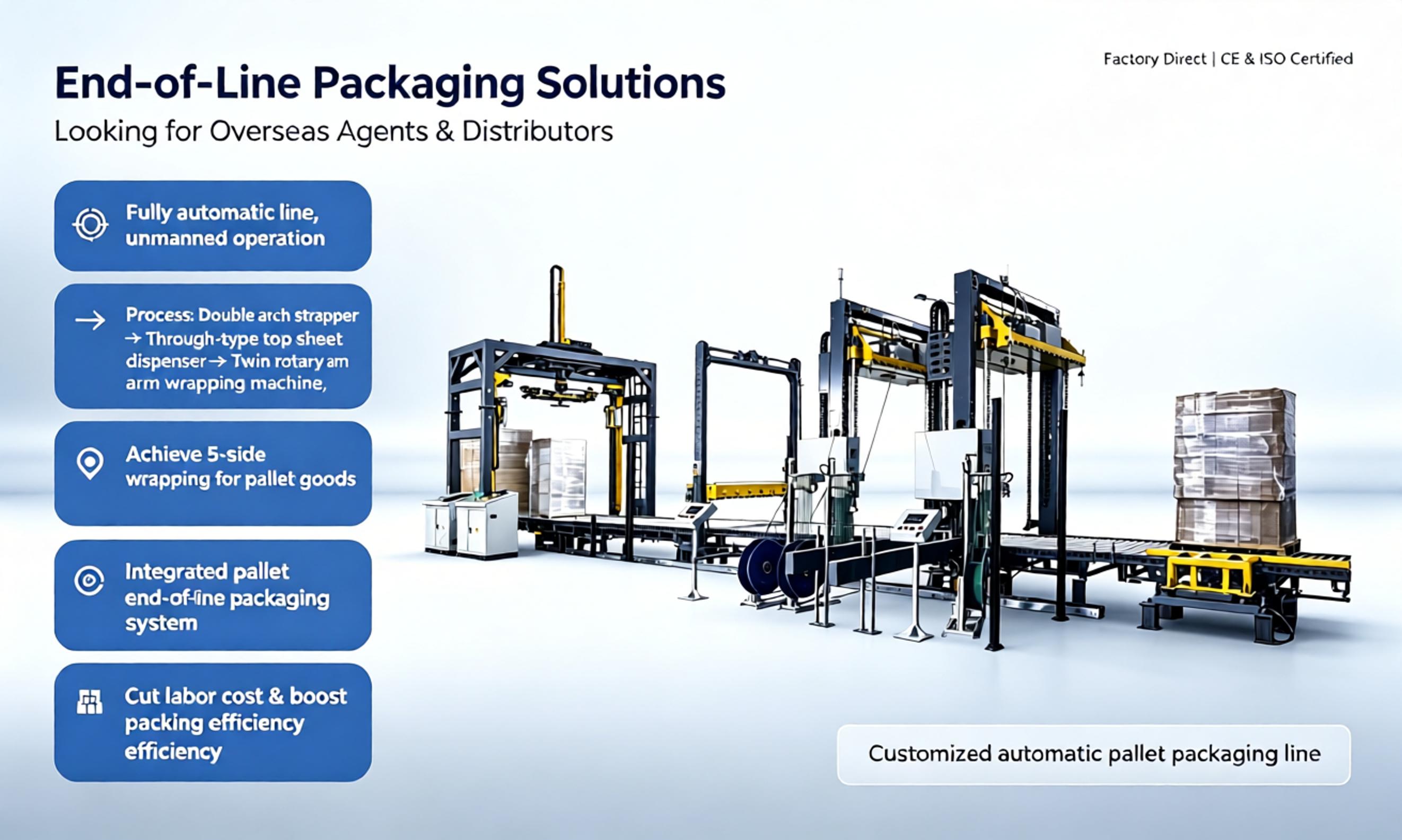
The global end-of-line packaging equipment market is projected to grow from USD 6.28 billion in 2026 to over USD 8.38 billion by 2032, expanding at a compound annual growth rate of approximately 5.0%. For manufacturers and warehouse operators, choosing the right end of line packaging machine is no longer just about wrapping a pallet — it's about building an integrated system that reduces labor costs, minimizes product damage, and keeps pace with increasing throughput demands.
Yet the sheer number of machine types — from case erectors and pallet wrappers to robotic palletizers and strapping systems — makes selection overwhelming. This guide breaks down every major category of end of line packaging equipment, explains how they work together, and provides a practical decision framework to help you select the right machines for your production environment.
What is an end of line packaging machine?
An end of line packaging machine is any automated or semi-automated equipment that handles the final stage of the production-to-shipping workflow — including case erecting, case packing, palletizing, stretch wrapping, strapping, labeling, and load inspection. These machines operate after primary and secondary packaging is complete, preparing unit loads for safe transport and distribution. The "end of line" typically covers the final 30% of a production line, from box formation through to pallet dispatch (source: DNC Automation).
Why End of Line Automation Matters in 2026
Labor scarcity remains the single biggest driver of end of line automation adoption. In manufacturing facilities worldwide, the physical demands of lifting cases, stacking pallets, and applying labels at production speed make these roles the hardest to staff and the most expensive to retain. A packaging line that required 6 workers per shift five years ago must now justify that headcount against materially higher wage baselines.
Beyond labor, three additional factors are accelerating investment:
E-commerce growth: Direct-to-consumer shipping demands faster, more flexible packaging configurations
Sustainability mandates: EU PPWR regulations (applying from approximately August 2026) push manufacturers toward optimized material usage and reduced packaging waste
Industry 4.0 integration: Smart sensors, IoT connectivity, and real-time performance monitoring transform EOL machines from standalone equipment into data-generating nodes within the connected factory
According to Towards Packaging, North America holds a 29.84% market share, while Asia Pacific shows the fastest growth at a 6.32% CAGR, driven by manufacturing expansion in China and India.
The 6 Core Types of End of Line Packaging Machines
Most end of line packaging systems are built from combinations of the following six equipment types. Understanding what each does — and how they connect — is essential for proper line design.
1. Case Erectors
A case erector converts flat cardboard blanks into open-top cases ready for product loading. The machine draws blanks from a magazine, folds them into box geometry, seals the bottom flaps with tape or hot-melt adhesive, and transfers the formed case downstream.
Key specs to compare:
Speed: 20–40 cases per minute for high-speed models
Blank size range: Determines SKU flexibility
Sealing method: Tape vs. hot-melt adhesive (hot-melt offers stronger bonds for heavy products)
Footprint: Compact models available for space-constrained facilities
2. Case Packers / Packers
Case packers load products into the erected cases. Three main types are available:
|
Type |
Best For |
Speed Range |
Flexibility |
|
Mechanical case packer |
Rigid containers, heavy products, beverage industry |
Low-medium, high payload |
Low (often dedicated to one SKU) |
|
Robotic pick-and-place |
Multi-layer stacking, pouches, soaps, mixed SKUs |
Medium |
High (quick changeover with smart grippers) |
|
Drop packer |
Cans, bottles, jars in trays |
High |
Medium |
3. Palletizers
Palletizers arrange cases or products onto pallets in predefined patterns. The three main categories:
Conventional palletizers: Layer-by-layer formation at high speed (up to 200+ cases/hour). Best for single-SKU, high-volume operations.
Robotic palletizers: Flexible arm-based systems that handle mixed SKUs and multiple infeed lines. Ideal for facilities with frequent changeovers.
Collaborative palletizers (cobots) : Entry-level robotic palletizers designed for easy programming and quick deployment. Growing fast in small and mid-size operations.
4. Stretch Wrappers
Once the pallet is built, a stretch wrapper applies LLDPE film to stabilize the load for transport. This is where Shandong Dyehome Intelligent Equipment specializes. Machine types include:
|
Machine Type |
Capacity |
Best Application |
|
Turntable stretch wrapper |
Up to 2,000 kg |
Standard pallets, general manufacturing |
|
Rotary arm wrapper |
Up to 3,000+ kg |
Heavy/unstable loads, high-speed lines |
|
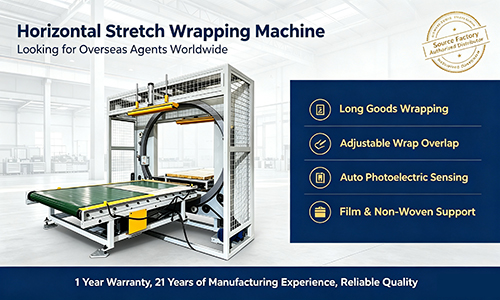
Horizontal stretch wrapper |
Variable length |
Long products (pipes, lumber, profiles) |
|
Automatic inline wrapper |
Integrated with conveyor |
High-volume distribution centers |
Modern stretch wrappers feature pre-stretch carriages that stretch film up to 300% before application, reducing film consumption by 30–50% compared to manual wrapping — a critical cost and sustainability advantage.
5. Strapping Machines
Strapping applies plastic (PP or PET) or steel bands around pallets or cases for additional containment. Strapping machines can be semi-automatic (operator feeds the strap) or fully automatic (integrated with conveyor systems). They are especially important for:
Heavy loads where stretch wrap alone provides insufficient containment
Pipe and steel product bundling
Securing loads for long-distance or ocean freight
6. Labeling & Inspection Systems
The final station before dispatch. Automatic labelers apply shipping labels, barcodes, and compliance markings. Vision inspection systems verify label accuracy, check seal integrity, and confirm pallet pattern correctness. These systems are increasingly integrated with warehouse management systems (WMS) for real-time tracking.
How to Select the Right End of Line Packaging Machine: 7-Step Decision Framework
Choosing the right equipment depends on your specific production requirements. Follow this decision framework:
Step 1: Map Your Current End of Line Process
Document every manual step from the point products leave your secondary packaging station to the point loaded pallets reach the shipping dock. Identify bottlenecks, injury-prone tasks, and quality inconsistencies.
Step 2: Calculate Your Throughput Requirements
Determine your peak loads per hour and daily pallet count. This determines whether you need semi-automatic or fully automatic equipment.
Under 15 pallets/hour: Semi-automatic machines may suffice
15–30 pallets/hour: Fully automatic equipment recommended
30+ pallets/hour: High-speed integrated line with robotic palletizing
Step 3: Analyze Your Load Profile
Load weight: Determines machine capacity ratings
Load dimensions: Irregular or oversized loads may require rotary arm or horizontal wrappers
Load stability: Unstable loads benefit from rotary arm wrappers (pallet stays stationary)
Product fragility: Gentle handling requirements may dictate specific case packer types
Step 4: Evaluate Floor Space and Layout
End of line equipment needs to fit your facility, not the other way around. Measure available floor space, ceiling height, and access points. Consider:
Compact or vertical designs for space-constrained facilities
Modular equipment that can be reconfigured as production needs change
Future expansion — leave room for additional stations
Step 5: Determine Integration Level
Decide how much automation you need across the entire EOL sequence:
|
Integration Level |
Description |
Investment Range |
|
Standalone machines |
Individual machines operating independently |
Low |
|
Partially integrated |
Machines connected by conveyors, some manual transfer |
Medium |
|
Fully integrated line |
Complete automated flow from case erect to pallet dispatch |
High |
|
Smart connected line |
Full integration + IoT monitoring + AMR compatibility |
Highest |
A case study by Gruppo demonstrated that combining case packing, palletizing, and stretch wrapping into a single integrated line reduced labor from 10+ operators to just 1 forklift driver, while eliminating safety risks from forklift traffic in the wrapping zone.
Step 6: Calculate Total Cost of Ownership (TCO)
Look beyond the purchase price. Key TCO components:
Film/consumable costs: Pre-stretch capable machines save 30–50% on film
Maintenance: Fewer moving parts = lower maintenance costs
Energy consumption: Modern servo-driven machines consume 20–40% less energy
Downtime cost: Machines with IoT predictive maintenance reduce unplanned stops by up to 50%
Labor savings: The primary ROI driver — typically 12–24 month payback period
Step 7: Consider Future-Proofing
The end of line packaging landscape is evolving rapidly. Key trends to factor in:
AMR (Autonomous Mobile Robot) integration: Leading manufacturers like Lantech now offer stretch wrappers designed for AMR handoff, eliminating fixed conveyor infrastructure entirely.
IoT and Industry 4.0: Real-time performance monitoring, predictive maintenance alerts, and data-driven optimization
Modular design: Equipment that can be reconfigured for new products or increased capacity without full replacement
Sustainability: Machines optimized for thinner gauge films, recycled-content materials, and minimal waste
products
Horizontal Stretch Wrapping Machine SP1000 for Pipes
view more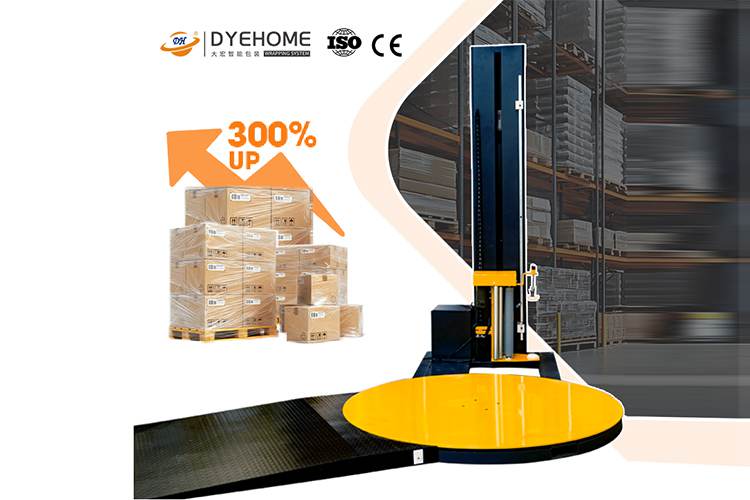
Pallet Stretch Wrapping Machine
view more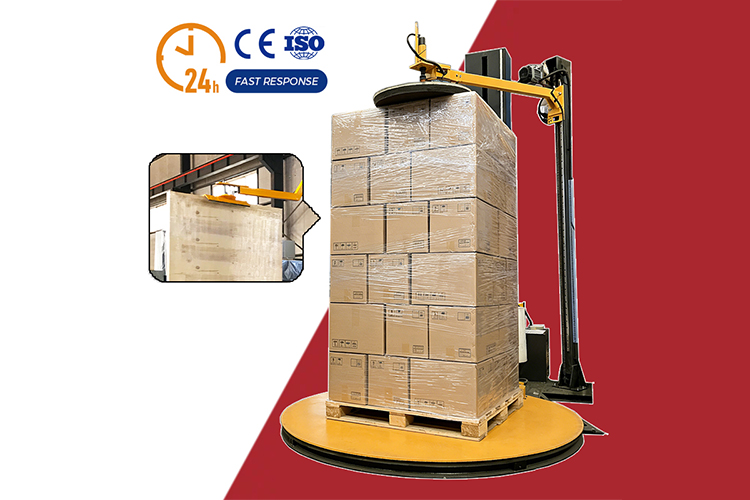
Top Press Pallet Stretch Wrapping Machine
view more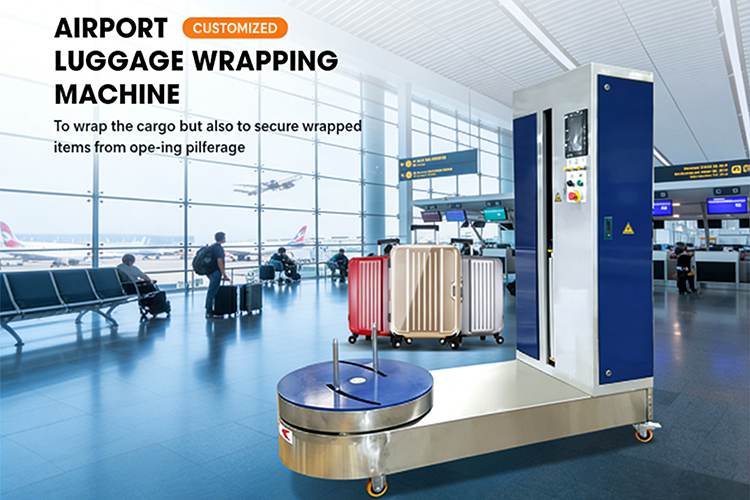
Luggage Wrapping Machine for Airports
view more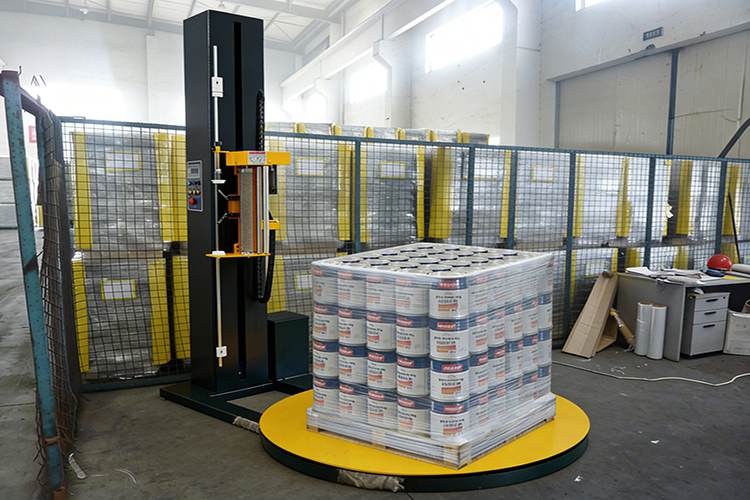
Pallet Stretch Wrapping Machine for Canned Goods
view more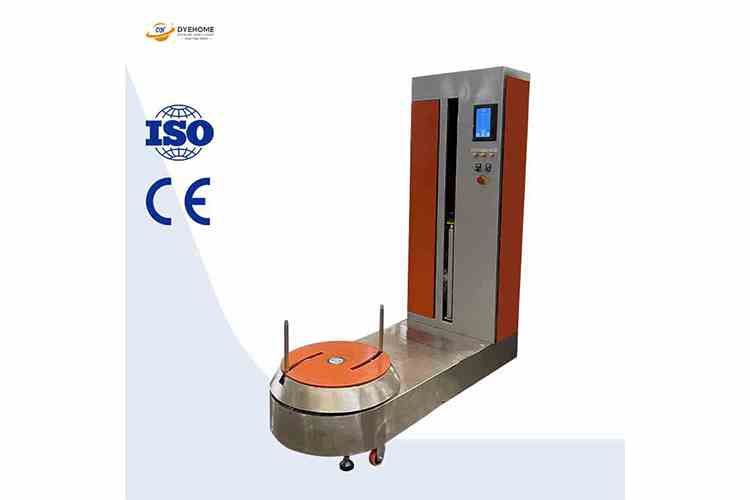
Airport Self-Service Luggage Wrapping Machine
view more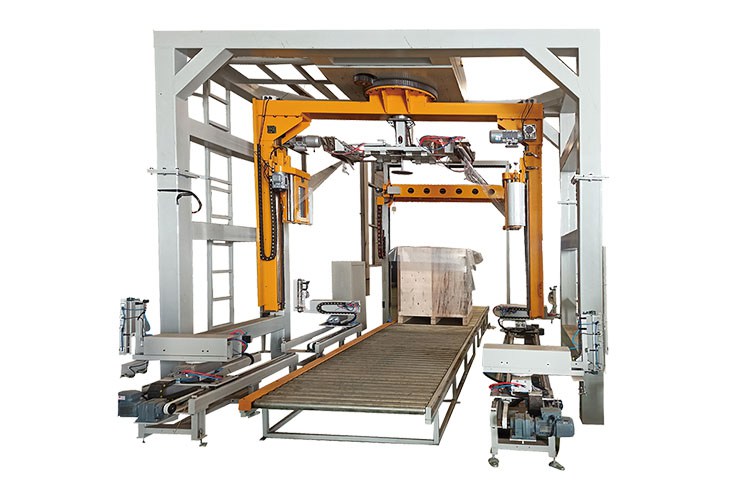
Cantilever wrapping film packaging machine
view more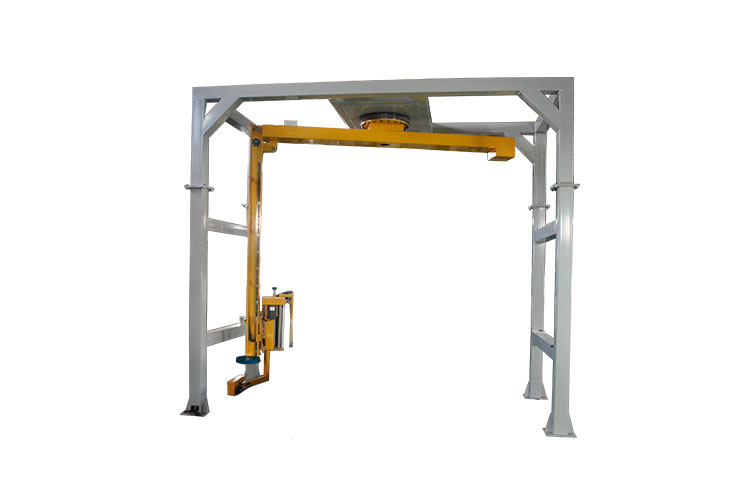
Gantry fully automatic cantilever wrapping machine
view more
 Shandong Dyehome Intelligent Equipment Co.,Ltd
Phone:0086-17362172587
Whatsapp:+8617362172587
Email:machinedyehome@gmail.com
Add:Building 62, 3000 Meili East Road, DmiPark, Wujiapu Street, Huaiyin District, Jinan City,Shandong Province
Jinan Jiasen Packaging Equipment Co., LtdPhone:0086-15665802370
Add:High-end Equipment Manufacturing Industrial Park, East Industrial New Town, Ancheng Town, Pingyin County, Jinan City, Shandong Province
Shandong Golden Pack Intelligent Equipment Co.,LtdPhone:0086-15662690213
Add:High-end Equipment Manufacturing Industrial Park, East Industrial New Town, Ancheng Town, Pingyin County, Jinan City, Shandong Province
YoursIndustry
OurSolutions
OurServices
OurInformation