

How Can High-Stack Pallets Be Wrapped More Securely? Rotary Arm Wrapping Machines Are Becoming a Preferred Solution
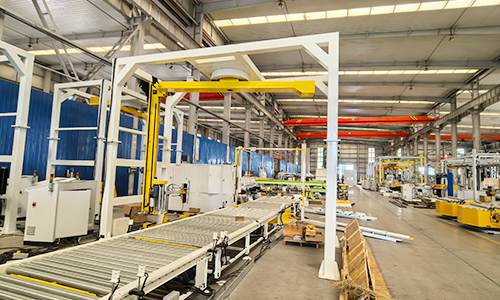
Why Are More Companies Choosing Stationary Load Wrapping?
Traditional turntable wrapping machines work well for standard pallet loads. However, as products become larger, heavier, and taller, concerns about load stability during rotation are increasing.
For example, palletized beverages, bagged materials, battery materials, and tall carton stacks may sway during high-speed rotation. If the load center of gravity is high or stacking quality is poor, the risk of tilting or collapse increases.
As a result, stationary-load wrapping methods are gaining popularity.
Why Are High Pallet Loads Better Suited to Rotary Arm Wrapping Machines?
With the widespread adoption of automated palletizing systems, many companies are building taller pallet loads to improve warehouse utilization and transportation efficiency.
Some beverage pallets exceed two meters in height, while certain chemical and new energy products are stacked even higher.
Rotary arm wrapping machines keep the load completely stationary while the arm rotates around it, eliminating centrifugal forces generated by load rotation. This makes them particularly suitable for tall, oversized, and heavy pallet loads.
Industries such as new energy materials, chemical bulk bags, beverages, and paper products are increasingly adopting this packaging solution.
Automation Is Accelerating Packaging Equipment Upgrades
As automated factories continue to develop, packaging is becoming an integral part of overall logistics systems.
Rotary arm wrapping machines can be integrated with roller conveyors, chain conveyors, and palletizing robots to achieve automatic product transfer, wrapping, and discharge.
For high-volume operations, this significantly improves logistics efficiency while reducing manual handling.
Automatic Film Clamp and Cut Functions Are Becoming Standard
As labor costs rise, companies are demanding higher levels of packaging automation.
Modern rotary arm wrapping machines can be equipped with automatic film attachment, film clamping, cutting, and wiping systems. Once wrapping is completed, the machine automatically handles the film tail and proceeds to the next pallet without operator intervention.
This is particularly beneficial for facilities operating continuously around the clock.
Rotary Arm Wrapping Machines Are Becoming Essential for Automated Packaging
As companies demand higher transportation safety, packaging efficiency, and automation levels, packaging equipment plays a critical role in maintaining logistics performance and delivery quality.
With advantages such as stationary load wrapping, suitability for high-stacked products, easy integration with automated production lines, and automatic film handling functions, rotary arm wrapping machines are increasingly used in food, beverage, chemical, new energy, building materials, and logistics industries.
FAQ
Q1: What is the difference between a rotary arm wrapper and a turntable wrapper?
A rotary arm wrapper keeps the load stationary while the arm rotates. A turntable wrapper rotates the load itself.
Q2: Which industries commonly use rotary arm wrapping machines?
Food, beverage, chemical, new energy, paper, building materials, and logistics industries.
Q3: Can rotary arm wrapping machines be integrated into automated systems?
Yes. They can connect with conveyors, palletizers, and warehouse automation systems.
Q4: Why are high-stacked loads better suited to rotary arm wrapping?
Because the load remains stationary, reducing the risk of load shifting, leaning, or collapse.
Q5: What is the packaging capacity?
Typically 20–40 pallets per hour depending on load dimensions and wrapping requirements.
products
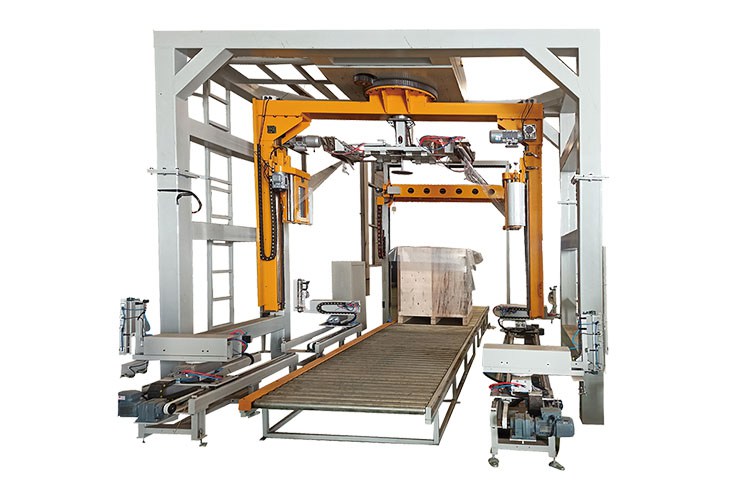
Cantilever wrapping film packaging machine
view more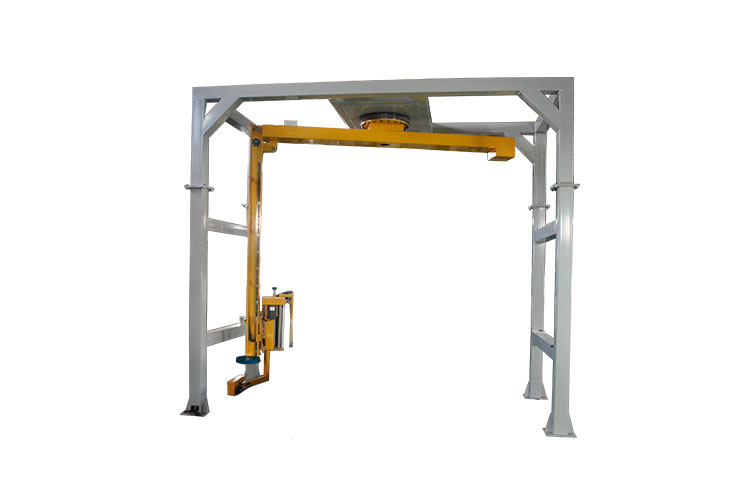
Gantry fully automatic cantilever wrapping machine
view more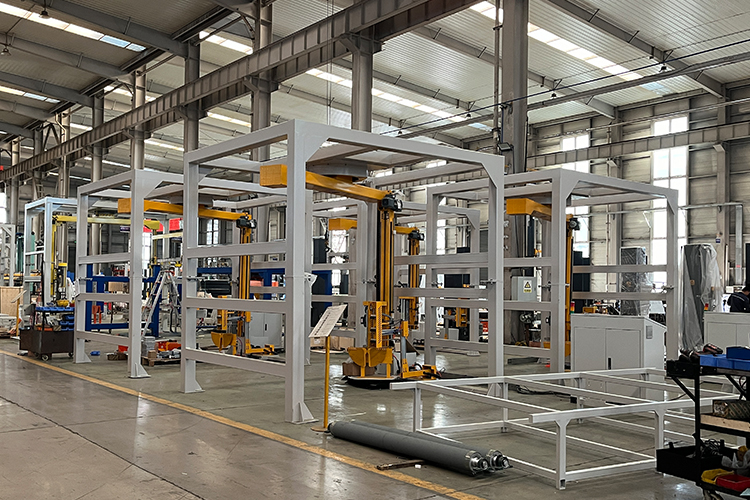
Cantilever wrapping packaging machine
view more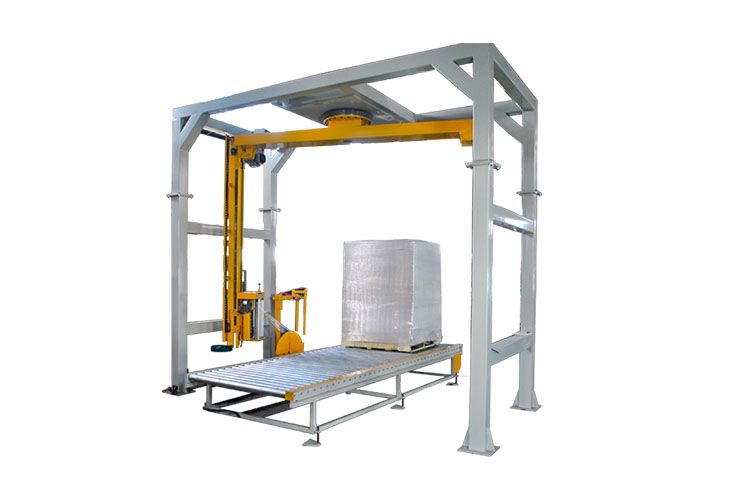
Rocker-type online wrapping machine
view more
Stretch film wrapping machine
view more
Pallet wrapping packaging equipment
view more
Turntable wrapping machine with top pressure
view more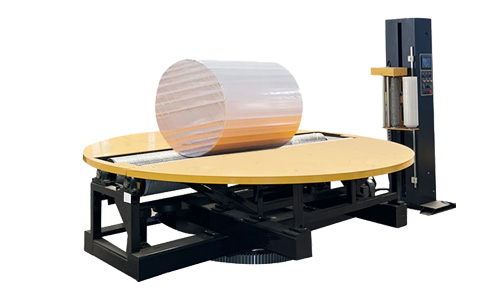
Pallet paper tube wrapping machine
view more
 Shandong Dyehome Intelligent Equipment Co.,Ltd
Phone:0086-17362172587
Whatsapp:+8617362172587
Email:machinedyehome@gmail.com
Add:Building 62, 3000 Meili East Road, DmiPark, Wujiapu Street, Huaiyin District, Jinan City,Shandong Province
Jinan Jiasen Packaging Equipment Co., LtdPhone:0086-15665802370
Add:High-end Equipment Manufacturing Industrial Park, East Industrial New Town, Ancheng Town, Pingyin County, Jinan City, Shandong Province
Shandong Golden Pack Intelligent Equipment Co.,LtdPhone:0086-15662690213
Add:High-end Equipment Manufacturing Industrial Park, East Industrial New Town, Ancheng Town, Pingyin County, Jinan City, Shandong Province
YoursIndustry
OurSolutions
OurServices
OurInformation