

How Can Nonwoven Fabric Manufacturers Reduce Damage During Long-Distance Transportation? Stretch Film Wrapping Machines Are Seeing Growing Adoption
Why Are Nonwoven Fabric Manufacturers Paying More Attention to Packaging Quality?
As the nonwoven fabric industry continues to expand, its products are widely used in medical supplies, hygiene products, packaging materials, household goods, and industrial filtration applications. After production, nonwoven products must go through storage, loading, transportation, and customer delivery, making packaging quality a critical factor in the final product condition.
Many manufacturers have found that roll products are prone to edge damage, surface contamination, and roll deformation during transportation. For export products and premium-grade nonwoven materials, inadequate packaging can affect product appearance and increase customer complaints and after-sales costs. As a result, more companies are upgrading their packaging processes.
Why Traditional Packaging Methods Are No Longer Enough
In the past, many companies relied on manual film wrapping, bagging, or simple covering methods. While these approaches provided basic protection, they are becoming less effective as product sizes increase and packaging standards become more demanding.
For example, large nonwoven rolls can experience loose packaging during transportation. During long-term storage, products may also be exposed to dust and moisture. In addition, inconsistent packaging appearance can negatively impact customers’ perception of a company's management and quality standards.
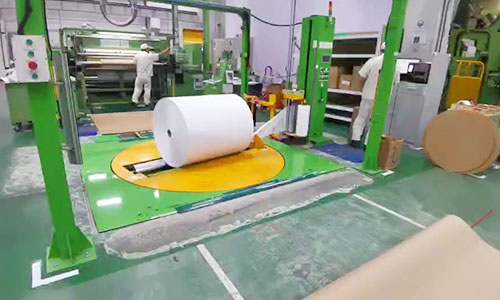
The nonwoven fabric stretch film wrapping machine combines rotating wrapping technology with full-surface film coverage, ensuring uniform film application around the product. This results in tighter packaging and a cleaner, more professional appearance.
What Packaging Challenges Occur During Transportation and Storage?
Most nonwoven products are transported in roll form. Due to their cylindrical shape, they can easily roll or collide during forklift handling and logistics transportation. If packaging is insufficient, roll edges may become damaged.
At the same time, many nonwoven products require high cleanliness standards and attractive appearance quality. During storage and transportation, they need protection from dust, moisture, and external contaminants. A fully wrapped protective film layer helps improve dustproof, moisture-resistant, and contamination-resistant performance, providing better protection throughout the logistics process.
Automation Is Driving Packaging Upgrades in the Nonwoven Industry
As production capacity continues to increase, manufacturers are demanding higher packaging efficiency and greater standardization. Packaging is no longer simply the final production step; it has become an important link connecting manufacturing, warehousing, and logistics.
Rotary roll wrapping machines can be configured according to roll diameter and width requirements, making them suitable for various roll products. Packaging speeds typically range from 10 to 30 rolls per hour. Optional features such as automatic roll ejection, weighing systems, and label printing can further enhance automation and support continuous production operations.
Stretch Film Wrapping Machines Are Becoming an Important Choice for Roll Packaging
As customers place greater emphasis on packaging quality, more manufacturers are focusing on standardized packaging systems. Effective packaging not only protects products during transportation but also reflects a company’s management standards and brand image.
Through 360-degree full wrapping protection, nonwoven fabric stretch film wrapping machines improve packaging consistency and transportation safety while reducing roll loosening, moisture exposure, and logistics-related damage. They are increasingly used in nonwoven fabric, tire cord fabric, paper, rubber products, and various roll-material industries, making them a key solution for packaging upgrades.
FAQ
Q1: What products can be packaged with a nonwoven fabric stretch film wrapping machine?
A: It is suitable for nonwoven fabric rolls, tire cord fabric rolls, paper rolls, rubber products, coils, and various cylindrical roll materials.
Q2: Why use stretch film packaging for nonwoven products?
A: Stretch film improves product stability, reduces roll loosening, damage, and contamination during transportation, and provides dustproof and moisture-resistant protection.
Q3: What is the packaging speed of a rotary roll wrapping machine?
A: Depending on product specifications, packaging speed typically ranges from 10 to 30 rolls per hour.
Q4: Can the machine be equipped with weighing and label printing systems?
A: Yes. Optional functions include weighing systems, label printers, automatic roll ejection, and other customized features.
Q5: Which industries commonly use nonwoven fabric stretch film wrapping machines?
A: They are widely used in nonwoven fabric manufacturing, paper production, rubber products, tire cord fabric, coil products, and other roll-material industries.
products
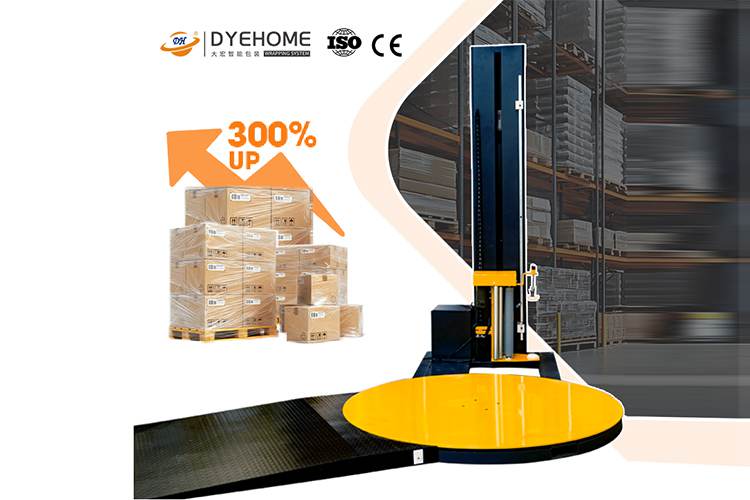
Pallet Stretch Wrapping Machine
view more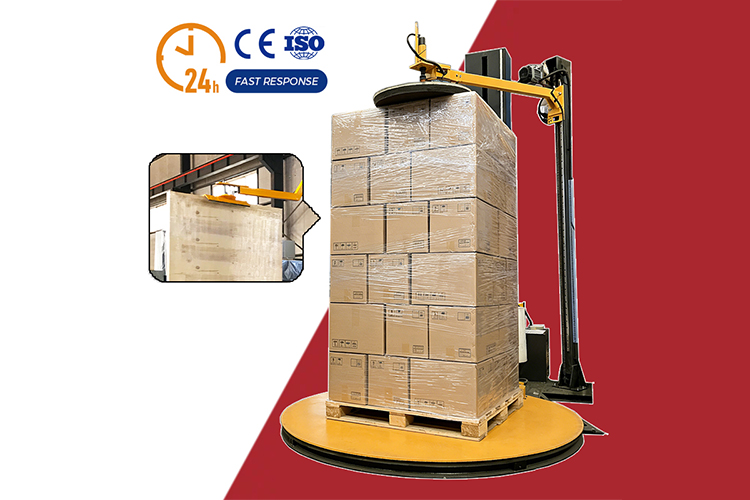
Top Press Pallet Stretch Wrapping Machine
view more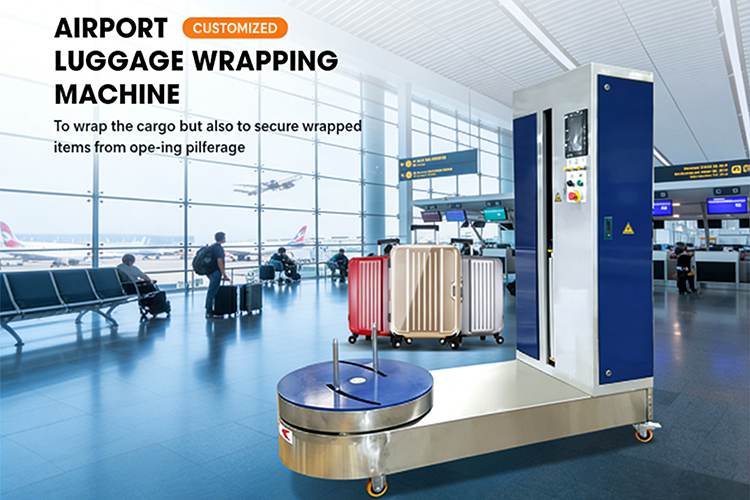
Luggage Wrapping Machine for Airports
view more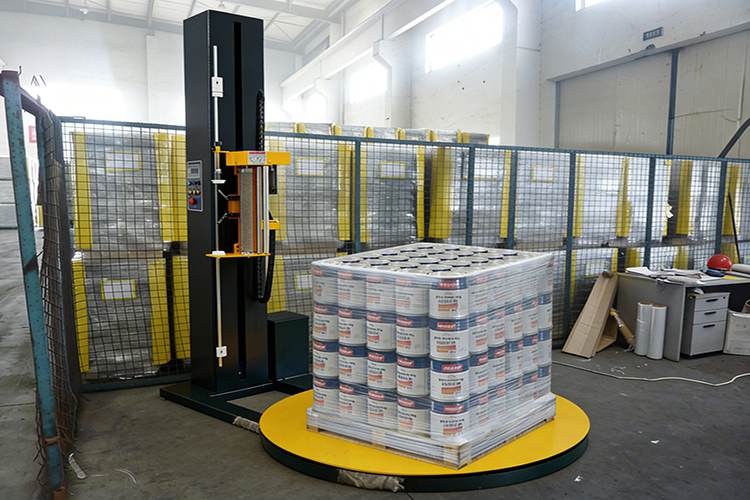
Pallet Stretch Wrapping Machine for Canned Goods
view more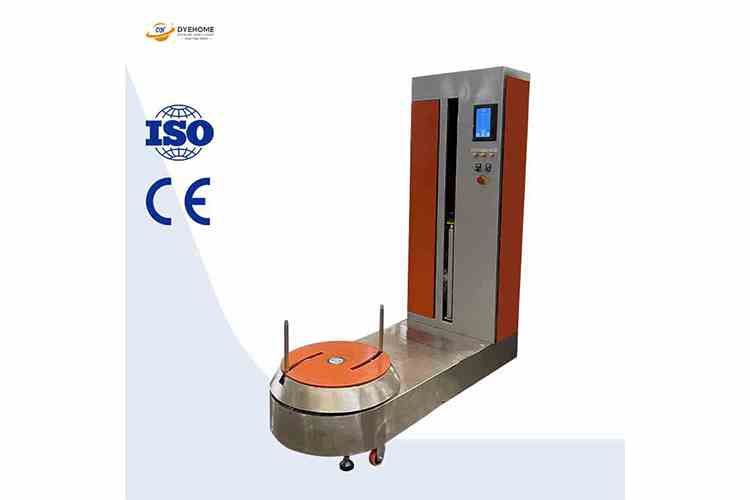
Airport Self-Service Luggage Wrapping Machine
view more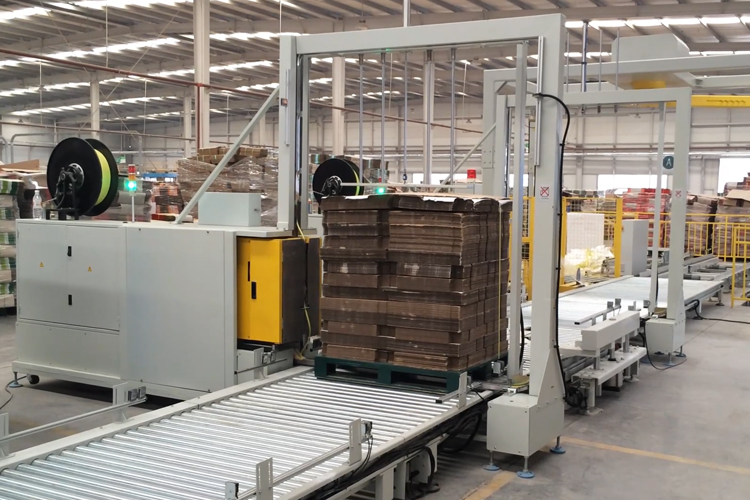
Automated film wrapping and packaging equipment
view more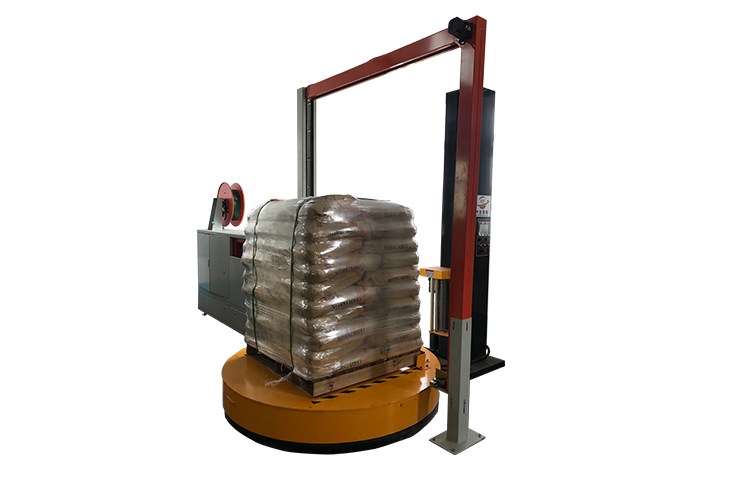
Sword-piercing baler and wrapping machine
view more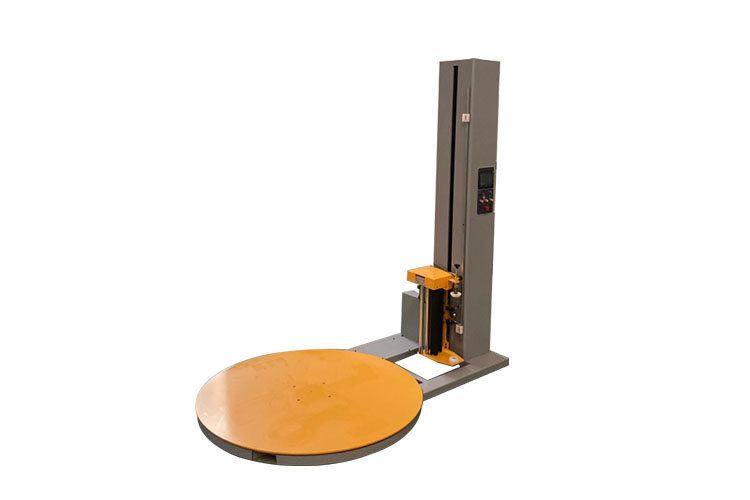
Pallet packaging equipment
view more
 Shandong Dyehome Intelligent Equipment Co.,Ltd
Phone:0086-17362172587
Whatsapp:+8617362172587
Email:machinedyehome@gmail.com
Add:Building 62, 3000 Meili East Road, DmiPark, Wujiapu Street, Huaiyin District, Jinan City,Shandong Province
Jinan Jiasen Packaging Equipment Co., LtdPhone:0086-15665802370
Add:High-end Equipment Manufacturing Industrial Park, East Industrial New Town, Ancheng Town, Pingyin County, Jinan City, Shandong Province
Shandong Golden Pack Intelligent Equipment Co.,LtdPhone:0086-15662690213
Add:High-end Equipment Manufacturing Industrial Park, East Industrial New Town, Ancheng Town, Pingyin County, Jinan City, Shandong Province
YoursIndustry
OurSolutions
OurServices
OurInformation