

How to Achieve Efficient Automatic Packaging for Tissue Products? Tissue Roll Stretch Wrapping Machine Provides the Solution
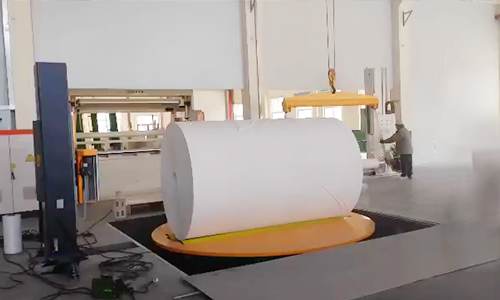
Low Packaging Efficiency Affects Overall Production Capacity
In tissue manufacturing, products need to be packaged after rewinding and cutting. Manual wrapping is inefficient and cannot match high production speeds, leading to bottlenecks and inconsistent packaging quality.
Automatic Wrapping Enables Continuous Operation
The machine uses an automated control system to perform continuous wrapping. Wrapping layers, film tension, and speed can be adjusted based on product specifications, ensuring stable and consistent packaging performance.
Stretch Film Improves Product Protection
Tissue products are sensitive to environmental conditions. Stretch film provides an external protective layer, helping prevent dust and moisture while maintaining product integrity during storage and transportation.
Automation Reduces Labor Cost and Intensity
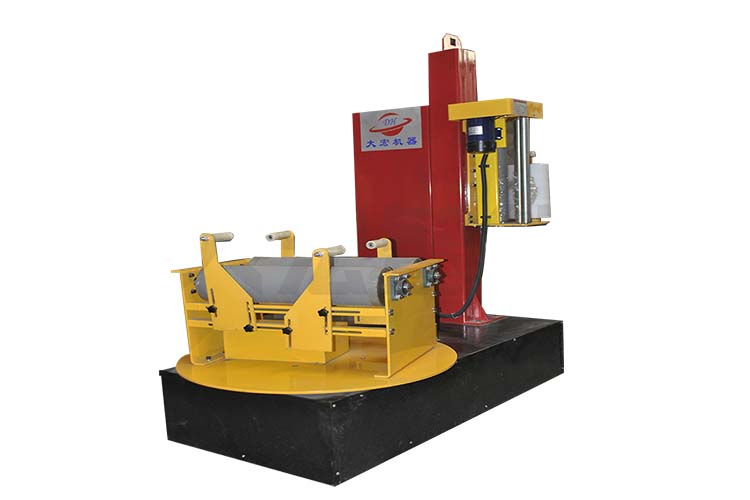
Manual wrapping requires dedicated operators and involves heavy labor. The automatic wrapping machine simplifies the process with one-button operation, reducing labor requirements and improving working conditions.
Adaptable to Multiple Roll Sizes and Materials
The machine can be adjusted for different diameters and widths, making it suitable for various products such as tissue rolls, kitchen paper, industrial paper, and nonwoven rolls.
Integration with Production Lines
For advanced production facilities, the machine can be integrated with upstream and downstream systems, enabling automatic conveying, positioning, and wrapping. This reduces manual handling and improves workflow efficiency.
Improves Packaging Consistency and Brand Image
Standardized packaging enhances not only protection but also brand presentation. Automated wrapping ensures consistent appearance across batches, improving professionalism and customer trust.
Supports Automation Upgrade in Tissue Industry
With increasing market demand, manufacturers are focusing on efficiency and cost control. Automatic wrapping machines play a key role in packaging automation and scalable production.
products
 Shandong Dyehome Intelligent Equipment Co.,Ltd
Phone:0086-17362172587
Whatsapp:+8617362172587
Email:machinedyehome@gmail.com
Add:Building 62, 3000 Meili East Road, DmiPark, Wujiapu Street, Huaiyin District, Jinan City,Shandong Province
Jinan Jiasen Packaging Equipment Co., LtdPhone:0086-15665802370
Add:High-end Equipment Manufacturing Industrial Park, East Industrial New Town, Ancheng Town, Pingyin County, Jinan City, Shandong Province
Shandong Golden Pack Intelligent Equipment Co.,LtdPhone:0086-15662690213
Add:High-end Equipment Manufacturing Industrial Park, East Industrial New Town, Ancheng Town, Pingyin County, Jinan City, Shandong Province
YoursIndustry
OurSolutions
OurServices
OurInformation