

How to Choose a Pallet Wrapping Machine:7-Step Decision Framework(2026)
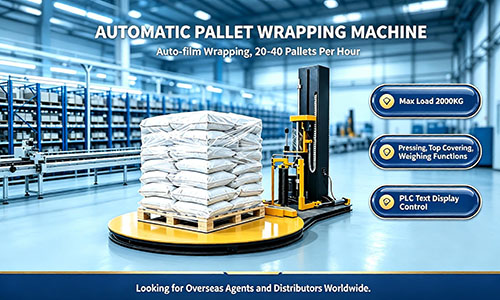
Choosing the right pallet wrapping machine is one of the most impactful packaging decisions a manufacturing or logistics facility will make.The wrong choice leads to film waste,damaged shipments,bottlenecks,and costly replacements.The right one delivers consistent load stability,30–50%film savings,and ROI within 12–18 months.
But with dozens of machine types,hundreds of specifications,and price ranges spanning from$1,500 to$50,000+,how do you make the right call?
This guide provides a structured 7-step decision framework specifically for pallet wrapping machines.It is designed for purchasing managers,plant engineers,and project leads who need to evaluate options systematically—rather than relying on sales pitches.
Step 1:Define Your Load Profile
A pallet wrapping machine must match your loads—not the other way around.
Before comparing machine types or brands,document your load characteristics:
Pallet dimensions:Standard(48"×40"),Euro(1200×800mm),or custom sizes
Load height:From floor to top of product(including pallet)
Load weight:Typical and maximum weight per pallet
Load shape:Uniform boxes,irregular shapes,bags,drums,rolls,or mixed
Load stability:Does the product shift easily?Is it fragile?
Why this matters:
|
Load Characteristic |
Machine Implication |
|
Height>2,000 mm |
Requires tall mast or horizontal wrapper |
|
Weight>2,000 kg |
Needs heavy-duty turntable(≥3,000 kg capacity) |
|
Irregular/oversized loads |
Rotary arm or cantilever wrapper(no turntable size limit) |
|
Unstable loads |
Requires top sheet dispenser and adjustable tension |
|
Mixed load types |
Variable-speed turntable with programmable wrap patterns |
Action step:Catalog your top 5 SKUs by volume.Record dimensions,weight,and wrapping requirements for each.This list becomes your specification baseline.
Step 2:Calculate Your Required Throughput
Throughput determines your automation level—and your budget.
Calculate how many pallets you wrap per shift and per day:
Low volume:<20 pallets/day→Semi-automatic turntable wrapper
Medium volume:20–60 pallets/day→Automatic turntable or rotary arm wrapper
High volume:60–120 pallets/day→Rotary arm with conveyor integration
Very high volume:>120 pallets/day→Fully automatic inline system with automatic film cutting
Required throughput=Daily pallets÷Shift hours÷60 minutes×Cycle time per pallet
Important:Most manufacturers quote cycle times under ideal conditions.In practice,plan for 70–80%of rated throughput to account for loading/unloading,film changes,and minor adjustments.
Example:If you need to wrap 40 pallets in an 8-hour shift:
Available minutes:480
Time per pallet needed:480÷40=12 minutes/pallet(including load/unload)
A machine with a 90-second wrap cycle+2 minutes load/unload=3.5 minutes/pallet
Capacity:480÷3.5=~137 pallets/day→sufficient with significant headroom
Step 3:Select the Right Machine Type
Match machine type to your throughput and load profile.
Machine Type Comparison
|
Machine Type |
Best For |
Throughput |
Load Weight Limit |
Key Advantage |
Typical Price Range |
|
Semi-Automatic Turntable |
Low volume,varied loads |
10–30 pallets/day |
1,500–2,000 kg |
Low cost,flexible |
$1,500–$4,000 |
|
Automatic Turntable |
Medium volume,standard loads |
20–60 pallets/day |
2,000–3,000 kg |
Consistent wrap quality |
$4,000–$10,000 |
|
Rotary Arm(Cantilever) |
Heavy/oversized loads |
30–80 pallets/day |
2,000 kg(no table limit) |
No turntable size constraint |
$8,000–$20,000 |
|
Horizontal(Orbital)Wrapper |
Long/bulky items(pipes,lumber) |
20–60 pallets/day |
N/A(length-based) |
Wraps length,not height |
$5,000–$15,000 |
|
online Automatic System |
High-volume production lines |
60–200+pallets/day |
Up to 2,000 kg |
Full automation,conveyor-integrated |
$15,000–$50,000+ |
|
Luggage/Airport Wrapper |
Suitcases,small parcels |
50–500 items/day |
100–200 kg |
Compact,high-speed |
$3,000–$8,000 |
Decision Shortcut
Standard pallets+<60/day→Turntable(semi-auto or auto)
Oversized,heavy,or unstable loads→Rotary arm
Long products(pipes,timber,carpet rolls)→Horizontal wrapper
Conveyor line integration needed→Inline automatic system
Step 4:Evaluate Critical Specifications
These are the specs that directly affect performance,cost,and compatibility.
Must-Check Specifications Checklist
Turntable diameter(for turntable models):Must exceed your largest pallet diagonal+100mm clearance
Turntable speed:Variable speed(0–15 RPM)allows optimization for different load types
Mast height:Must accommodate your tallest load+200mm for film carriage travel
Film carriage type:
Powered pre-stretch(200–300%):Saves 25–40%on film costs vs.non-pre-stretch
Mechanical brake pre-stretch:Lower cost,less precise tension control
Film tension control:Adjustable containment force prevents product crush damage
PLC controller:Programmable wrap patterns for different SKUs;look for recipe storage(10+patterns minimum)
Safety features:Emergency stop,photoelectric sensors,safety fencing,CE/UL certification
Power requirements:Voltage(380V/220V/440V),frequency(50/60Hz),compressed air needs
Step 5:Assess Total Cost of Ownership(TCO)
Machine price is only 30–40%of the total cost over its lifetime.
TCO Breakdown Over 7 Years
|
Cost Component |
Typical Share |
What to Evaluate |
|
Machine purchase price |
30–40% |
Compare similar-spec machines,not just headline price |
|
Film consumption |
35–45% |
Pre-stretch ratio directly impacts this;250%pre-stretch saves~35%vs.hand wrap |
|
Maintenance&spare parts |
10–15% |
Ask for spare parts list+pricing;check local availability |
|
Energy consumption |
3–5% |
Typically$300–$800/year;servo-driven systems use less |
|
Downtime cost |
5–10% |
Hard to quantify but critical;unreliable machines cost thousands per day in lost production |
Step 6:Verify Supplier Capability&Support
The machine is only as good as the supplier behind it.
Supplier Evaluation Checklist
Industry experience:Minimum 5 years in stretch wrapping/packaging machinery
Manufacturing capacity:In-house production(not pure trading company)ensures quality control and customization
Certifications:CE marking(Europe),UL listing(North America),ISO 9001 quality management
Reference customers:Ask for 3+references in your industry;request site visit or video calls
Spare parts availability:Confirm critical parts(film carriage motor,turntable motor,PLC)are stocked locally or ship within 72 hours
Warranty terms:Standard is 12 months;negotiate 24 months for key components(bearings,drive system)
Training:On-site or virtual training included;operator manual in English
Communication protocols:If integrating with existing line,confirm Ethernet/IP,Profinet,or Modbus compatibility
Critical question to ask:"What is your average response time for technical support calls,and do you have service engineers in my region?"
Step 7:Request a Live Test With Your Product
Never buy based on spec sheets alone.Always validate with your actual loads.
Pre-Purchase Test Protocol
Send your top 3 load types(or detailed photos+dimensions)to the supplier
Request a video wrapping test showing:
Complete wrap cycle(start to finish)
Film consumption measurement(weigh film before/after)
Wrapped load stability test(tilt test or vibration simulation)
Evaluate the results:
Is the wrap pattern even and consistent?
Are there film breaks or loose areas?
Does the load look secure for transport?
Ask for a trial period(if possible):Some suppliers offer 2–4 week trial installations for high-value purchases
Pro tip:Ask the supplier to wrap your product at 110%of your target throughput speed.If the machine handles it smoothly,you have confidence in real-world performance.
FAQ
Q: What is the most important factor when choosing a pallet wrapping machine?
A: The most critical factor is matching realistic throughput capacity to your actual daily pallet volume. Plan for 70–80% of rated maximum speed to account for loading/unloading time and operational variability. A machine running at its theoretical maximum will become a bottleneck, not a solution.
Q: Should I choose a turntable or rotary arm wrapper?
A: Choose a turntable wrapper if you wrap standard pallets (≤1,200mm diagonal) weighing under 2,000 kg at moderate volumes. Choose a rotary arm wrapper if your loads are oversized, heavy (>2,000 kg), unstable, or if floor space constraints prevent a large turntable installation. Rotary arm machines also handle very tall loads more safely since the load doesn't rotate.
Q: How long does a pallet wrapping machine typically last?
A: A well-maintained pallet wrapping machine lasts 10–15 years for mechanical components and 7–10 years for electronic/PLC systems. Key wear items (turntable bearings, film carriage rollers, brushes) should be replaced every 3–5 years as part of preventive maintenance. Regular lubrication and cleaning can extend machine life by 30–50% .
products
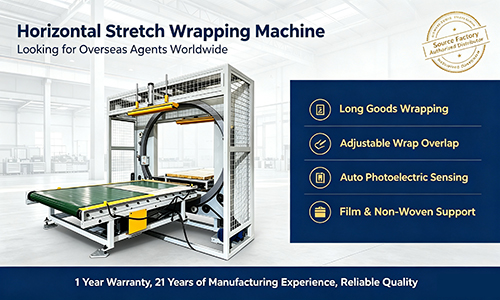
Horizontal Stretch Wrapping Machine SP1000 for Pipes
view more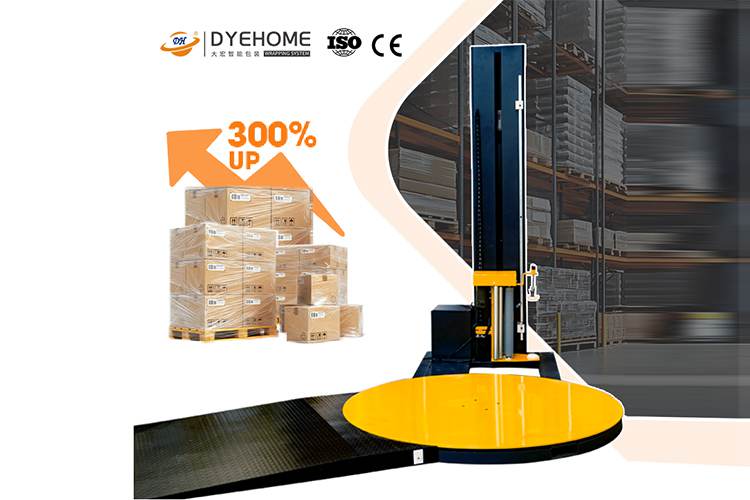
Pallet Stretch Wrapping Machine
view more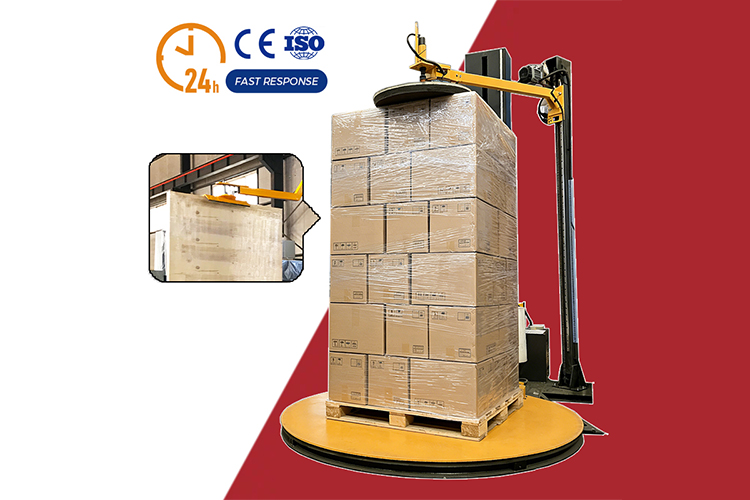
Top Press Pallet Stretch Wrapping Machine
view more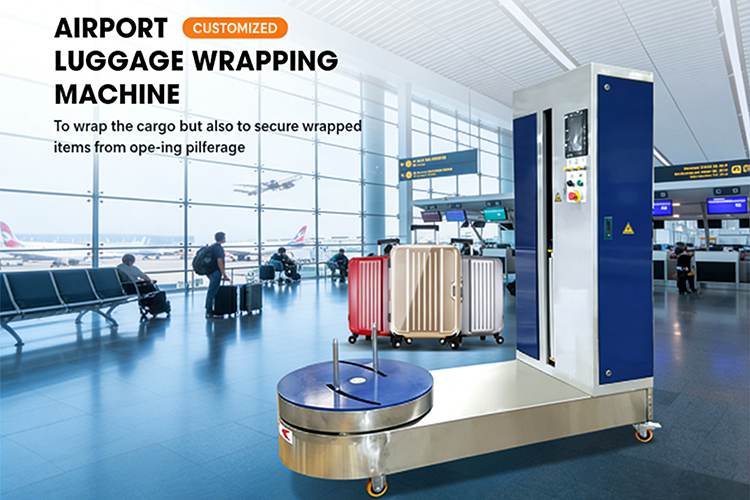
Luggage Wrapping Machine for Airports
view more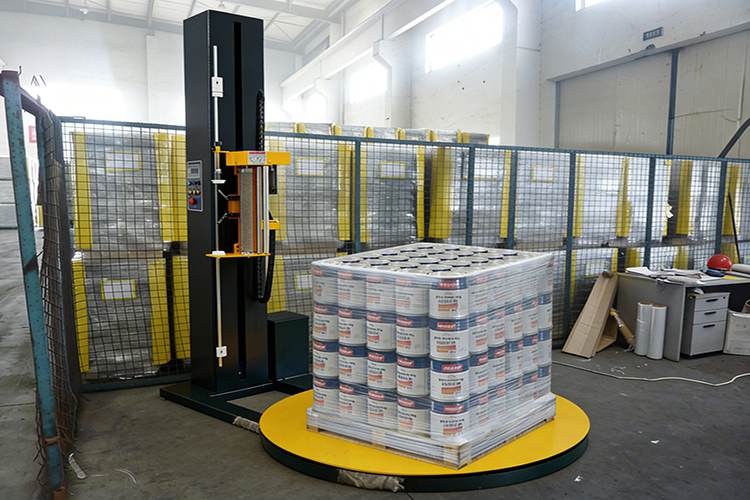
Pallet Stretch Wrapping Machine for Canned Goods
view more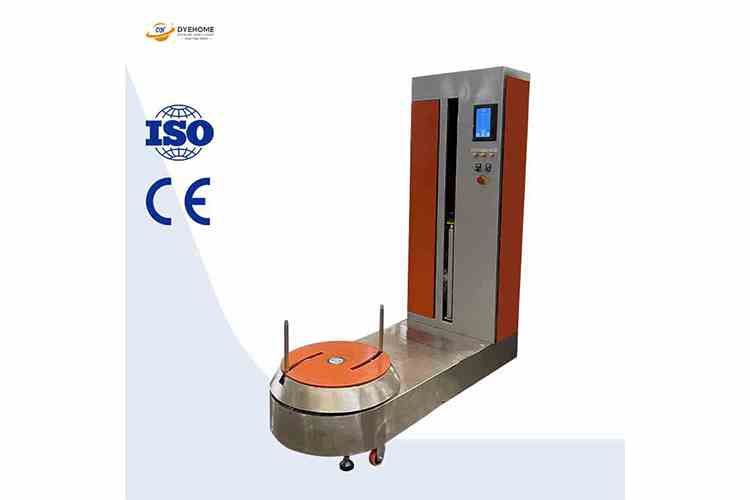
Airport Self-Service Luggage Wrapping Machine
view more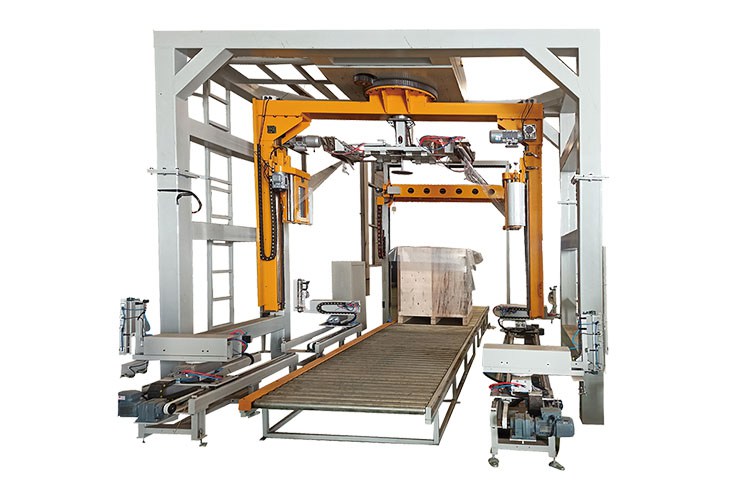
Cantilever wrapping film packaging machine
view more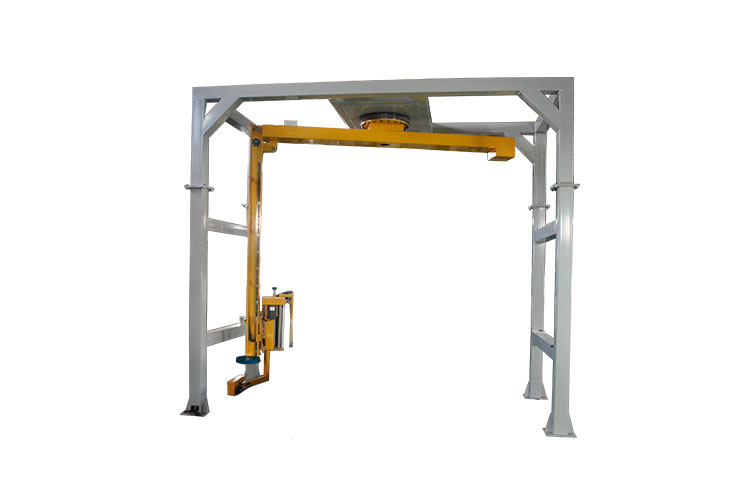
Gantry fully automatic cantilever wrapping machine
view more
 Shandong Dyehome Intelligent Equipment Co.,Ltd
Phone:0086-17362172587
Whatsapp:+8617362172587
Email:machinedyehome@gmail.com
Add:Building 62, 3000 Meili East Road, DmiPark, Wujiapu Street, Huaiyin District, Jinan City,Shandong Province
Jinan Jiasen Packaging Equipment Co., LtdPhone:0086-15665802370
Add:High-end Equipment Manufacturing Industrial Park, East Industrial New Town, Ancheng Town, Pingyin County, Jinan City, Shandong Province
Shandong Golden Pack Intelligent Equipment Co.,LtdPhone:0086-15662690213
Add:High-end Equipment Manufacturing Industrial Park, East Industrial New Town, Ancheng Town, Pingyin County, Jinan City, Shandong Province
YoursIndustry
OurSolutions
OurServices
OurInformation