

How to Improve Baggage Protection Efficiency Before Check-In? Airport Luggage Wrapping Machine Optimizes On-Site Service Workflow
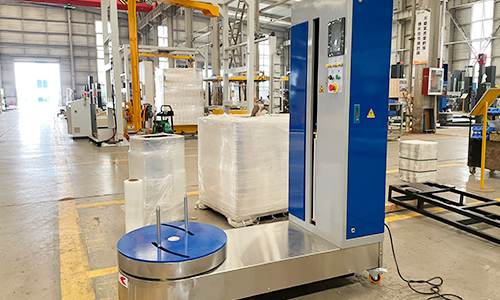
Enhancing Pre-Check-In Baggage Protection Efficiency
At airports and major transport hubs, passengers often require additional luggage protection before check-in. During peak travel seasons, concentrated baggage flow can cause queues if wrapping efficiency is insufficient.
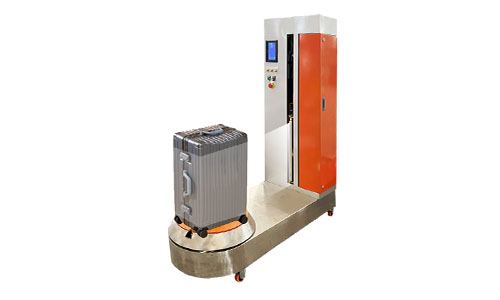
The airport luggage wrapping machine completes automatic rotation and wrapping through preset programs. Typically, 3–5 layers of film are applied per luggage piece, ensuring stable and predictable processing time.
Handling Peak Hours More Efficiently
During holidays or high-traffic periods, manual wrapping methods may struggle to keep up. The automated turntable system ensures consistent operating rhythm, helping reduce waiting times and improve service efficiency.
Easy Handling of Small and Irregular Luggage
Besides standard suitcases, passengers may carry cartons, backpacks, or irregular items. Manual wrapping may result in uneven tension or unstable fixation.
Compact luggage wrapping machines use a central turntable design. Operators adjust the support pole according to luggage size, and the system automatically forms six-sided wrapping coverage, making baggage more secure during handling.
Space Constraints? Compact Structure for Flexible Layout
Luggage wrapping areas are often located near entrances or departure halls where space is limited. Compact models occupy minimal floor area and can be flexibly positioned in high-traffic zones.
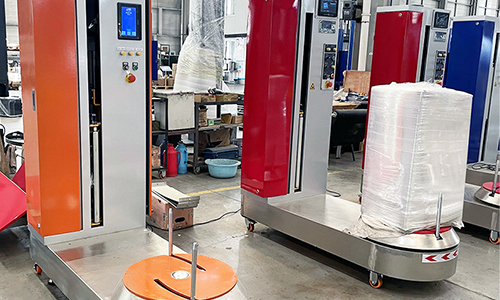
The equipment is also mobile, suitable for temporary or permanent service stations.
Operational Cost and Maintenance Considerations
The machine operates on standard power supply with controlled energy consumption. Basic staff training is sufficient for operation. Optional features such as weighing systems, display screens, or cameras can be added to meet different operational needs.
Practical Value for Transport Hub Operators
The airport luggage wrapping machine is not merely a packaging device but a service enhancement tool. Standardized wrapping improves passenger confidence in baggage safety while supporting orderly site management.
As passenger flow continues to grow, integrating automated luggage wrapping equipment contributes to improved operational efficiency and overall service image at transportation hubs.
-
 Shandong Dyehome Intelligent Equipment Co.,Ltd
Phone:0086-17362172587
Whatsapp:+8617362172587
Email:machinedyehome@gmail.com
Add:Building 62, 3000 Meili East Road, DmiPark, Wujiapu Street, Huaiyin District, Jinan City,Shandong Province
Jinan Jiasen Packaging Equipment Co., LtdPhone:0086-15665802370
Add:High-end Equipment Manufacturing Industrial Park, East Industrial New Town, Ancheng Town, Pingyin County, Jinan City, Shandong Province
Shandong Golden Pack Intelligent Equipment Co.,LtdPhone:0086-15662690213
Add:High-end Equipment Manufacturing Industrial Park, East Industrial New Town, Ancheng Town, Pingyin County, Jinan City, Shandong Province
-
YoursIndustry
-
OurSolutions
-
OurServices
-
OurInformation