

Many Pallet Loads Still Become Loose After Wrapping — More Factories Are Turning to Pre-Stretch Rotary Stretch Wrapping Machines
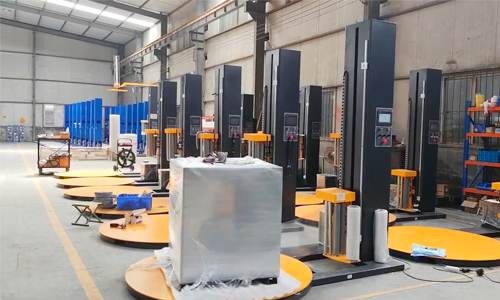
Why Do Many Loads Still Shift During Transportation Even After Multiple Film Layers?
Today, many logistics, beverage, and manufacturing companies face a common issue: cargo appears secure after wrapping in the factory, but during forklift transportation or long-distance shipping, pallets still become loose, tilted, or partially collapsed. High-stacked pallets are particularly vulnerable because changes in center of gravity during transport can easily cause instability.
Many companies previously believed the problem was caused by insufficient film layers, so they simply increased wrapping turns. However, long-term operation has shown that the real issue is not how many layers are applied, but whether wrapping tension remains stable throughout the process. If film tension fluctuates, even multiple film layers cannot prevent cargo from loosening during transportation.
This is especially common with cartons, bagged products, and bottled goods, where layers naturally slide against each other. Once wrapping tension becomes insufficient, middle layers begin shifting first, eventually causing the entire pallet to lean.
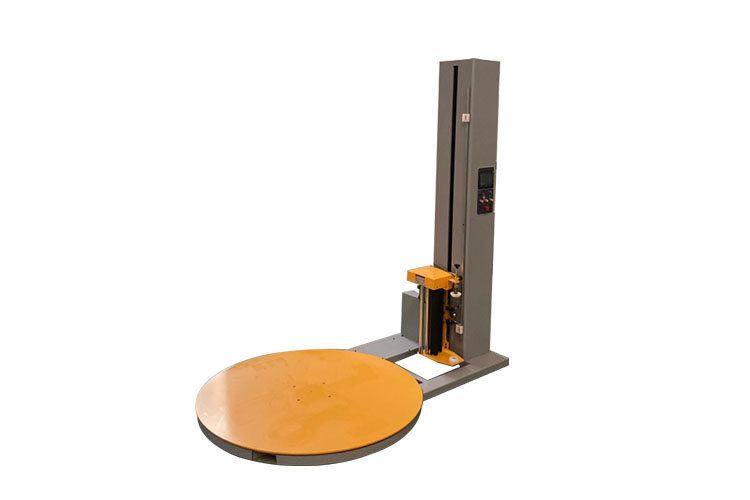
As a result, more factories are now adopting pallet pre-stretch rotary wrapping machines to improve overall packaging stability through pre-stretch film systems and consistent tension control.
Why Are Pre-Stretch Systems Becoming Increasingly Important?
Traditional wrapping equipment often relies on mechanical resistance to stretch film, resulting in unstable stretch ratios during packaging. This not only increases film consumption but also causes uneven holding force. Particularly with tall pallet loads, the bottom may become overly tight while the upper section remains loose.
The biggest advantage of a pre-stretch system is that the film is stretched before being applied to the cargo, allowing more stable and uniform wrapping tension. For pallet packaging, the key factor is not film thickness, but overall load containment.
After switching to pre-stretch rotary wrapping machines, many factories notice significant improvements in pallet stability. In forklift-intensive and long-distance transportation environments, cargo shifting, carton deformation, and pallet collapse problems are greatly reduced.
Industries such as beverages, chemicals, and e-commerce warehousing are now paying more attention to how packaging performs after transportation, rather than simply how it looks before shipment.
Why Are High-Stacked Pallets and Heavy Cargo More Suitable for Pre-Stretch Wrapping?
High-stacked pallet loads are becoming increasingly common as factories try to maximize warehouse space utilization. However, the higher the pallet, the greater the risk of instability caused by center-of-gravity movement during transportation.
Products requiring especially high packaging stability include beverage pallets, chemical drums, bagged raw materials, e-commerce cartons, building materials, and export cargo. These products are often heavy and transported over long distances. If wrapping tension is insufficient, middle sections may loosen while upper layers shift during transit.
During export container transportation, cargo experiences repeated loading, unloading, and long-term storage. If the packaging structure lacks stability, packaging deformation or even customer rejection may occur upon delivery.
Therefore, more companies are now using pre-stretch rotary stretch wrapping machines to achieve more uniform load containment and reduce transportation damage and rework costs.
Why Are More Automated Factories Upgrading Wrapping Equipment?
In the past, many companies viewed stretch wrapping as merely an auxiliary packaging process. However, with the rapid growth of automated logistics and continuous shipping operations, packaging equipment now directly impacts overall shipment efficiency.
Large warehouses and automated production lines demand increasingly higher packaging continuity. Unstable wrapping equipment can easily create conveyor line congestion and disrupt shipping schedules.
As a result, many factories now prioritize integrating pre-stretch rotary wrapping machines with conveyor systems during automation planning. Compared with traditional manual-assisted packaging, automated wrapping equipment provides greater consistency and is better suited for high-volume continuous shipment environments.
For modern factories, the key concern is no longer whether products are wrapped, but whether cargo can remain stable and intact after transportation.
products
-
Pallet Stretch Wrapping Machine
view more -
Top Press Pallet Stretch Wrapping Machine
view more -
Luggage Wrapping Machine for Airports
view more -
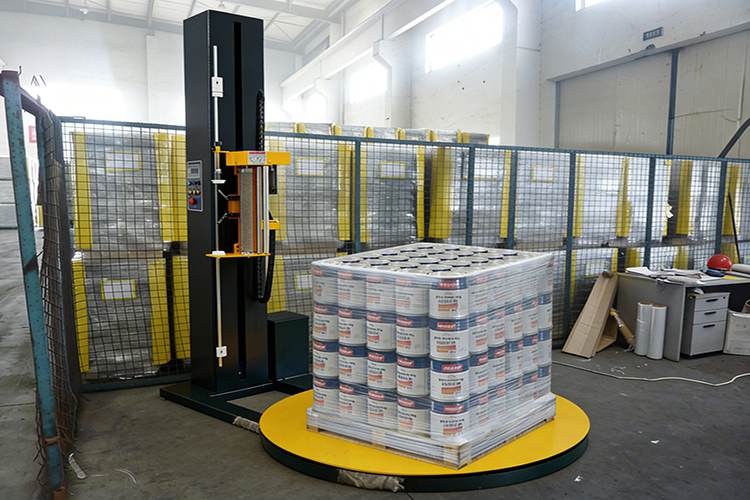
Pallet Stretch Wrapping Machine for Canned Goods
view more -
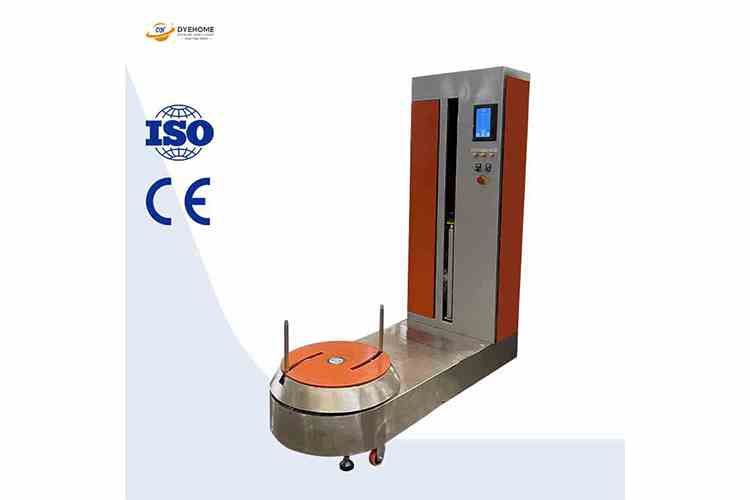
Airport Self-Service Luggage Wrapping Machine
view more -
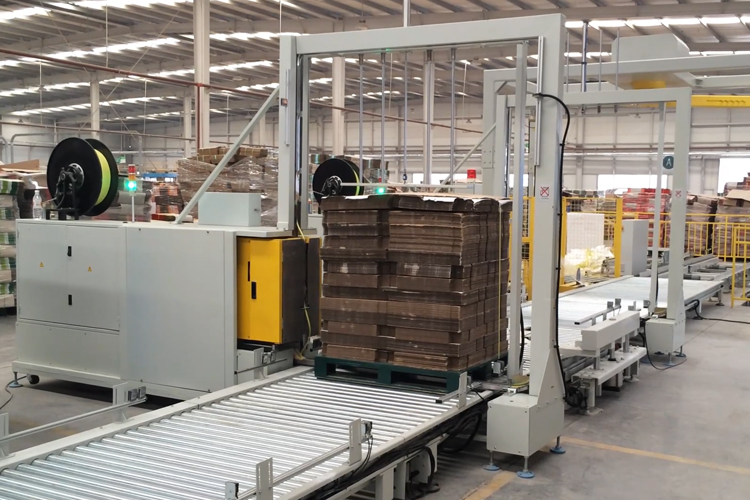
Automated film wrapping and packaging equipment
view more -
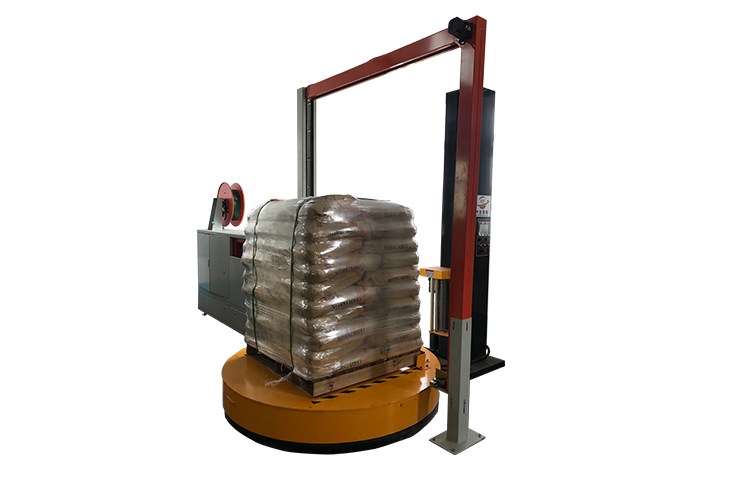
Sword-piercing baler and wrapping machine
view more -
Pallet packaging equipment
view more
-
 Shandong Dyehome Intelligent Equipment Co.,Ltd
Phone:0086-17362172587
Whatsapp:+8617362172587
Email:machinedyehome@gmail.com
Add:Building 62, 3000 Meili East Road, DmiPark, Wujiapu Street, Huaiyin District, Jinan City,Shandong Province
Jinan Jiasen Packaging Equipment Co., LtdPhone:0086-15665802370
Add:High-end Equipment Manufacturing Industrial Park, East Industrial New Town, Ancheng Town, Pingyin County, Jinan City, Shandong Province
Shandong Golden Pack Intelligent Equipment Co.,LtdPhone:0086-15662690213
Add:High-end Equipment Manufacturing Industrial Park, East Industrial New Town, Ancheng Town, Pingyin County, Jinan City, Shandong Province
-
YoursIndustry
-
OurSolutions
-
OurServices
-
OurInformation