

Online Pallet Wrapping Machine:Complete Guide to Automated Inline Systems(2026)
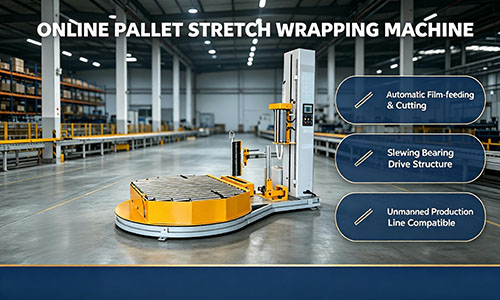
An online pallet wrapping machine is a fully conveyor-integrated stretch wrapper that automatically wraps palletized loads as part of a production or distribution line—with zero forklift handling and zero dedicated operators.Unlike standalone wrappers that require a worker to load and unload each pallet,online(also called"inline")systems receive pallets from upstream conveyors,wrap them using pre-programmed cycles,and discharge them to the next station—all synchronized with your line speed.
For facilities wrapping 80+pallets per day or running multiple shifts,an online pallet wrapping machine can cut packaging labor costs by 60–80%and improve throughput consistency by 15–25%(McKinsey,2025).But with system investments ranging from$30,000 to over$100,000,choosing the right configuration is critical.
This guide covers everything you need to know:how online wrappers work,when to upgrade,the two main types,key specifications,industry applications,and a step-by-step selection framework.
How Does an Online Pallet Wrapping Machine Work?
An inline stretch wrapping system follows a fully automated 5-step process:
Infeed:A finished pallet arrives via powered conveyor from the palletizer or upstream production line
Detection:Photoelectric sensors detect the pallet's presence and measure its height
Wrapping:The machine executes a pre-programmed wrapping cycle—either a rotary arm orbits the stationary pallet,or a conveyor-integrated turntable rotates the load
Film Cut&Clamp:The film is automatically cut,sealed,and clamped—no manual intervention
Outfeed:The wrapped pallet exits to the next station(labeling,stretch hood,warehouse,or truck loading)
The entire process is controlled by a PLC(Programmable Logic Controller)with an HMI touchscreen interface.Most modern systems support multiple wrapping recipes,so operators can switch between different product SKUs with a single button press.
Key difference from standalone wrappers:There is no forklift involved in the wrapping process.Pallets flow in and out automatically,which eliminates the bottleneck of operator-dependent loading and unloading.
When Should You Upgrade to an Online Pallet Wrapping Machine?
Not every facility needs an inline wrapper.Here are the 7 clearest signals that it's time to upgrade:
1.You're Wrapping 80+Pallets Per Day
Standalone wrappers max out at about 25–40 pallets/hour with an operator.At 80+daily pallets across one or two shifts,the labor cost of dedicated wrapper operators exceeds$48,000/year—enough to fund an inline system's lease in under 2 years.
2.Your Standalone Wrapper Is a Bottleneck
If pallets are consistently queuing up before the wrapper,your machine can't keep pace with production.Inline wrappers eliminate this queue by synchronizing wrapping with conveyor speed.
3.You're Installing an Automated Palletizer
If you're investing in robotic or automated palletizing,it defeats the purpose to have a worker manually transporting pallets to a standalone wrapper.End-of-line automation should be truly end-to-end.
4.You're Running 2+Shifts
Each shift with a dedicated wrapper operator adds$24,000–$48,000/year in labor.An inline wrapper runs unattended across all shifts.
5.Labor Turnover Is High
Manual wrapping is repetitive and physically demanding.High turnover means constant retraining costs and inconsistent wrap quality.
6.Wrap Quality Is Inconsistent
Operator-dependent wrapping leads to variable tension,missed layers,and damaged shipments.Inline systems deliver identical wrap quality every cycle.
7.Safety Incidents Are a Concern
Forklift traffic around standalone wrappers creates injury risks—back strains,crushed feet,and collisions.Inline systems eliminate manual pallet handling at the wrapping station entirely.
Rule of Thumb:If you're wrapping 50+pallets/day and growing,start evaluating inline systems.If you're at 150+pallets/day,an inline wrapper should already be in your operation.
Types of Online Pallet Wrapping Machines
There are two primary configurations for inline stretch wrapping:
Type 1:Rotary Arm Inline Wrapper
The pallet remains stationary on the conveyor while a rotating arm orbits around it,applying stretch film vertically.
|
Parameter |
Typical Range |
|
Throughput |
40–60+pallets/hour |
|
Max load weight |
2,000–5,000 kg |
|
Max wrap height |
2,000–3,000 mm |
|
Pre-stretch ratio |
200%–300% |
Best for:
Heavy,unstable,or top-heavy loads(the pallet never moves)
High-speed production lines(beverage,food&beverage)
Facilities prioritizing load stability
Advantages:
No centrifugal force on the load—ideal for fragile or tall pallets
Faster cycle times than inline turntable systems
Compatible with conveyor-integrated automation
Type 2:Turntable Inline Wrapper
Conveyor rollers are built into a rotating turntable.The pallet stops on the turntable,which spins to wrap the load.
|
Parameter |
Typical Range |
|
Throughput |
25–40 pallets/hour |
|
Max load weight |
1,500–2,500 kg |
|
Max wrap height |
2,000–2,800 mm |
|
Pre-stretch ratio |
200%–250% |
Best for:
Stable,uniformly stacked loads
Budget-conscious installations
Compact facility layouts
Advantages:
Lower cost than rotary arm inline systems
Smaller footprint
Simpler mechanical design
Quick Comparison
Key Specifications to Evaluate
When comparing online pallet wrapping machines,focus on these 6 critical parameters:
1.Throughput(Pallets Per Hour)
Match machine speed to your peak production rate—not average.If your line produces 45 pallets/hour at peak,you need a rotary arm inline system(40–60/hr),not a turntable inline(25–40/hr).
2.Pre-Stretch Ratio
A 200%pre-stretch means 1 meter of film stretches to 3 meters—reducing film consumption by approximately 30%compared to no pre-stretch.Higher-end systems offer 250–300%pre-stretch,saving even more.Over a year wrapping 10,000+pallets,this translates to$8,000–$20,000 in film savings alone.
3.Conveyor Compatibility
Ensure the wrapper's conveyor matches your existing line in:
Type:Roller,chain,or belt
Height:Must align with upstream/downstream conveyors
Speed:Must synchronize with your line's maximum throughput
Control signals:PLC communication protocol compatibility
4.Max Wrap Height
Standard machines handle up to 2,000–2,200 mm.If your pallets stack taller(beverage,building materials),specify a taller mast—typically available up to 3,000 mm.
5.Safety Features
Since inline wrappers run unattended,safety is non-negotiable:
CE marking(required for EU markets)
Safety fencing or light curtains
Emergency stop at multiple locations
Photoelectric safety sensors
Proper guarding around rotating components
6.Integration Capability
The wrapper must communicate with your existing systems:
PLC compatibility(Siemens,Allen-Bradley,Mitsubishi)
WMS(Warehouse Management System)data output
OEE tracking and production data logging
Optional IoT connectivity for remote monitoring
Industry Applications:Where Online Wrappers Deliver the Most Value
Food&Beverage
High-volume production lines running 200–500+pallets/day.Beverage pallets are heavy(often 1,000–1,500 kg)and require stable,consistent wrapping.Rotary arm inline systems dominate this sector,with some beverage plants achieving wrapping speeds as fast as 30 seconds per pallet using ring-type inline wrappers.
Chemical Industry
Chemical pallets often include drums,IBC containers,and bags that require secure,multi-layer wrapping with specific tension profiles.Inline systems ensure consistent containment force—critical for hazardous materials compliance during transport.
3C Electronics&Automotive Parts
These industries demand clean,precise wrapping with controlled tension to avoid damaging sensitive components.PLC-controlled recipe management allows different products to use different wrapping programs—all on the same line.
Building Materials
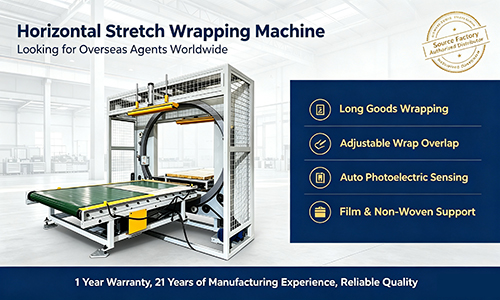
Long,heavy,or irregular loads(timber,steel pipes,insulation boards)benefit from inline wrappers integrated with horizontal wrapping systems.The combination provides full coverage protection in a continuous flow.
Logistics&3PL Warehouses
Third-party logistics providers handling diverse product mixes benefit from inline wrappers with quick recipe changeover—switching between different pallet types in seconds rather than minutes.
How to Choose the Right Online Pallet Wrapping Machine:6-Step Framework
Step 1:Calculate Your Daily&Peak Throughput
Daily pallets÷operating hours=required pallets/hour
Add 20%buffer for peak periods
This determines your machine type(rotary arm vs turntable inline)
Step 2:Map Your Load Profile
Document pallet dimensions(L×W×H),weight range,and load stability
Heavy or unstable loads→rotary arm inline
Standard stable loads→turntable inline is cost-effective
Step 3:Audit Your Conveyor Line
Measure conveyor type,width,height,and speed
Photograph connection points for the wrapping station
Share line drawings with the manufacturer before ordering
Step 4:Define Integration Requirements
List all systems the wrapper must communicate with(PLC brand,WMS,MES)
Specify data output requirements(OEE tracking,production logging)
Determine if IoT/remote monitoring is needed
Step 5:Calculate Total Cost of Ownership(3-Year)
Include these cost components:
Machine purchase price+installation+commissioning
Film consumption(higher pre-stretch=lower ongoing cost)
Labor savings(eliminated wrapper operators)
Maintenance and spare parts
Energy consumption
Expected downtime costs
Step 6:Evaluate Supplier Capabilities
Installation support(on-site or remote)
Spare parts availability and delivery time
Training for operators and maintenance teams
References from similar industry installations
Common Mistakes to Avoid
FAQ
Q:How many pallets per hour can an online pallet wrapping machine handle?
A:Throughput depends on the type.Rotary arm inline wrappers handle 40–60+pallets per hour,while turntable inline systems handle 25–40 pallets per hour.Ring-type inline wrappers(used primarily in beverage)can reach up to 120 pallets per hour.Always size your machine based on peak throughput,not average daily volume.
Q:What is the difference between an online and offline pallet wrapping machine?
A:An online(inline)pallet wrapper is fully integrated into a conveyor line—pallets flow in and out automatically without forklift handling.An offline(standalone)wrapper requires a forklift operator to load and unload each pallet.Online systems are faster,require zero dedicated operators,and are suited for 80+pallets/day.Offline systems are lower cost and suited for 20–80 pallets/day.
products
Horizontal Stretch Wrapping Machine SP1000 for Pipes
view more
Pallet Stretch Wrapping Machine
view more
Top Press Pallet Stretch Wrapping Machine
view more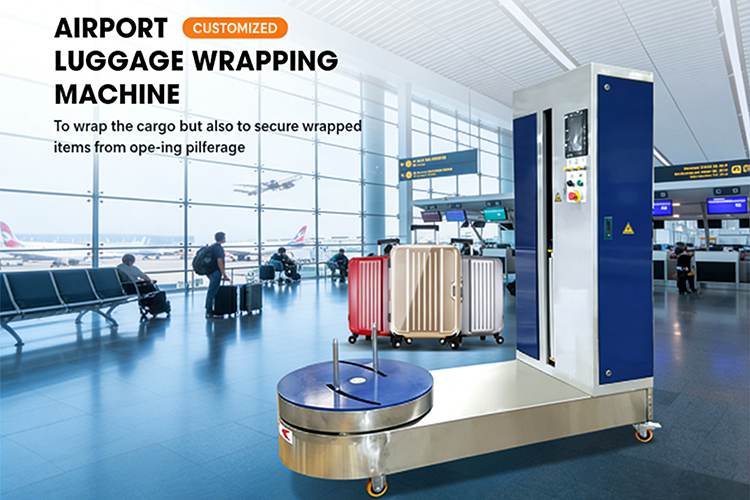
Luggage Wrapping Machine for Airports
view more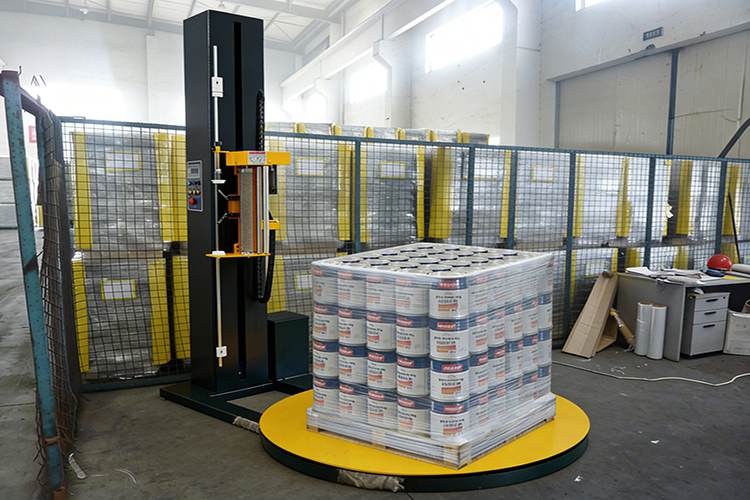
Pallet Stretch Wrapping Machine for Canned Goods
view more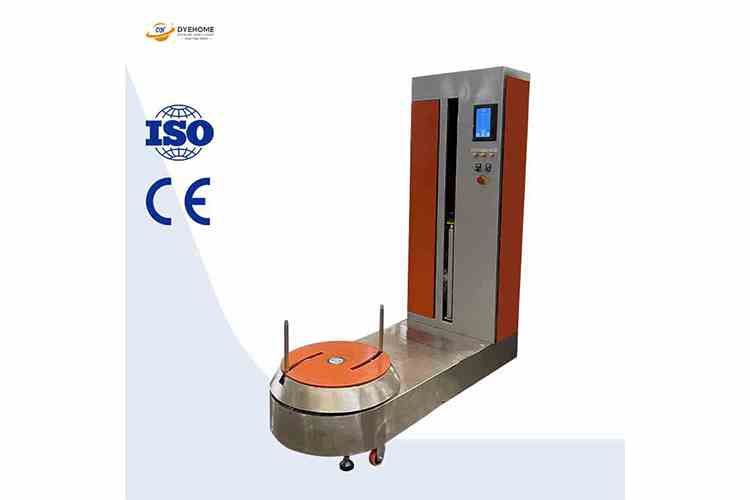
Airport Self-Service Luggage Wrapping Machine
view more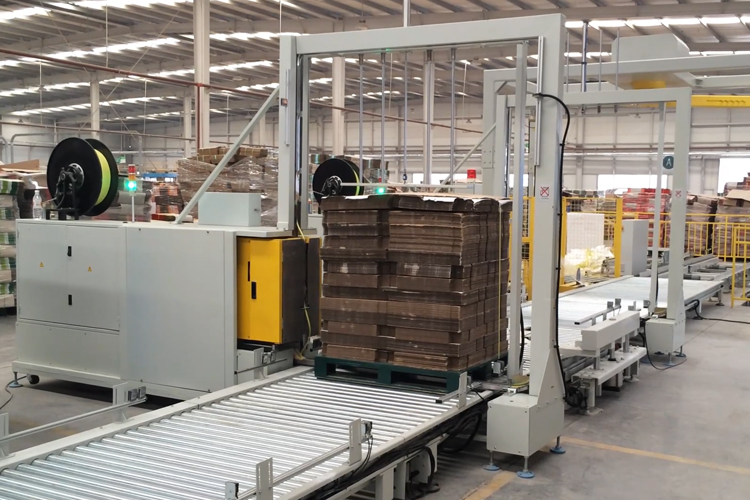
Automated film wrapping and packaging equipment
view more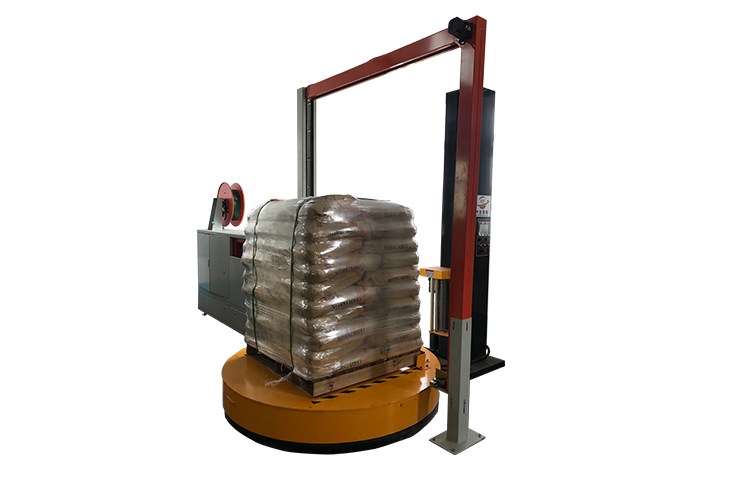
Sword-piercing baler and wrapping machine
view more
 Shandong Dyehome Intelligent Equipment Co.,Ltd
Phone:0086-17362172587
Whatsapp:+8617362172587
Email:machinedyehome@gmail.com
Add:Building 62, 3000 Meili East Road, DmiPark, Wujiapu Street, Huaiyin District, Jinan City,Shandong Province
Jinan Jiasen Packaging Equipment Co., LtdPhone:0086-15665802370
Add:High-end Equipment Manufacturing Industrial Park, East Industrial New Town, Ancheng Town, Pingyin County, Jinan City, Shandong Province
Shandong Golden Pack Intelligent Equipment Co.,LtdPhone:0086-15662690213
Add:High-end Equipment Manufacturing Industrial Park, East Industrial New Town, Ancheng Town, Pingyin County, Jinan City, Shandong Province
YoursIndustry
OurSolutions
OurServices
OurInformation