

Online wrapping machine vs Offline Stretch Wrapping Machine:Which Fits Your Line?(2026)
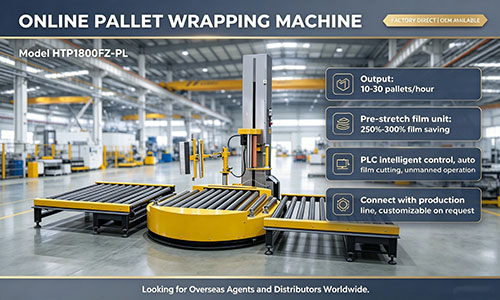
Quick definition:An online stretch wrapping machine is a fully automatic wrapper integrated directly into a conveyorized production or packaging line—pallets flow in,get wrapped,and flow out without any manual handling.An offline(standalone)stretch wrapping machine is a self-contained unit where pallets are delivered and removed by forklift or pallet jack,and an operator typically starts each cycle.
If you are planning an end-of-line packaging upgrade in 2026,this single decision—online vs offline—will shape your layout,labor model,budget,and expansion options for the next 10–15 years.The global end-of-line packaging equipment market is projected to reach USD 7.2 billion in 2026 and grow at roughly 4.9%CAGR through 2033(Persistence Market Research),driven largely by labor shortages and automation mandates.In other words,more plants are asking exactly this question right now.
This guide compares the two configurations across 7 decision dimensions,gives you a clear selection framework,and shows real-world scenarios for each—so you can specify the right machine the first time.
1.How Each Configuration Actually Works
Online Stretch Wrapping Systems
An online system is one station inside a continuous flow:
Pallet arrives via powered roller or chain conveyor from upstream equipment(palletizer,case sealer,production line)
Photoelectric sensors detect the load and trigger the wrapping cycle automatically
A rotary arm wraps the stationary pallet(or a conveyorized turntable/ring rotates it)
The machine clamps,cuts,and seals the film tail automatically
The wrapped pallet conveys out to downstream staging,warehousing,or truck loading
The entire sequence is PLC-controlled and synchronized with line speed.No operator touches the load.
Offline(Standalone)Stretch Wrapping Machines
An offline machine operates as an island:
A forklift or pallet jack places the pallet onto the turntable(or beside a rotary arm unit)
An operator attaches the film to the load and presses start
The machine wraps according to a stored program
The operator(or an auto-cut device)cuts the film;the forklift removes the pallet
Offline machines range from semi-automatic(operator attaches and cuts film)to fully automatic standalone(auto clamp,cut,and wipe-down—still loaded by forklift).
2.Throughput&Labor:Where the Real Difference Lives
The headline numbers tell the story:an online rotary arm system wrapping 60 pallets per hour replaces what would take 3–4 semi-automatic machines plus 3 operators to match.
The labor math that drives most decisions
A semi-automatic offline wrapper requires roughly 2–3 minutes of operator time per pallet(loading,attaching film,cycling,cutting,unloading)
At 20 pallets/hour target,one operator is fully occupied on one machine
An online system at the same volume needs zero dedicated operators—the line supervisor monitors it alongside other stations
At a fully loaded labor cost of$20–$30/hour in North America or Europe,eliminating two operator shifts saves$80,000–$120,000 per year—which is why plants above 30–40 pallets/hour almost always justify inline automation within 2–3 years.
3.Total Cost of Ownership:Beyond the Sticker Price
The upfront gap looks dramatic—$10,000 vs$150,000—but the 10-year picture is much closer:
Offline route(3 semi-auto machines,2 shifts)
Equipment:~$30,000
10-year labor:~$800,000+
Film waste(no powered pre-stretch optimization on entry models):15–30%higher consumption
10-year TCO:roughly$850,000–$950,000
Online route(1 inline rotary arm system)
Equipment+conveyors+integration:~$150,000
10-year labor:~$50,000(supervision,maintenance)
Film savings from 250–300%powered pre-stretch:30–50%less film per pallet
10-year TCO:roughly$250,000–$350,000
The crossover point most industry consultants use:sustained volume above 25–30 pallets per day across 2+shifts makes online the cheaper option over the machine's life.
4.Real-World Scenarios:Which Configuration Wins?
Scenario A:Beverage bottling plant,80 pallets/hour,single line
Winner:Online rotary arm system.Volume alone rules out offline.An inline ring or rotary arm wrapper synchronized with the palletizer is the only configuration that keeps pace without a fleet of forklifts.
Scenario B:3PL distribution center,5 docks,mixed SKUs,15 pallets/hour each
Winner:Offline.Each dock gets its own semi-automatic or standalone automatic turntable wrapper.Consolidating to one inline system would create cross-traffic bottlenecks.See our pallet wrapper guide for 3PL operations.
Scenario C:Chemical manufacturer,40 pallets/hour,2 shifts,labor shortage
Winner:Online.The labor math dominates:two shifts of dedicated wrapping operators cost more than the inline system's financing payment.Consistent,documented wrap force also supports hazardous goods compliance audits.
Scenario D:Building materials producer,long/irregular loads,12 pallets/hour
Winner:Offline(or orbital).Highly irregular loads need operator judgment per cycle.A horizontal/orbital wrapper handles the non-palletized items that inline pallet systems can't.
Scenario E:Electronics factory planning full automation by 2028
Winner:Hybrid path.Start with a conveyor-ready standalone automatic now;integrate into the inline system during the planned Phase 2 expansion.This staged approach spreads capex while protecting the automation roadmap.
5.Decision Framework:5 Questions to Settle Online vs Offline
Ask these in order—your answers will usually make the choice obvious:
What is your sustained peak throughput?
Under 20 pallets/hour→offline
20–40 pallets/hour→either;go to question 2
Over 40 pallets/hour→online
Do pallets arrive from a single upstream line or multiple sources?
Single line→favors online
Multiple docks/lines→favors offline
How uniform are your loads?
±10%size/weight variance→online handles it via sensors and recipes
Highly variable→offline with operator judgment
What does labor cost and availability look like over 5 years?
Rising wages or hiring difficulty→online pays back faster
Stable,low-cost labor→offline remains viable
Is the facility owned,and is the line layout fixed for 10+years?
Yes→online investment is safe
Leased or layout likely to change→offline preserves flexibility
Frequently Asked Questions
Q:What is the main difference between an online and offline stretch wrapping machine?
A:An online machine is integrated into a conveyorized production line—pallets enter,wrap,and exit automatically with PLC synchronization.An offline(standalone)machine is loaded and unloaded by forklift,with an operator starting each cycle.Online systems deliver 30–100+pallets/hour with minimal labor;offline systems handle 10–40 pallets/hour at much lower upfront cost.
Q:Can I convert an offline stretch wrapper to an online system later?
A:Yes,but only if you buy a conveyor-ready model from the start.These machines include mounting interfaces for infeed/outfeed conveyors and PLCs supporting line communication protocols.Retrofitting a standard semi-automatic machine usually costs 60–80%of a new inline system,so plan the automation roadmap before the first purchase.
Q:At what volume does an inline stretch wrapping system pay for itself?
A:The widely used industry crossover is 25–30 pallets per hour sustained across two or more shifts.At that volume,eliminating 1.5–2 operator positions(worth$80,000–$120,000/year in North America or Europe)plus 30–50%film savings from powered pre-stretch typically pays back the inline premium within 1–2 years.
products
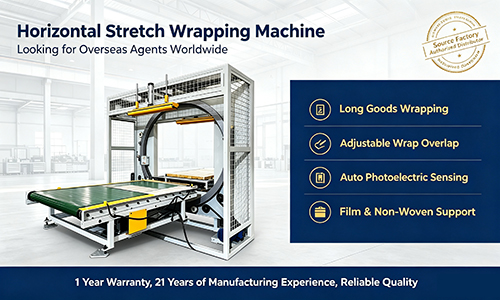
Horizontal Stretch Wrapping Machine SP1000 for Pipes
view more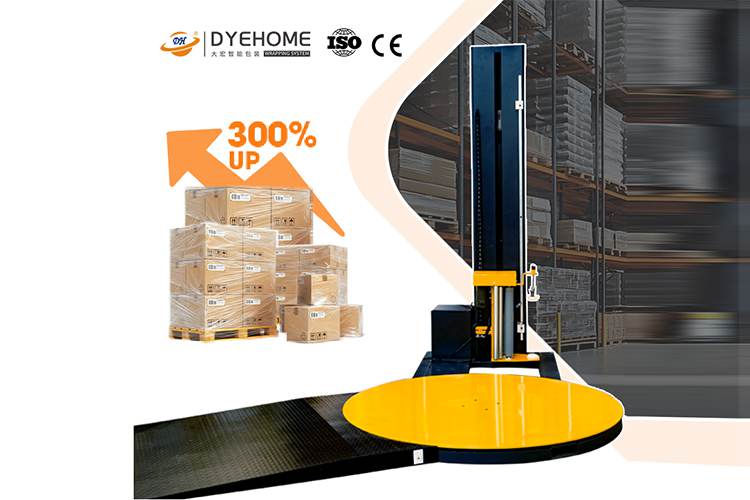
Pallet Stretch Wrapping Machine
view more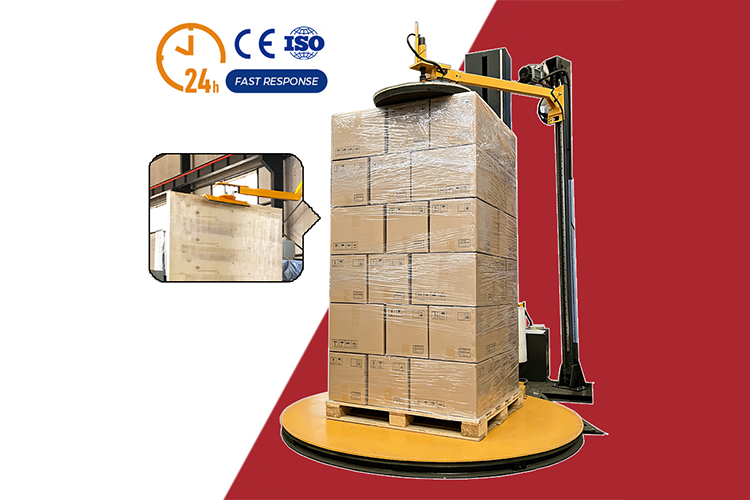
Top Press Pallet Stretch Wrapping Machine
view more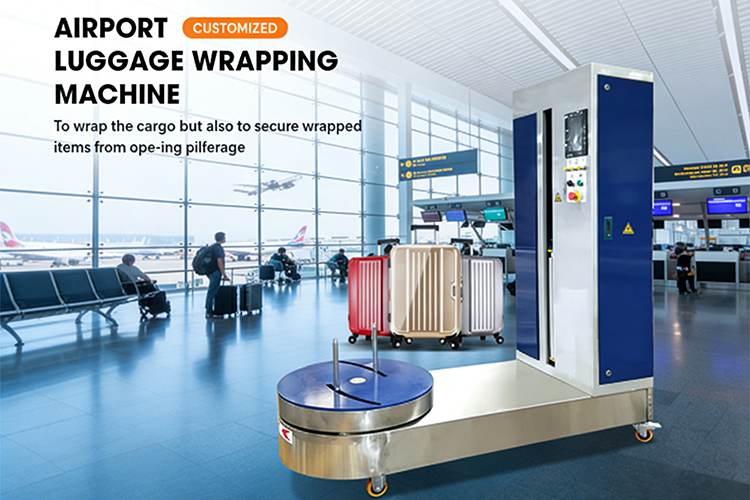
Luggage Wrapping Machine for Airports
view more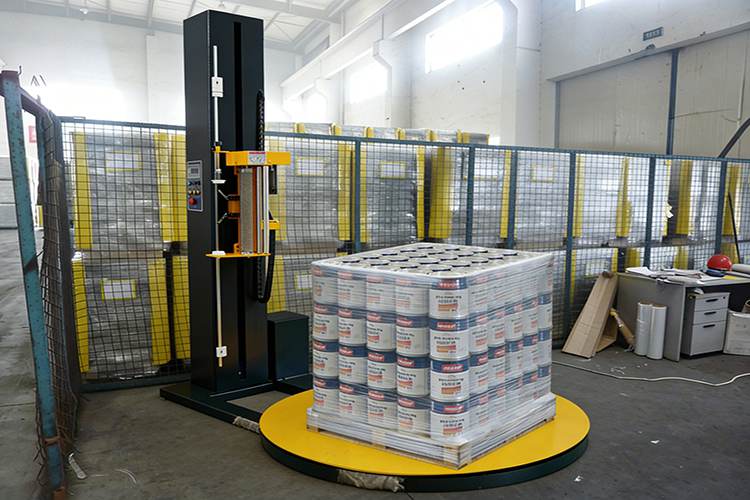
Pallet Stretch Wrapping Machine for Canned Goods
view more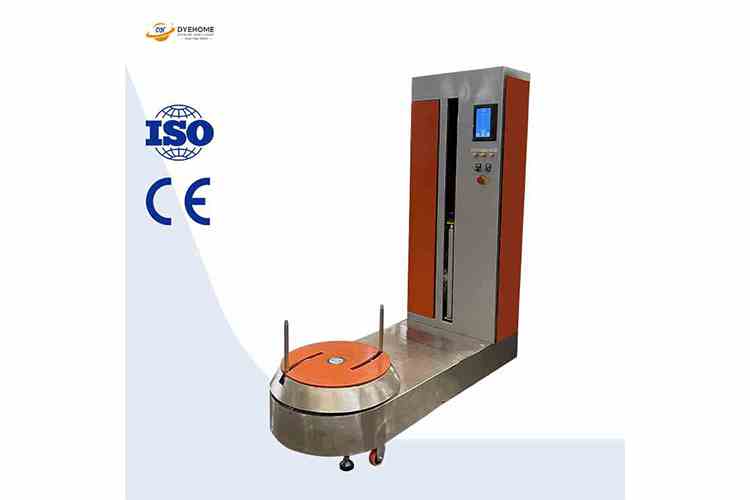
Airport Self-Service Luggage Wrapping Machine
view more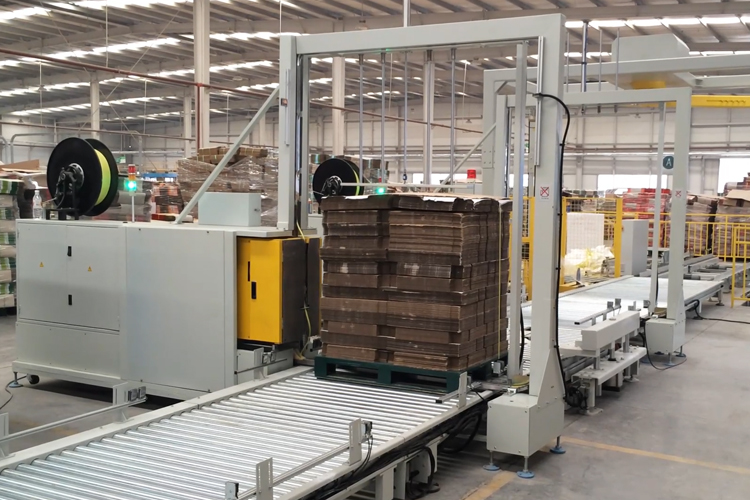
Automated film wrapping and packaging equipment
view more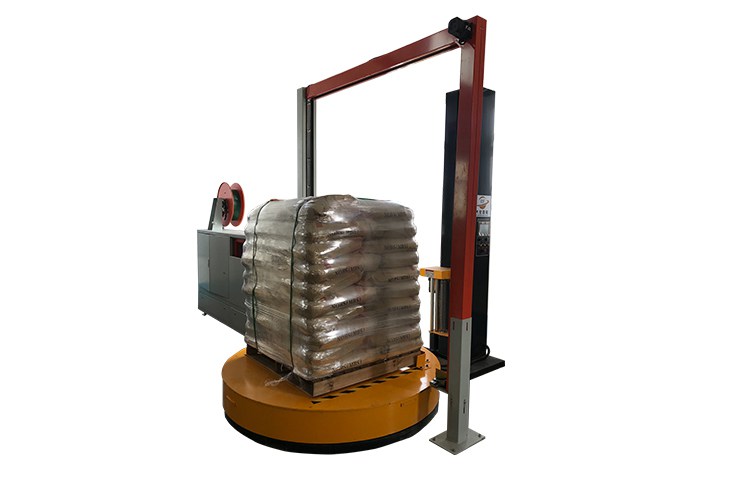
Sword-piercing baler and wrapping machine
view more
 Shandong Dyehome Intelligent Equipment Co.,Ltd
Phone:0086-17362172587
Whatsapp:+8617362172587
Email:machinedyehome@gmail.com
Add:Building 62, 3000 Meili East Road, DmiPark, Wujiapu Street, Huaiyin District, Jinan City,Shandong Province
Jinan Jiasen Packaging Equipment Co., LtdPhone:0086-15665802370
Add:High-end Equipment Manufacturing Industrial Park, East Industrial New Town, Ancheng Town, Pingyin County, Jinan City, Shandong Province
Shandong Golden Pack Intelligent Equipment Co.,LtdPhone:0086-15662690213
Add:High-end Equipment Manufacturing Industrial Park, East Industrial New Town, Ancheng Town, Pingyin County, Jinan City, Shandong Province
YoursIndustry
OurSolutions
OurServices
OurInformation