

Pallet Online Stretch Wrapping Machine Improves Continuous Shipping Efficiency as Demand for Automated Packaging Continues to Grow
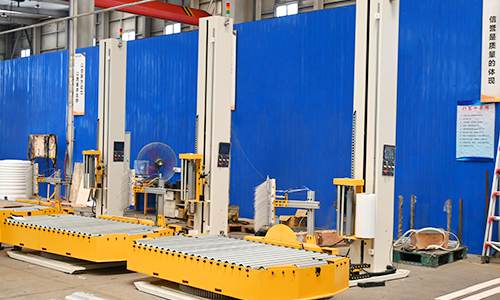
Why Traditional Packaging Methods Are Revealing Their Limitations as Shipping Volumes Increase
As manufacturing capacity continues to expand, many factories are finding that packaging efficiency can no longer keep pace with production output. In industries such as food, beverages, chemicals, and building materials, production lines often operate continuously, while packaging processes still rely on manual labor or semi-automatic equipment, creating bottlenecks between production and shipment.
During peak shipping periods, many companies experience packaging area congestion, frequent forklift movements, and overtime labor for packaging tasks. Although products can be manufactured quickly, insufficient packaging efficiency directly affects shipping performance. As a result, packaging automation has become a key focus for production upgrades.
Why More Companies Are Investing in Online Packaging Systems
For businesses with high shipping volumes, packaging is no longer an isolated operation but an essential part of the overall logistics process. Traditionally, pallets must be transported by forklift from the palletizing area to a separate wrapping station, increasing handling time and creating operational delays.
A pallet online stretch wrapping machine can be directly connected to conveyor systems. After palletizing, products automatically enter the wrapping area, where the machine identifies the load, completes the wrapping process, and transfers it to the next stage. This continuous workflow reduces intermediate handling and improves overall logistics efficiency.
Why Automatic Film Attachment and Cutting Functions Are Gaining Attention
Although many companies have adopted automatic wrapping systems, manual film attachment and cutting are still common in many packaging operations. As labor costs continue to rise, businesses are increasingly looking for fully automated packaging solutions.
The pallet online stretch wrapping machine can be equipped with automatic film attachment, automatic film cutting, and film wiping systems. After wrapping is completed, the machine automatically secures the film tail and prepares for the next pallet without operator intervention. This not only reduces labor requirements but also improves packaging consistency and equipment utilization.
Automated Logistics Is Driving Packaging Equipment Upgrades
With the rapid development of smart factories and automated warehouses, packaging equipment is evolving from standalone automation to fully integrated production-line automation. More manufacturers are integrating palletizing robots, conveyor systems, online wrapping machines, and warehouse management systems to create seamless automated workflows from production to shipment.
Online wrapping machines can be configured with roller conveyors, chain conveyors, or slat conveyors and customized according to product specifications. Packaging capacity typically ranges from 10 to 30 pallets per hour, meeting the continuous shipping requirements of most manufacturing facilities.
Pallet Online Stretch Wrapping Machines Are Becoming Essential Equipment for Automated Factories
As companies place greater emphasis on packaging efficiency, logistics performance, and labor cost control, packaging automation has become an important component of modern factory construction. For industries such as food, beverages, chemicals, paper, building materials, and warehousing logistics, the automation level of packaging operations directly impacts overall productivity.
By combining automatic conveying, stretch wrapping, film attachment and cutting, and continuous packaging operations, pallet online stretch wrapping machines improve both packaging efficiency and transportation protection, making them an increasingly important solution for automated production lines and smart factories.
Frequently Asked Questions About Pallet Online Stretch Wrapping Machines
Q1: What is the difference between an online stretch wrapping machine and a standard stretch wrapper?
An online stretch wrapping machine is designed for automated production lines and can be integrated with conveyor systems and palletizing equipment. It allows products to enter the wrapping area automatically, complete wrapping, and exit the line without manual intervention. Standard stretch wrappers usually require forklifts to transport pallets to the machine and are better suited for smaller packaging volumes.
Q2: Which industries commonly use pallet online stretch wrapping machines?
These machines are widely used in food, beverage, chemical, paper, building materials, new energy, and warehousing logistics industries, especially in facilities with large shipping volumes and a high degree of automation.
Q3: Can an online wrapping machine achieve unmanned packaging?
Yes. Most online wrapping machines can be equipped with automatic film attachment, film cutting, and film wiping systems. When integrated with conveyors and palletizers, they can perform continuous automatic packaging operations with minimal human intervention.
Q4: What is the packaging capacity of an online wrapping machine?
Depending on load dimensions, wrapping requirements, and conveyor cycle times, an online wrapping machine can typically handle 10–30 pallets per hour, making it suitable for high-volume shipping environments.
Q5: Which companies are best suited for online stretch wrapping machines?
Companies with large daily shipping volumes, automated palletizing systems, conveyor lines, or smart factory projects can significantly benefit from online stretch wrapping machines by improving packaging efficiency, reducing labor costs, and increasing logistics throughput.
products
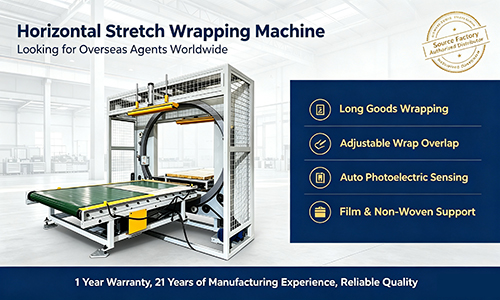
Horizontal Stretch Wrapping Machine SP1000 for Pipes
view more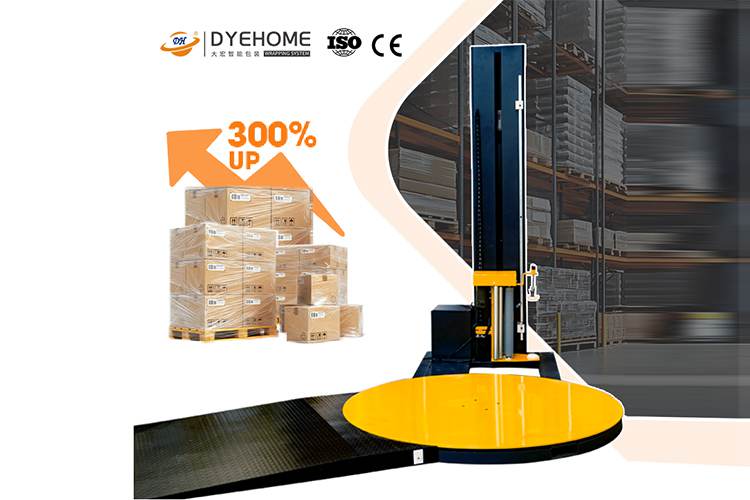
Pallet Stretch Wrapping Machine
view more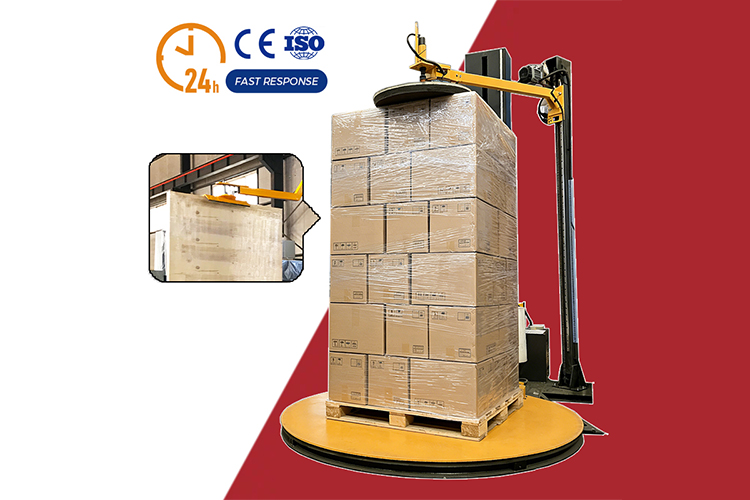
Top Press Pallet Stretch Wrapping Machine
view more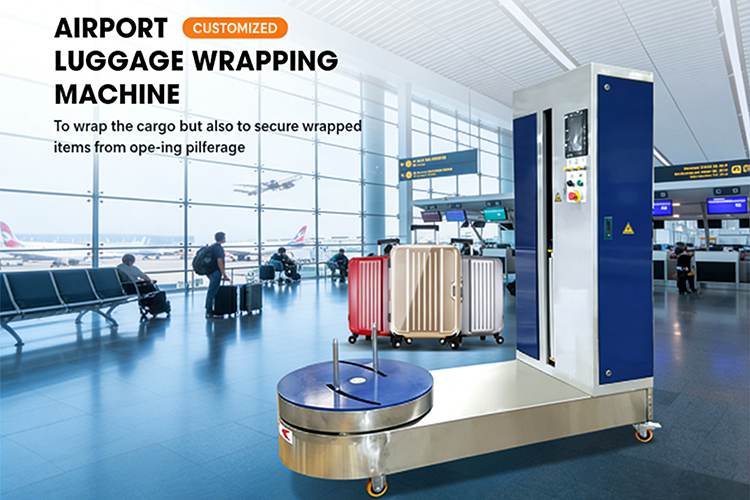
Luggage Wrapping Machine for Airports
view more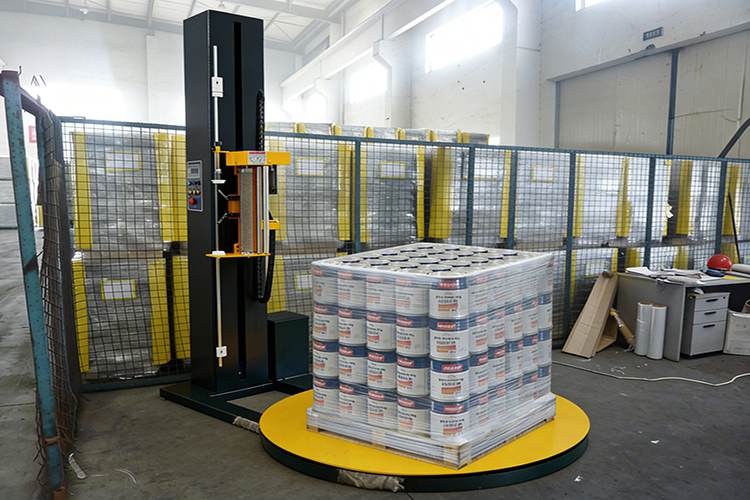
Pallet Stretch Wrapping Machine for Canned Goods
view more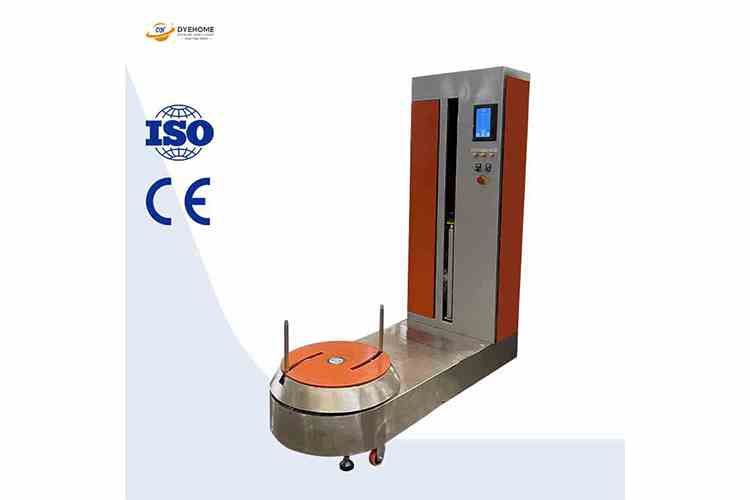
Airport Self-Service Luggage Wrapping Machine
view more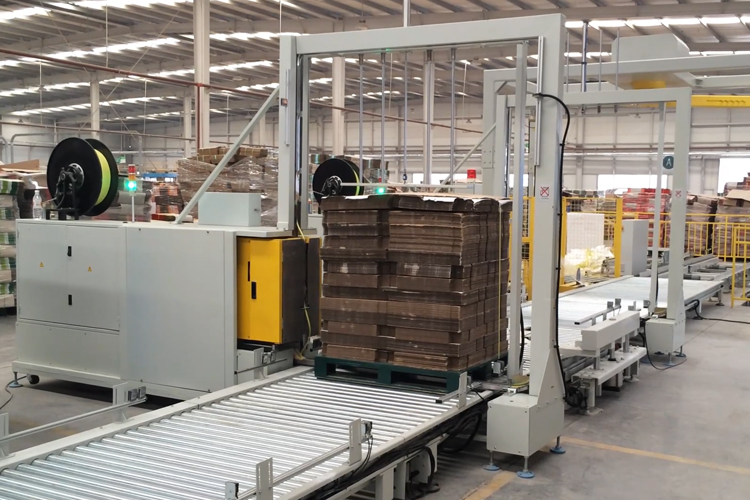
Automated film wrapping and packaging equipment
view more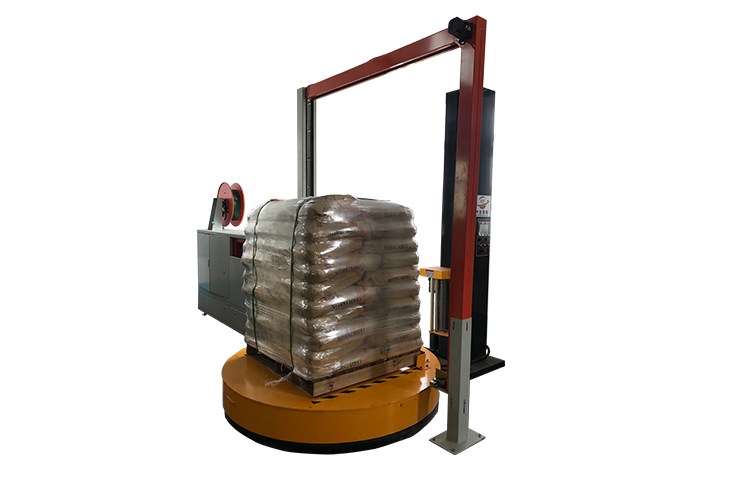
Sword-piercing baler and wrapping machine
view more
 Shandong Dyehome Intelligent Equipment Co.,Ltd
Phone:0086-17362172587
Whatsapp:+8617362172587
Email:machinedyehome@gmail.com
Add:Building 62, 3000 Meili East Road, DmiPark, Wujiapu Street, Huaiyin District, Jinan City,Shandong Province
Jinan Jiasen Packaging Equipment Co., LtdPhone:0086-15665802370
Add:High-end Equipment Manufacturing Industrial Park, East Industrial New Town, Ancheng Town, Pingyin County, Jinan City, Shandong Province
Shandong Golden Pack Intelligent Equipment Co.,LtdPhone:0086-15662690213
Add:High-end Equipment Manufacturing Industrial Park, East Industrial New Town, Ancheng Town, Pingyin County, Jinan City, Shandong Province
YoursIndustry
OurSolutions
OurServices
OurInformation