

Pallet Wrapper Not Wrapping Properly?10 Common Causes&Quick Fixes(2026 Guide)

A pallet wrapper that starts leaving loose,lopsided,or half-finished wraps is one of those problems that tends to get ignored—until a load shifts in transit and a customer sends photos of crushed product.The frustrating part is that the machine usually isn't broken.Service records from packaging equipment suppliers suggest that over 70%of wrap-quality complaints stem from settings drift,worn consumables,or operator inconsistency rather than actual component failure.
Below are the ten issues we see most often on both semi-automatic turntable machines and fully automatic inline systems,along with practical fixes you can apply on the floor.
1.Film Tension Is Set Wrong
What it looks like:The wrap is so loose that products move under the film,or so tight that cartons deform and the film snaps.
Tension has more influence on wrap quality than any other parameter.Below roughly 12 lbs(53 N),most loads don't have enough containment force to survive braking and cornering.Push past the film's rated limit and it necks down,tears,or crushes lightweight boxes.Logistics audits consistently find that around 63%of in-transit load failures trace back to outer wraps with below-spec tension.
What to do:
Use a tension meter and calibrate to 15–20 lbs(67–89 N)for standard machine-grade film.
Do the thumb test:properly tensioned film should give less than 1 cm when you press it firmly at mid-pallet.
Match the setting to the load—heavier products like bricks or beverages need more tension;empty containers and tissue goods need less.
Write down the correct value for each load profile so settings don't drift between shifts.
2.Pre-Stretch Doesn't Match the Film
What it looks like:Film snaps mid-cycle,or it comes out so narrow that gaps appear between wraps.
The pre-stretch ratio determines how much the rollers elongate the film before it reaches the load.Set it too high and the film narrows as it exits the carriage,leaving exposed strips.Set it too low and you're wasting film while getting weaker holding force.Stretching a film just 20%beyond its maximum rated elongation can cut its holding force by nearly half because the molecular orientation breaks down.
|
Film type |
Recommended pre-stretch |
Force retention |
|
Hand cast film |
150–200% |
High(≥85%) |
|
Machine cast film |
200–300% |
Excellent when calibrated |
|
Pre-stretched film |
0%additional stretch |
Maximum residual force |
What to do:
Check the manufacturer's range printed on the roll core or spec sheet.
Start at the midpoint of that range and adjust from there.
Recalibrate every 40 operating hours or whenever you change film batches.
Watch the film width after stretching—if necking exceeds 25%of original width,dial the ratio back.
3.Carriage Rollers Are Worn or Dirty
What it looks like:Film wanders sideways,breaks happen at random,and stretch performance changes from one shift to the next.
The rollers inside the film carriage guide material through the pre-stretch assembly.In busy packaging areas they pick up dust,adhesive residue,and corrugated lint.Glazed,flat-spotted,or seized rollers distribute tension unevenly,which makes the film behave unpredictably.
What to do:
Wipe rollers with isopropyl alcohol at the start of every shift.
Look for flat spots,cracks,or uneven wear and replace anything visibly damaged.
Spin each bearing by hand;drag from a seized bearing can mimic a tension problem.
For machines running 8+hours a day,put rollers on a quarterly replacement schedule.
4.Sensors Are Misreading
What it looks like:The machine stops for no reason,cuts film at the wrong spot,or ends the cycle early.
Today's wrappers depend on photo eyes,height sensors,film-break detectors,and home-position switches.When any one of them gives a bad reading,the machine can alarm out or run an incorrect cycle.Sensor faults are responsible for a surprising share of"phantom"downtime.
Usual culprits:dust on the lens,misalignment after maintenance,loose connectors from vibration,and reflective packaging surfaces that confuse photoelectric sensors.
What to do:
Clean every sensor lens with a soft,lint-free cloth at least weekly.
Use the machine's diagnostic mode to verify alignment.
Check that wiring harnesses and connectors are seated tight,especially on parts that vibrate.
If reflective loads are causing trouble,switch to retro-reflective sensors or reduce sensitivity.
5.The Load Itself Isn't Set Up Right
What it looks like:Wrap quality varies pallet to pallet even though nobody changed any settings,and film consumption goes up without making loads more stable.
Not every problem starts in the machine.Crooked stacks,cartons hanging over the pallet edge,and off-center loads force the wrapper into conditions it can't handle.The machine still runs,but the result suffers.Research on unit-load stability found that overhanging boxes can reduce stacking strength by up to 30%,and an off-center pallet causes uneven film distribution by definition.
What to do:
Center each pallet on the turntable before pressing start.
Eliminate overhang—no box should extend past the pallet edge.
Use interlocking stacking patterns rather than column stacks for better inherent stability.
Add edge protectors on sharp-cornered loads;roughly 73%of film tears start at unprotected corners.
Make sure the top surface is flat and level so film applies even downward pressure.
6.The Film Doesn't Match the Application
What it looks like:Repeated breaks,weak cling,or performance that changes every time a new film batch arrives.
A wrapper can only do so much with film that isn't suited to the load.Gauge,cling level,puncture resistance,and core quality all play a role.Sometimes the machine is fine—the film lot itself is substandard.
What to do:
Confirm the gauge fits the job:≥90 gauge for heavy loads,≤70 gauge for light ones.
Check puncture resistance ratings for sharp-edged products like chemical drums or building materials.
Log film batch numbers next to downtime records to spot lot-to-lot variation.
Store rolls off concrete floors at 50–70°F and under 70%relative humidity;moisture can cut cling by about 30%within ten days.
7.Wrap Settings Change Between Shifts
What it looks like:One operator's loads look great,another's are loose,and nobody can agree on the"right"settings.
When each person adjusts parameters independently—adding top wraps,slowing the carriage,changing pre-stretch—quality becomes inconsistent and troubleshooting has no baseline.
What to do:
Build approved wrap recipes for each load type:bottom wraps,top wraps,carriage speed,pre-stretch,and tension—all documented.
Password-protect parameter changes so only authorized staff can modify them.
Require operators to log any adjustment along with the reason.
Train the team to check containment force before adding more film;extra wraps won't fix a tension problem.
8.Turntable or Carriage Drive Is Wearing Out
What it looks like:The machine jerks or drifts while rotating,wrap overlap is uneven,or stops happen at unpredictable moments.
Mechanical wear in the turntable drive,lift chain,belts,or bearings causes inconsistent speed and positioning.The machine still functions,but wrap overlap patterns shift and quality declines.
Warning signs to listen and look for:
Grinding or squealing during rotation
Visible chain slack or cracked belts
Carriage that doesn't reach programmed top or bottom positions reliably
Turntable that hesitates at startup or decelerates unevenly
What to do:
Lubricate chains and bearings per the manufacturer's schedule—typically every 200 operating hours.
Inspect belts for cracking,glazing,or stretching;replace at the first sign.
Check that the turntable is level;a tilted base causes load shift during rotation.
Re-torque fasteners quarterly,since vibration loosens bolts over time.
9.The Load-Height Sensor Is Off
What it looks like:The machine consistently wraps too high or too low,leaving the top of the load under-wrapped or ending the cycle before the film reaches the top.
Automatic wrappers use a photoelectric or ultrasonic sensor to detect where the load ends so the carriage knows when to reverse.If it reads wrong,the reversal point is wrong on every cycle.Dark loads that absorb light are a common trigger;irregular shapes where height varies are another.
What to do:
Clean the sensor face—dust and debris are the number-one cause of misreads.
Increase sensitivity for dark loads,or place a reflective marker on top.
For irregular loads,switch to a fixed-height program instead of automatic sensing.
Run three test loads in a row and photograph each.Consistent height errors point to the sensor;variable errors point to a mechanical issue.
10.Temperature and Environment Are Working Against You
What it looks like:Film breaks more in winter,wrap quality shifts between summer and winter,or problems start after a facility HVAC change.
Stretch film is temperature-sensitive.Below about 55°F(13°C),standard film gets brittle and break rates can jump by up to 65%.In hot,humid conditions it goes the other way—too soft,with poor tension memory.
What to do:
Store film in a climate-controlled area and bring rolls to the packaging line 24 hours before use so they acclimate.
Use cold-temperature-rated film(down to-20°F/-29°C)in unheated warehouses.
For outdoor storage,use UV-treated film;standard film can lose up to 50%of its tensile strength after 200 hours of sun exposure.
Adjust settings with the seasons:slightly lower pre-stretch in cold weather,higher tension when it's warm.
Where to Start:A 5-Step Diagnostic Checklist
Before you pick up the phone and call for service,run through these five checks.They clear up roughly 80%of wrap-quality issues on their own.
|
Step |
Check |
What to look for |
|
1 |
Active wrap program vs.load type |
Settings match the current load profile |
|
2 |
Film carriage rollers |
Clean,free-spinning,no residue or wear |
|
3 |
Sensor lenses and alignment |
Clean,aligned,no alarm history |
|
4 |
Pallet centering and load stability |
Centered,no overhang,flat top,interlocked stack |
|
5 |
Film batch and storage |
Correct gauge,proper storage,no lot variation |
FAQ
Why isn't my pallet wrapper wrapping tightly enough?
Usually it comes down to film tension sitting below the effective containment range—check it with a meter and target 15–20 lbs.Also confirm the pre-stretch ratio matches the film manufacturer's spec.If both are correct,inspect the carriage rollers;contamination or wear can reduce the tension that actually reaches the load.
Why does the film keep breaking?
Three causes account for most breaks:pre-stretch set beyond the film's rated elongation,worn rollers creating stress points,and cold film becoming brittle.Try lowering pre-stretch by 25%first.If breaks continue,clean and inspect every roller in the film path.
Why does the wrapper only wrap part of the load?
This is almost always a height-sensor issue.The photoelectric or ultrasonic sensor that detects the top of the load is dirty,misaligned,or confused by a dark surface.Clean it first;if that doesn't work,increase sensitivity or switch to a fixed-height program.Also verify that the active recipe's height settings match the actual load dimensions.
How often should a pallet wrapper be serviced?
Most manufacturers recommend preventive maintenance every 200 operating hours—roughly monthly for a single-shift operation.That means lubricating chains and bearings,inspecting rollers and belts,cleaning sensors,checking fastener torque,and verifying wrap programs.Daily operator-level checks(wiping sensors,eyeballing rollers)go a long way toward extending service intervals.
Can the wrong stretch film cause wrapping problems?
Absolutely.Gauge,cling,puncture resistance,and batch consistency all affect how the machine runs.Film that's too thin breaks;film with weak cling can't maintain containment.Lot-to-lot quality variation is an often-overlooked cause of recurring issues—track batch numbers alongside downtime data and you'll start seeing patterns.
products
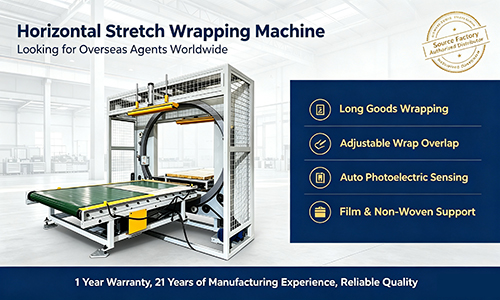
Horizontal Stretch Wrapping Machine SP1000 for Pipes
view more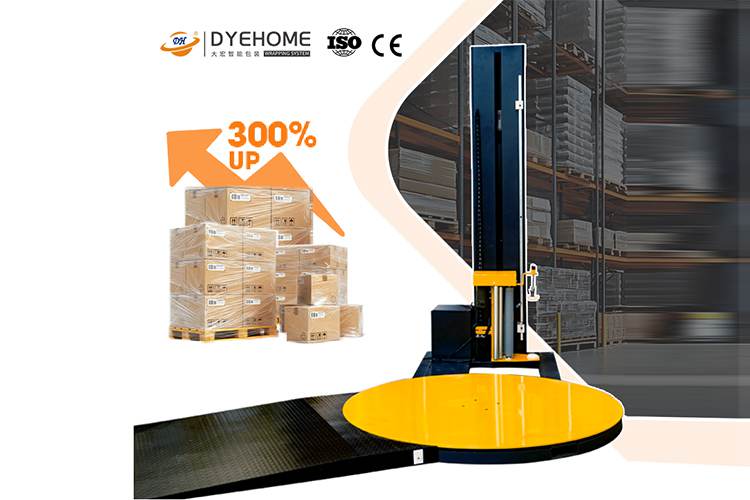
Pallet Stretch Wrapping Machine
view more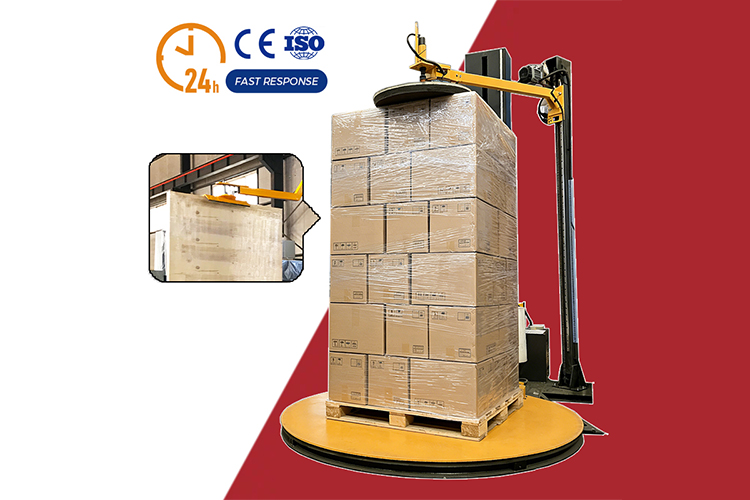
Top Press Pallet Stretch Wrapping Machine
view more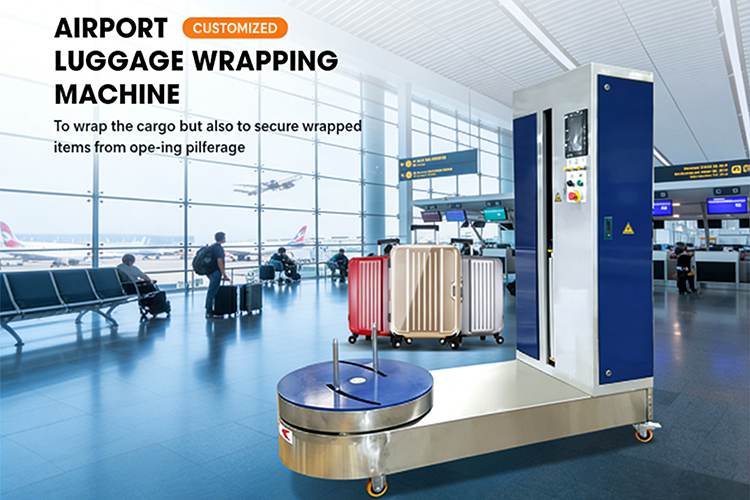
Luggage Wrapping Machine for Airports
view more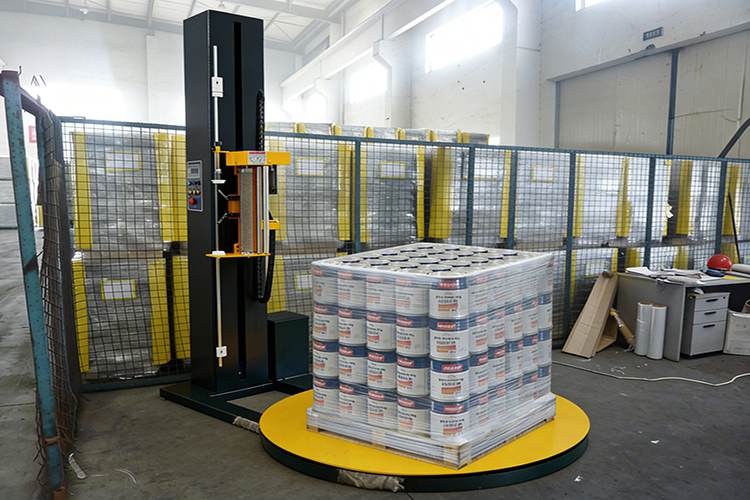
Pallet Stretch Wrapping Machine for Canned Goods
view more
Airport Self-Service Luggage Wrapping Machine
view more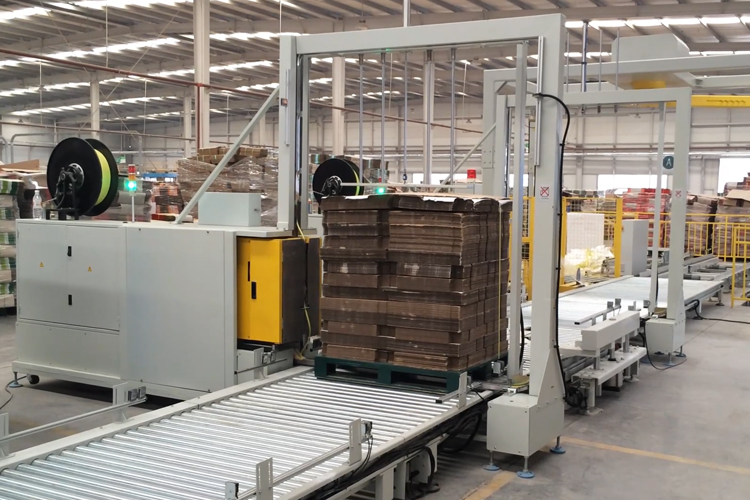
Automated film wrapping and packaging equipment
view more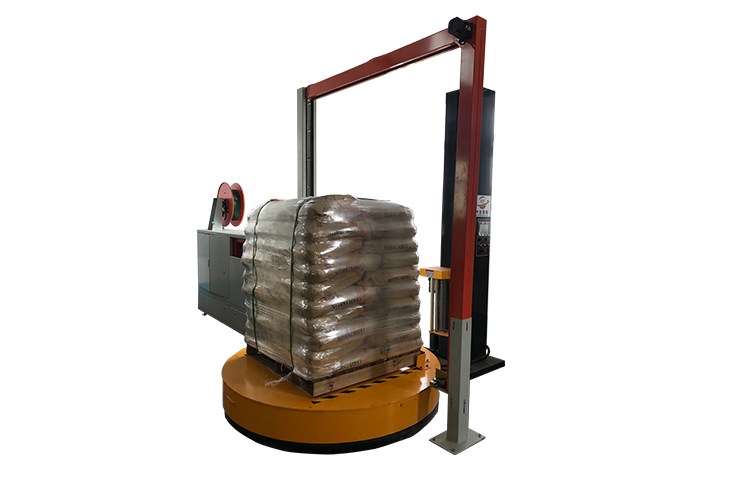
Sword-piercing baler and wrapping machine
view more
 Shandong Dyehome Intelligent Equipment Co.,Ltd
Phone:0086-17362172587
Whatsapp:+8617362172587
Email:machinedyehome@gmail.com
Add:Building 62, 3000 Meili East Road, DmiPark, Wujiapu Street, Huaiyin District, Jinan City,Shandong Province
Jinan Jiasen Packaging Equipment Co., LtdPhone:0086-15665802370
Add:High-end Equipment Manufacturing Industrial Park, East Industrial New Town, Ancheng Town, Pingyin County, Jinan City, Shandong Province
Shandong Golden Pack Intelligent Equipment Co.,LtdPhone:0086-15662690213
Add:High-end Equipment Manufacturing Industrial Park, East Industrial New Town, Ancheng Town, Pingyin County, Jinan City, Shandong Province
YoursIndustry
OurSolutions
OurServices
OurInformation