

Pallet Wrapper for 3PL:How to Choose the Right Stretch Wrapper for Logistics Operations
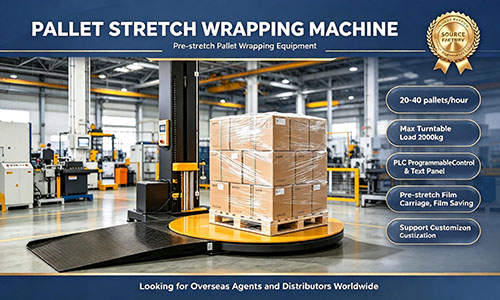
A pallet wrapper for 3PL(third-party logistics)operations is a stretch wrapping machine selected specifically to handle the multi-client,high-mix,variable-throughput demands of a contract warehousing or distribution environment.Unlike a dedicated manufacturing line that wraps the same product all day,a 3PL pallet wrapper must accommodate different pallet sizes,load weights,film types,and throughput requirements—often switching between clients multiple times per shift.With the global 3PL market valued at approximately$1.22 trillion in 2026 and growing at a 5.27%CAGR(Mordor Intelligence,2026),selecting the right wrapping equipment directly impacts a logistics provider's profitability,service quality,and competitive positioning.
This guide breaks down the unique requirements of 3PL pallet wrapping,compares machine types against real logistics scenarios,and provides a decision framework to help you choose the optimal stretch wrapper for your operation.
Why 3PL Pallet Wrapping Is Fundamentally Different
Before evaluating specific machines,it's essential to understand what makes 3PL wrapping different from in-house manufacturing or dedicated distribution wrapping.
The Multi-Client Challenge
A typical 3PL warehouse manages palletized goods for 5 to 50+different clients,each with unique:
Pallet sizes:Euro pallets(800×1,200 mm),standard US pallets(48×40 inches),half-pallets,quarter-pallets,and custom dimensions
Load characteristics:Chemical drums,food boxes,automotive parts,consumer goods,paper rolls—each with different stability profiles and wrapping requirements
Film specifications:Some clients specify specific film brands,thicknesses,or wrap patterns per their carrier requirements
Throughput demands:One client may ship 10 pallets per day;another may require 200+pallets during peak season
What This Means for Machine Selection
A 3PL pallet wrapper must deliver:
Flexibility—Quick changeover between different wrap programs,pallet sizes,and film types
Durability—Multi-shift operation across varied load types causes more wear than consistent use
Speed range—Ability to handle both low-volume specialty wraps and high-volume standard pallets
Programmability—PLC controls with recipe management to save and recall client-specific wrap patterns
Scalability—Room to grow throughput without replacing the entire system
3PL Pallet Wrapper Types:Which Fits Your Operation?
The right machine type depends on your facility's throughput profile,load mix,and growth trajectory.Here's how each major wrapper type performs in a 3PL environment.
Turntable Stretch Wrappers for 3PL
Best for:Small to mid-size 3PL operations(15–60 pallets/day)with relatively standard loads.
|
Feature |
Typical Specification |
|
Throughput |
20–40 pallets/hour |
|
Load capacity |
1,500–2,500 kg |
|
Pallet sizes |
800×800 mm to 1,200×1,200 mm |
|
Pre-stretch |
200–300% |
|
Price range |
$15,000–$45,000 |
3PL Advantages:
Lower capital investment per station
Simple operation—minimal training for temporary or seasonal workers
Compact footprint allows multiple machines for different client zones
Easy to relocate if warehouse layout changes
3PL Limitations:
Cannot handle unstable or top-heavy loads safely(centrifugal force during rotation)
Maximum weight capacity limits heavy industrial clients
Turntable wear increases with diverse load types
Recommended Dyehome Solution:The TP1650F automatic turntable wrapper handles loads up to 2,000 kg with 250%pre-stretch,delivering up to 40 pallets per hour—ideal for mid-volume 3PL operations serving food,consumer goods,and light industrial clients.
Rotary Arm(Cantilever)Stretch Wrappers for 3PL
Best for:High-volume 3PL warehouses(60–200+pallets/day)handling heavy,tall,or unstable loads across multiple clients.
|
Feature |
Typical Specification |
|
Throughput |
40–60 pallets/hour |
|
Load capacity |
2,000–3,000 kg(effectively unlimited—pallet is stationary) |
|
Pallet sizes |
Up to 1,650 mm diameter coverage |
|
Pre-stretch |
250–350% |
|
Price range |
$35,000–$90,000 |
3PL Advantages:
No load movement—safely wraps unstable,fragile,or top-heavy pallets from any client
Higher throughput for peak-season surges
Better film containment force for heavy industrial loads
Compatible with inline conveyor integration for future automation
3PL Limitations:
Larger footprint requires dedicated wrapping bay
Higher initial investment
More complex maintenance than turntable models
Recommended Dyehome Solution:The R1800 rotary arm stretch wrapper delivers up to 60 pallets per hour with a heavy-duty steel frame designed for 24/7 multi-shift operation—built for 3PL warehouses serving chemical,building materials,and heavy manufacturing clients.
Inline(Online)Stretch Wrapping Systems for 3PL
Best for:Large-scale 3PL distribution centers(200+pallets/day)with conveyorized end-of-line systems and dedicated high-volume clients.
|
Feature |
Typical Specification |
|
Throughput |
20–40 pallets/hour |
|
Load capacity |
Unlimited(conveyor-supported) |
|
Integration |
Full PLC synchronization with upstream/downstream conveyors |
|
Automation level |
Fully automatic—zero operator intervention during cycle |
|
Price range |
$80,000–$250,000+(including conveyor integration) |
3PL Advantages:
Maximum throughput for dedicated high-volume client lines
Consistent,repeatable wrap quality for SLA compliance
Reduces forklift traffic in busy distribution environments
Data logging for client reporting and quality audits
3PL Limitations:
Highest cost;requires conveyor infrastructure
Less flexible for small or irregular clients
Longer installation and commissioning time
Fixed location—cannot be relocated for layout changes
Comparison:3PL Pallet Wrapper Types at a Glance
表格
|
Criteria |
Turntable |
Rotary Arm |
Inline System |
|
Best throughput range |
15–60 pallets/day |
60–200 pallets/day |
200+pallets/day |
|
Load flexibility |
Standard loads only |
All load types |
Standard to heavy |
|
Client changeover speed |
Fast(5 min) |
Moderate(10 min) |
Slow(requires recipe change) |
|
Capital cost |
$15K–$45K |
$35K–$90K |
$80K–$250K+ |
|
ROI payback period |
6–12 months |
12–18 months |
18–30 months |
|
Scalability |
Add more stations |
Upgrade arm speed |
Full line expansion |
|
Best 3PL fit |
Multi-client,low-mix |
Multi-client,high-mix |
Dedicated client lines |
5 Key Selection Criteria for 3PL Pallet Wrappers
When evaluating a pallet wrapper for your 3PL operation,prioritize these five criteria over price alone.
1.PLC Programmability with Recipe Management
Why it matters:In a 3PL environment,you may switch between 10+different wrap programs in a single shift—one per client.A machine with robust recipe management lets operators recall saved wrap patterns(number of wraps,tension,speed,top/bottom layers)with a single button press.
What to look for:
Minimum 50 programmable recipes—enough for most multi-client operations
Touchscreen HMI with clear labeling for each client's program
USB/Ethernet export for backing up recipes and transferring between machines
Password protection to prevent accidental program changes by untrained operators
2.Pre-Stretch Ratio and Film Cost Control
Why it matters:Stretch film is the second-largest operating cost in pallet wrapping(after labor).Higher pre-stretch ratios mean less film consumed per pallet.For a 3PL wrapping 100 pallets per day,the difference between 200%and 300%pre-stretch translates to$15,000–$25,000 in annual film savings.
What to look for:
Minimum 250%pre-stretch for standard operations
300%+powered pre-stretch for high-volume operations
Adjustable pre-stretch per recipe—some clients may specify lower stretch for fragile loads
Film break detection with automatic restart to avoid partial wraps
3.Variable Turntable/Arm Speed
Why it matters:Different clients have different requirements.A food client may need gentle,slow wrapping for display pallets;a chemical client may need maximum speed for drum pallets.Variable speed control lets you optimize for each situation.
What to look for:
Turntable speed range:3–12 RPM(adjustable via potentiometer or PLC)
Film carriage speed:Variable vertical travel speed
Soft start/stop function to prevent load shift on fragile pallets
4.Photoelectric Load Height Detection
Why it matters:In a 3PL setting,pallet heights vary dramatically—from low-profile automotive parts(500 mm)to tall beverage displays(2,200+mm).Automatic height detection eliminates manual measurement and ensures consistent wrap coverage.
What to look for:
Auto-height sensor that detects load dimensions before wrapping begins
Adjustable wrap zones(top wraps,bottom wraps,body wraps)per load profile
Memory function to recall previous settings for repeat loads
5.Facility Layout and Relocation Flexibility
Why it matters:3PL warehouses frequently reconfigure layouts when winning or losing client contracts.Equipment that's easy to relocate protects your investment.
What to look for:
Standalone design—no floor anchoring required(standard turntable models)
Forklift-movable base—ability to relocate the machine with a forklift when needed
Standard power requirements—220V/50Hz or 380V/3-phase,no special electrical infrastructure
Compact footprint with adequate forklift access clearance
Real-World 3PL Scenarios:Machine Recommendations
Scenario 1:Multi-Client Food&Beverage 3PL
Throughput:40–80 pallets/day
Load types:Mixed cases,display pallets,shrink-bundled beverages
Key requirement:Gentle handling,consistent wrap for retail-ready pallets
Recommended:Automatic turntable wrapper(TP1650F)with soft-start function and adjustable film tension
Scenario 2:Heavy Industrial 3PL(Chemical/Building Materials)
Throughput:60–120 pallets/day
Load types:Drum pallets(500–1,500 kg),tall unstable building material stacks
Key requirement:High load capacity,no pallet rotation,strong containment force
Recommended:Rotary arm wrapper(R1800)—stationary pallet eliminates toppling risk
Scenario 3:E-Commerce Fulfillment 3PL
Throughput:100–300+pallets/day(highly seasonal,peaks at 3×baseline)
Load types:Standard cartons on 48×40 pallets,relatively uniform
Key requirement:Maximum throughput during peak,scalability for seasonal demand
Recommended:Inline automatic wrapper with conveyor integration,or multiple turntable stations for flexible capacity
Scenario 4:Small 3PL Startup(<20 Pallets/Day)
Throughput:5–20 pallets/day
Load types:Highly variable,depending on client base
Key requirement:Low capital cost,maximum flexibility,easy operation
Recommended:Semi-automatic turntable wrapper—low investment,handles most standard loads,easy to upgrade later
FAQ
Q:What is the best pallet wrapper for a small 3PL warehouse?
A:For a small 3PL warehouse wrapping fewer than 20 pallets per day with varied load types,a semi-automatic turntable stretch wrapper is the best choice.It offers low capital investment($8,000–$15,000),handles standard pallet sizes(800×800 to 1,200×1,200 mm),and requires minimal operator training.Look for models with adjustable turntable speed and at least 200%pre-stretch capability to keep film costs low as you scale.
Q:How fast should a 3PL pallet wrapper be?
A:The ideal speed depends on your daily throughput.For operations wrapping 15–40 pallets/day,a turntable wrapper at 20–25 pallets/hour is sufficient.For 40–100 pallets/day,an automatic turntable or rotary arm at 30–40 pallets/hour keeps up with demand.Above 100 pallets/day,consider a rotary arm or inline system capable of 50–60+pallets/hour to avoid creating a bottleneck during peak shipping windows.
Q:Can one pallet wrapper handle different pallet sizes for multiple 3PL clients?
A:Yes.Modern automatic stretch wrappers accommodate pallet footprints ranging from 800×800 mm to 1,200×1,200 mm(or larger with custom turntables).The key is choosing a machine with PLC recipe management—this lets you save a unique wrap program for each client,including pallet size,wrap count,film tension,and top/bottom layer settings.Operators simply select the client's recipe from the touchscreen and the machine adjusts automatically.
products
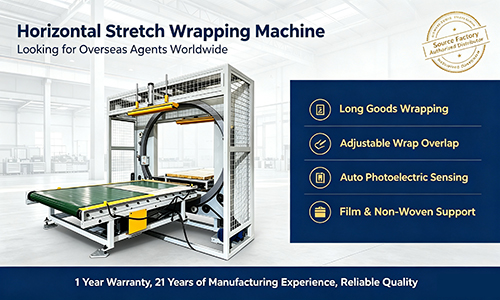
Horizontal Stretch Wrapping Machine SP1000 for Pipes
view more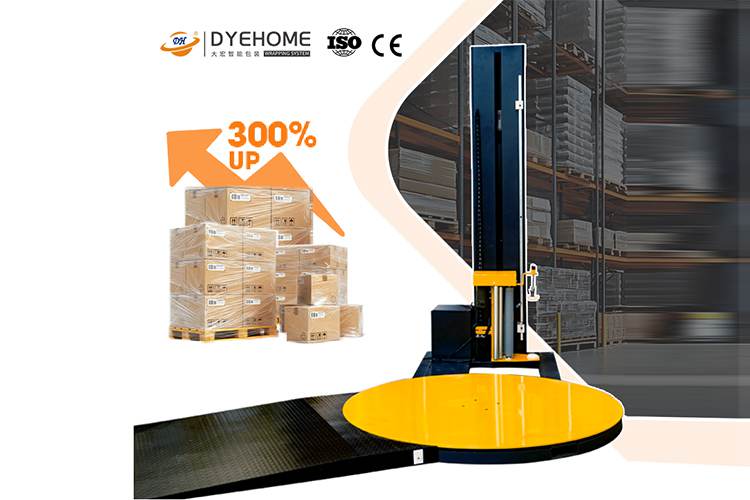
Pallet Stretch Wrapping Machine
view more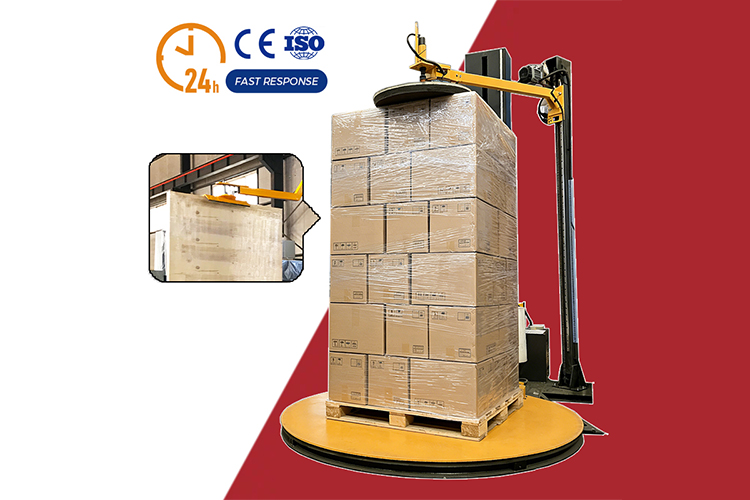
Top Press Pallet Stretch Wrapping Machine
view more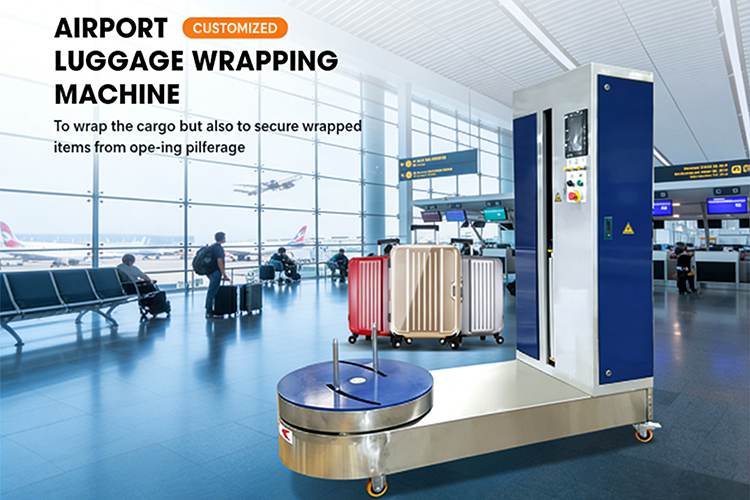
Luggage Wrapping Machine for Airports
view more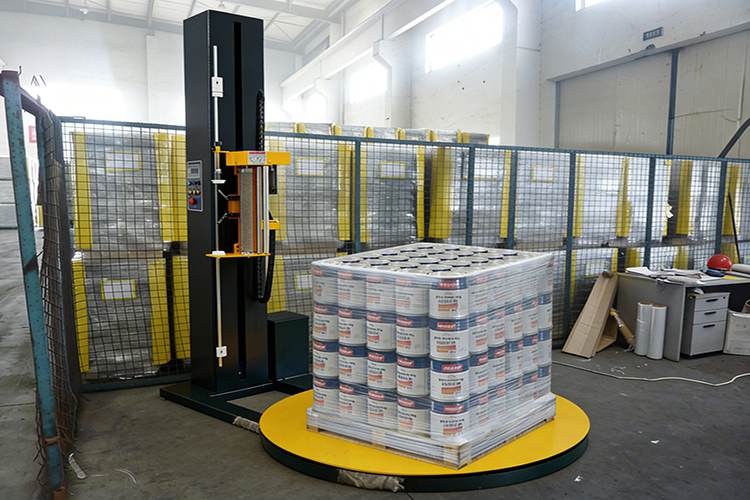
Pallet Stretch Wrapping Machine for Canned Goods
view more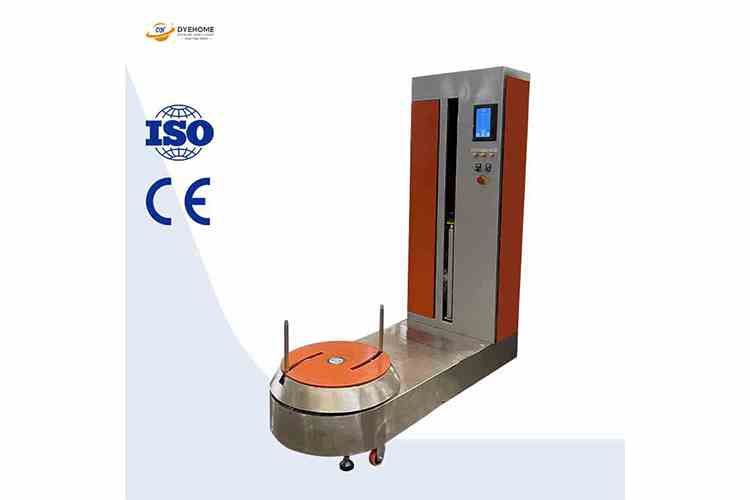
Airport Self-Service Luggage Wrapping Machine
view more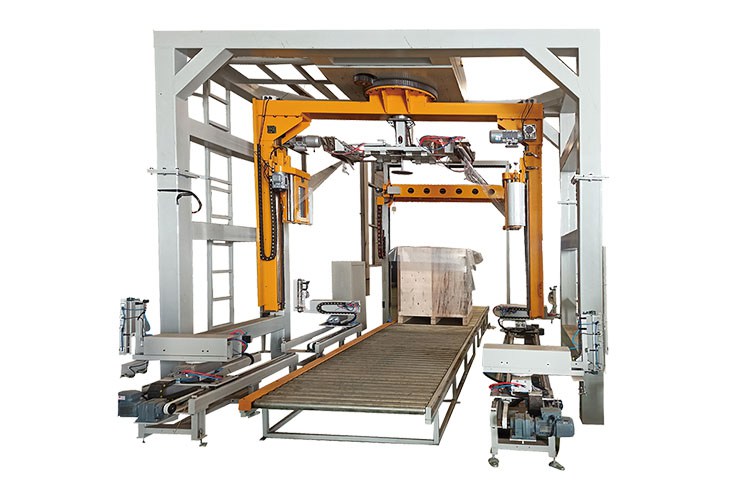
Cantilever wrapping film packaging machine
view more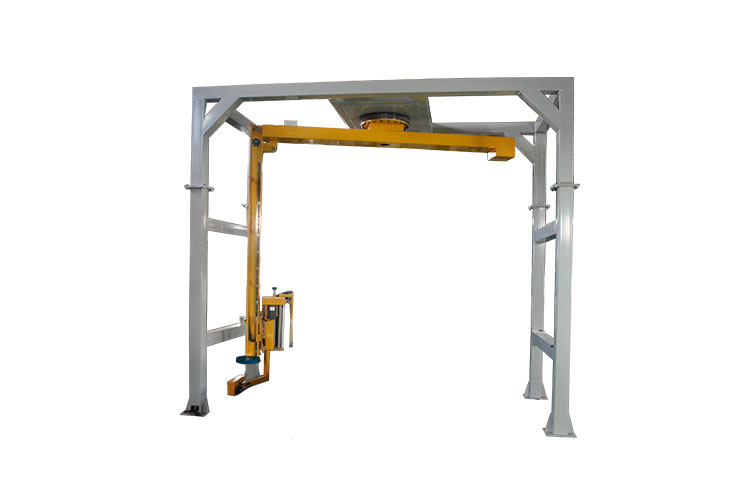
Gantry fully automatic cantilever wrapping machine
view more
 Shandong Dyehome Intelligent Equipment Co.,Ltd
Phone:0086-17362172587
Whatsapp:+8617362172587
Email:machinedyehome@gmail.com
Add:Building 62, 3000 Meili East Road, DmiPark, Wujiapu Street, Huaiyin District, Jinan City,Shandong Province
Jinan Jiasen Packaging Equipment Co., LtdPhone:0086-15665802370
Add:High-end Equipment Manufacturing Industrial Park, East Industrial New Town, Ancheng Town, Pingyin County, Jinan City, Shandong Province
Shandong Golden Pack Intelligent Equipment Co.,LtdPhone:0086-15662690213
Add:High-end Equipment Manufacturing Industrial Park, East Industrial New Town, Ancheng Town, Pingyin County, Jinan City, Shandong Province
YoursIndustry
OurSolutions
OurServices
OurInformation