

Rotary Arm vs. Turntable Stretch Wrapper: Which Is Right for Your Factory?
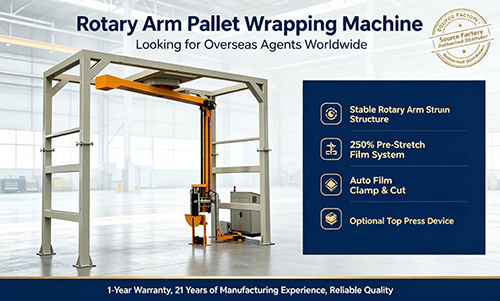
If you're shopping for a pallet stretch wrapper, you've probably noticed two main types: turntable wrappers and rotary arm wrappers (also called cantilever wrappers). Both wrap pallets with stretch film — but they work very differently, and choosing the wrong one can cost you thousands in downtime, damaged goods, and wasted film.
Here's the hard truth: about 30% of factories buy the wrong type of wrapper because they only look at price. A turntable machine might cost less upfront, but if you're wrapping tall or heavy loads, you'll deal with constant tipping, load shift, and rework. Conversely, a rotary arm machine is overkill for standard stable pallets — you'll pay more for capability you don't need.
In this guide, we'll break down:
How each machine type works;The pros and cons of rotary arm vs. Turntable;6 critical factors to help you decide;Real ROI comparison;The 4 most common buying mistakes
How Each Machine Works
Turntable Stretch Wrapper
The pallet sits on a rotating turntable (usually 1650mm diameter) while a film carriage moves up and down on a mast. The pallet itself spins, and the film is applied as it rotates.
Best for: Standard stable pallets, 20-40 pallets/hour, loads under 2000kg and under 2000mm tall.
Rotary Arm (Cantilever) Stretch Wrapper
The pallet stays completely stationary on the floor or conveyor. A vertical column with a horizontal arm rotates around the pallet, and the film carriage moves up and down the arm. The load never moves.
Best for: Heavy, tall, or unstable loads, 20-40 pallets/hour, products that would shift or tip if rotated.
Head-to-Head Comparison
|
Factor |
Turntable Wrapper |
Rotary Arm Wrapper |
|
How it works |
Pallet rotates, film carriage moves vertically |
Pallet stationary, arm orbits around it |
|
Throughput |
20-40 pallets/hr |
20-40 pallets/hr |
|
Load stability |
Good for stable loads only |
Excellent — load never moves |
|
Max load weight |
1500-2000kg (rotating) |
2000kg+ |
|
Max load height |
2000-2400mm |
2000mm+ (extendable) |
|
Footprint |
Small (~2.5 × 1.7m) |
Larger (~4.3 × 2.3m) |
|
Power requirement |
1.5 kW / 220V |
3.2 kW / 380V |
|
Installation |
Simple — plug and play |
More complex — heavier, needs proper floor space |
|
Maintenance |
Simpler — fewer moving parts |
More components — arm bearing, chains, pneumatics |
|
Best industries |
Food, building materials, general warehouse |
Beverage, chemical, canned goods, heavy manufacturing |
6 Critical Factors to Help You Decide
1. Load Stability — The #1 Decision Factor
This is the most important question: will your load tip or shift if it rotates?
If you're wrapping:
Bottled water or beverages in shrink-wrapped trays — rotary arm is safer. Tall stacks of bottles can shift on turntables.
Canned goods — rotary arm recommended. Cans can shift during rotation, especially at higher speeds.
Chemical drums or barrels — rotary arm. Heavy round loads are unstable on turntables.
Cardboard boxes on standard pallets — turntable is fine. Stable boxed loads don't shift.
Rule of thumb: If you've ever had a pallet fall over during manual wrapping or forklift transport, get a rotary arm machine. The cost of one damaged pallet of goods often exceeds the price difference.
2. Load Height
Taller loads are more prone to tipping. As a general guideline:
Under 1800mm — turntable is usually fine for stable loads
1800-2400mm — depends on load stability; rotary arm recommended for anything fragile or top-heavy
Over 2400mm — rotary arm is almost always the right choice
The physics are simple: the taller the load, the more centrifugal force affects it during rotation. Even stable products can shift at the top if the turntable accelerates too quickly.
3. Throughput Volume
Both machine types handle 20-40 pallets per hour at standard speed. The difference isn't in speed — it's in consistency.
Turntable machines often need slower speeds for tall or heavy loads to prevent tipping, which reduces effective throughput. Rotary arm machines can run at full speed regardless of load type, since the pallet doesn't move.
If you need more than 40 pallets/hour, look at inline/conveyorized systems or high-speed rotary arm models.
4. Floor Space
Rotary arm machines need more room. The LR1800FZ requires 4300 × 2320mm of floor space — about 10 square meters. A turntable machine needs only about 4 square meters.
Important: Don't forget to account for forklift access around the machine. You need at least 1.5 meters of clearance on at least one side for loading/unloading.
5. Power and Air Requirements
Turntable: Usually 220V single phase, 1.5 kW. Works in most factory environments.
Rotary arm: Usually 380V three phase, 3.2 kW. May require electrical upgrades.
Rotary arm machines with auto film attach/cut also need compressed air (0.4-0.6 MPa). If you don't have air lines, factor in the cost of a small compressor.
6. Future Growth
If your production is growing 20%+ per year, think about what you'll need in 2-3 years, not just today.
Ask yourself:
Will you be adding taller products?
Will you be handling heavier loads?
Will you need to integrate with a conveyor line later?
A rotary arm machine has more upgrade headroom. Many can be extended for taller loads and integrated with conveyors for inline operation.
The 4 Most Common Buying Mistakes
Mistake #1: Buying on Price Alone
The cheapest turntable wrapper seems like a bargain — until your bottled water pallets start tipping and you're replacing 5-10 cases per day. One month of damaged goods often equals the price difference to upgrade to a rotary arm.
Fix: Calculate total cost of ownership, not just purchase price.
Mistake #2: Not Testing with Your Actual Product
A machine that works great in the supplier's demo video with perfect test pallets might struggle with your specific product. Odd shapes, slippery packaging, top-heavy loads — all of these can cause problems that only show up in real use.
Fix: Ask for a test video with your actual product, or send sample pallets for testing.
Mistake #3: Ignoring After-Sales Support
A $2,000 cheaper machine from a trading company isn't a deal if it breaks and nobody can fix it for 2 weeks. Production downtime costs thousands per day.
Fix: Buy from a real manufacturer with a track record, spare parts inventory, and technical support. Check how long they've been in business and what countries they export to.
Mistake #4: Buying for Today, Not Tomorrow
If you're growing 20% per year, your wrapper needs to keep up. A machine that's perfect for today's 20 pallets/day might be bottlenecking production in 2 years.
Fix: Buy for your expected volume in 2-3 years. It's cheaper to buy slightly more capacity now than to replace the machine later.
Become a Dyehome Distributor
Are you a packaging equipment distributor, system integrator, or industrial supplier looking for a reliable stretch wrapper manufacturer?
Dyehome is actively seeking qualified distributors worldwide. 21 years in the industry, CE certified, exporting to 80+ countries. We manufacture both turntable and rotary arm wrappers, plus horizontal wrappers, cylindrical wrappers, and inline systems — giving your customers a complete solution.
Conclusion
Choosing between rotary arm and turntable comes down to three questions:
1. Is your load stable enough to rotate? If not, rotary arm is non-negotiable.
2. What's your budget and space? Turntable wins on both if your loads are suitable.
3. What will you need in 2-3 years? If growth is on the horizon, lean toward rotary arm for its upgrade flexibility.
Both machine types deliver excellent ROI — typically under 6 months payback. The real cost is buying the wrong machine and dealing with downtime, damage, and rework.
Not sure which machine fits your specific application? Get a free application review. Send us your pallet dimensions, product type, photos, and daily volume — we'll recommend the right configuration with a detailed ROI calculation within 24 hours.
products
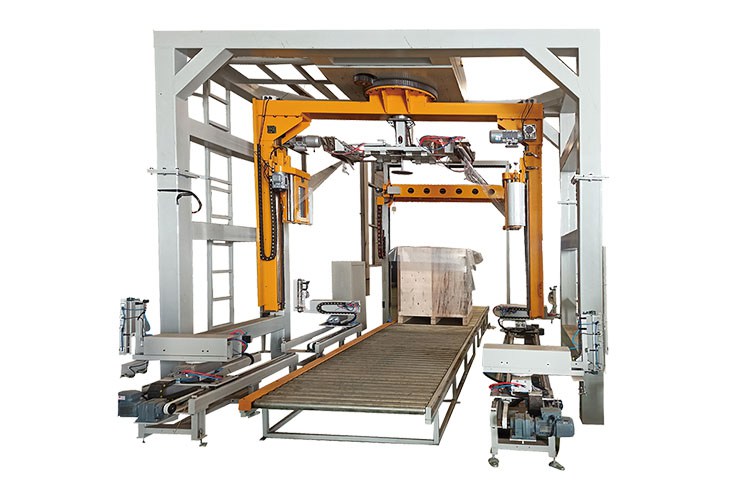
Cantilever wrapping film packaging machine
view more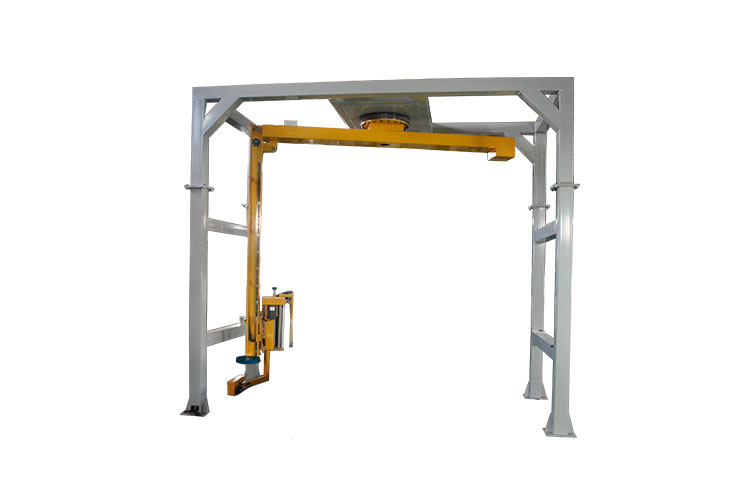
Gantry fully automatic cantilever wrapping machine
view more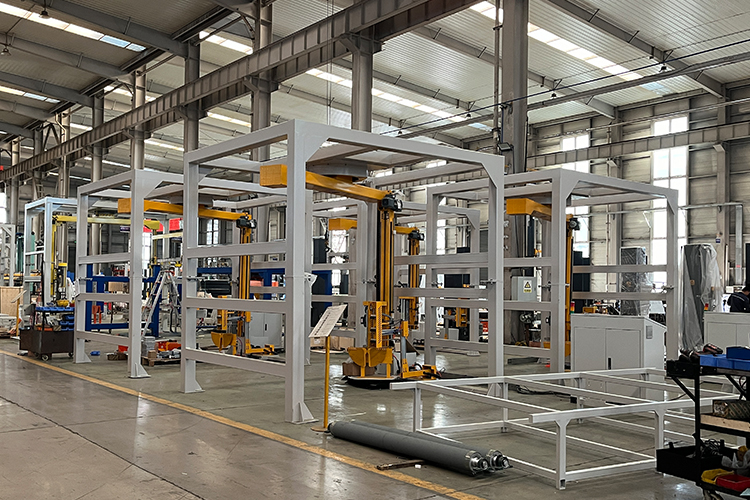
Cantilever wrapping packaging machine
view more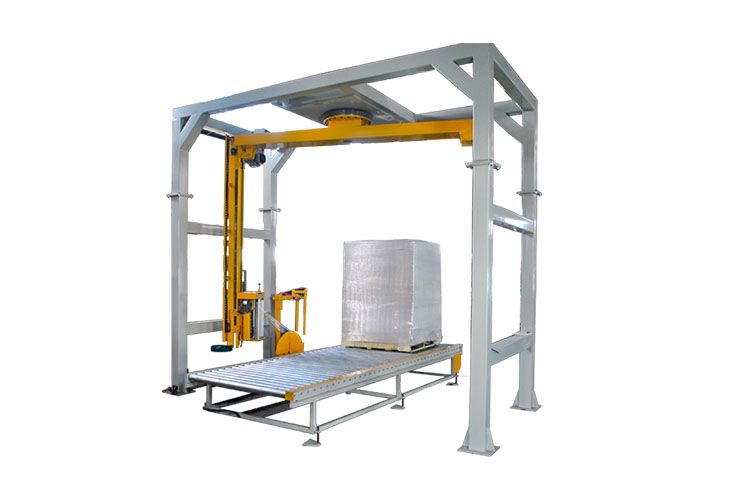
Rocker-type online wrapping machine
view more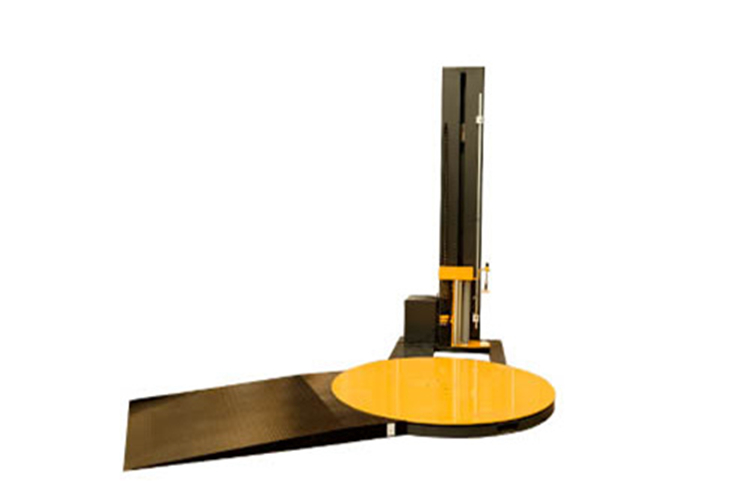
Stretch film wrapping machine
view more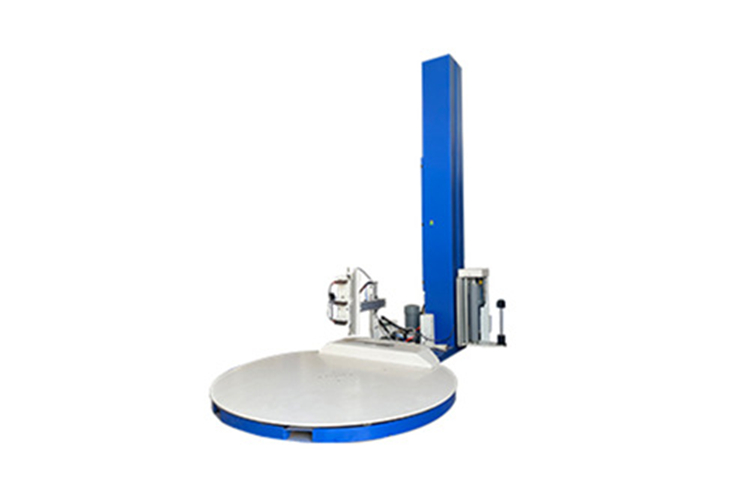
Pallet wrapping packaging equipment
view more
Turntable wrapping machine with top pressure
view more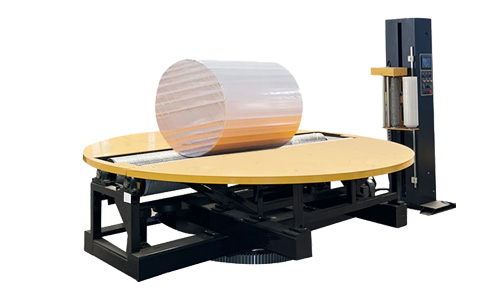
Pallet paper tube wrapping machine
view more
 Shandong Dyehome Intelligent Equipment Co.,Ltd
Phone:0086-17362172587
Whatsapp:+8617362172587
Email:machinedyehome@gmail.com
Add:Building 62, 3000 Meili East Road, DmiPark, Wujiapu Street, Huaiyin District, Jinan City,Shandong Province
Jinan Jiasen Packaging Equipment Co., LtdPhone:0086-15665802370
Add:High-end Equipment Manufacturing Industrial Park, East Industrial New Town, Ancheng Town, Pingyin County, Jinan City, Shandong Province
Shandong Golden Pack Intelligent Equipment Co.,LtdPhone:0086-15662690213
Add:High-end Equipment Manufacturing Industrial Park, East Industrial New Town, Ancheng Town, Pingyin County, Jinan City, Shandong Province
YoursIndustry
OurSolutions
OurServices
OurInformation