

Stretch Film Wrapping Machine: Half of Your Stretch Film May Be Going to Waste — How Pre-Stretch Technology Makes One Roll Work Like Two
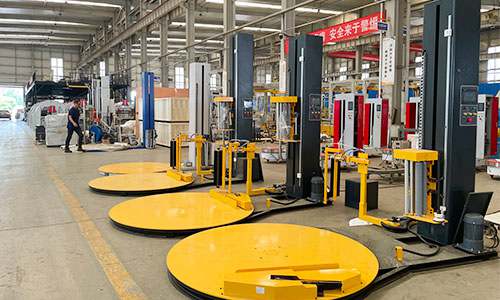
Most Companies Compare Machine Prices, but Ignore Film Costs
When purchasing a wrapping machine, many buyers focus only on equipment price while overlooking a much larger expense: stretch film consumption.
Consider a factory shipping 50,000 pallets per year. If each pallet consumes 0.5 kg of stretch film, annual film usage reaches 25 tons. At a market price of approximately USD 1,650 per ton, annual film costs exceed USD 41,000.
In comparison, the cost of a stretch film wrapping machine is often less than half of one year's film expense.
This raises an important question:
If a wrapping machine can reduce film usage by 50%, are you spending money on equipment, or investing in long-term savings?
First Understand How Film Gets Wasted
Film utilization depends on one key factor: stretch ratio.
The physical length of a film roll is fixed when manufactured. However, by stretching the film before application, the same roll can cover a much larger surface area. The higher the stretch ratio, the more pallets a single roll can wrap.
With manual wrapping, workers can only stretch the film by hand. Actual stretch ratios typically range from 50% to 100%, meaning a large portion of the film is applied before reaching its full potential. Essentially, much of the film is used without sufficient stretching.
A pre-stretch wrapping machine works differently.
Before the film reaches the pallet, a powered roller system inside the film carriage stretches it up to 250%. The film is then applied in its stretched state.
As a result, the film becomes approximately 2.5 times longer before wrapping, allowing one roll to cover nearly 2.5 times the area compared with unstretched film. This is the level of efficiency stretch film is designed to achieve.
Automatic Film Attachment and Cutting: More Than Convenience, It Saves Film
Manual film application creates two major sources of waste.
1. Excess Film at the Beginning and End
When operators manually attach the film, they usually pull out extra material to secure the film tail. After wrapping, additional film is often left when cutting and securing the film end.
The waste per pallet may seem small, but over dozens of pallets each day, it quickly adds up to significant material loss.
2. Inconsistent Film Cutting Positions
Manual cutting is rarely precise. Sometimes an extra wrap is added before the operator stops the machine. Other times, insufficient wrapping requires additional film application.
Every unnecessary wrap directly increases film consumption.
The automatic film attachment, cutting, and wiping system completes all three operations through an integrated pneumatic mechanism:
- Automatic film attachment
- Precise film cutting at preset positions
- Automatic film tail wiping and sealing
Every cycle uses exactly the required amount of film—no more and no less.
When Does a Pre-Stretch Wrapping Machine Pay for Itself?
Let's look at a common example.
A factory ships 30,000 pallets annually and currently wraps pallets manually.
Film consumption:
30,000 pallets × 0.5 kg = 15 tons per year
At approximately USD 1,650 per ton:
Annual film cost = about USD 24,750
With a pre-stretch wrapping machine that reduces film usage by 50%:
Annual film consumption = 7.5 tons
Annual film cost = about USD 12,375
Annual savings = approximately USD 12,375
The purchase cost of a QTP1800F-L Automatic Stretch Film Wrapping Machine is typically lower than these annual film savings.
For factories shipping more than 30,000 pallets per year, film savings alone can often recover the equipment investment within one year, not including labor savings, improved packaging consistency, and reduced transportation damage claims.
Even facilities shipping fewer than 10,000 pallets annually can benefit. The payback period may extend to 18–24 months, but standardized packaging quality and reduced labor requirements continue to provide value every day.
Not Every Wrapping Machine Is a True Pre-Stretch Machine
The QTP1800F-L Stretch Film Wrapping Machine is specifically designed to maximize film utilization.
Key features include:
- Standard 250% powered pre-stretch film carriage
- Compatible with resistance-stretch operation mode
- Automatic film attachment, cutting, and wiping system
- Integrated pneumatic control
- PLC-controlled wrapping parameters
- Adjustable wrapping layers, carriage travel, and stretch ratio
- Consistent wrapping quality for every pallet
- 1800 mm turntable diameter
- 2000 kg maximum load capacity
- Variable-frequency soft start and soft stop
- Wrapping capacity of 20–40 pallets per hour
- Machine weight: 800 kg
- Ready for immediate operation after installation
QTP1800F-L vs. TP1650F-L
Compared with the TP1650F-L standard model, the QTP1800F-L offers several upgrades:
- Automatic film attachment and cutting system
- Larger 1800 mm turntable (vs. 1650 mm)
- Higher load capacity
- Larger wrapping dimensions
- More precise film consumption control
Simply put:
The TP1650F-L is an entry-level model requiring manual film attachment and cutting.
The QTP1800F-L is an advanced automatic solution featuring automatic film attachment, cutting, and wiping functions for improved efficiency and reduced film waste.
Factory-Direct Manufacturing with Proven Reliability
As a professional wrapping machine manufacturer, every machine undergoes comprehensive testing before shipment. Wrapping parameters can be pre-configured according to customer pallet specifications, allowing the equipment to be put into operation immediately upon installation.
We believe product quality speaks louder than words, delivering dependable performance and long-term value for every customer.
products
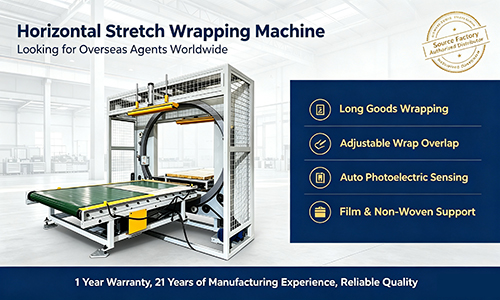
Horizontal Stretch Wrapping Machine SP1000 for Pipes
view more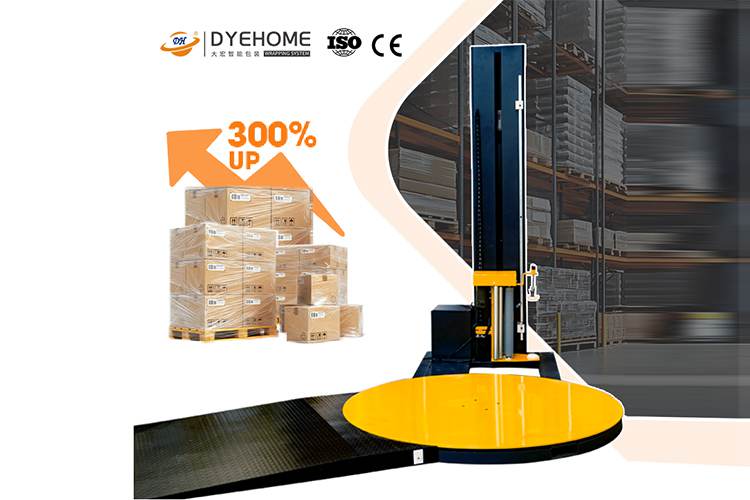
Pallet Stretch Wrapping Machine
view more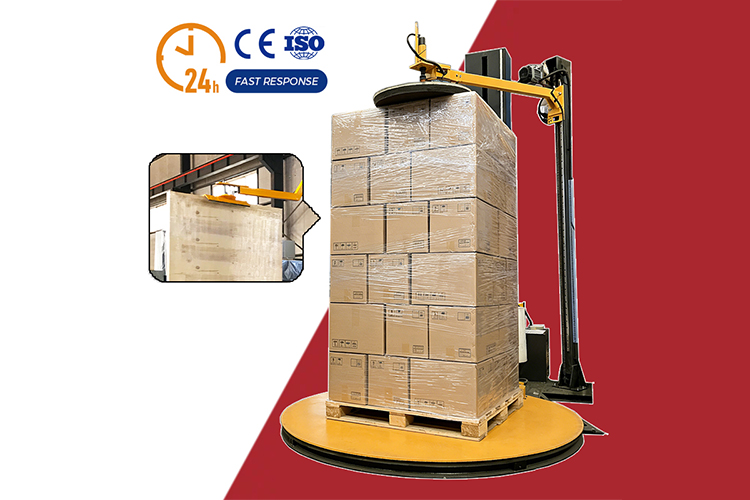
Top Press Pallet Stretch Wrapping Machine
view more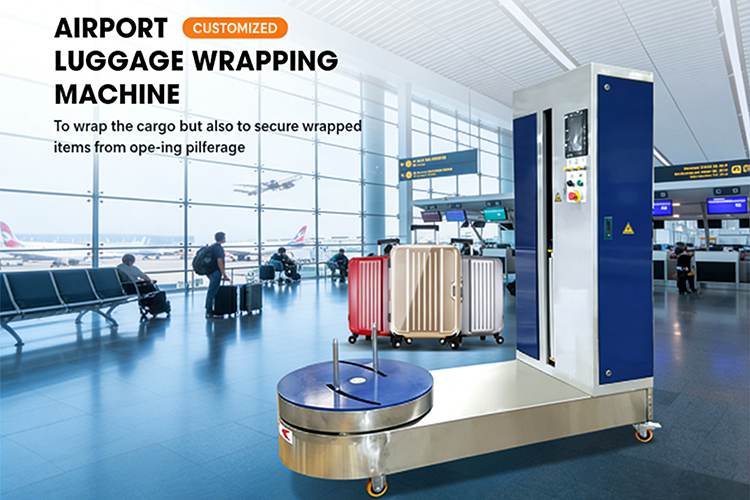
Luggage Wrapping Machine for Airports
view more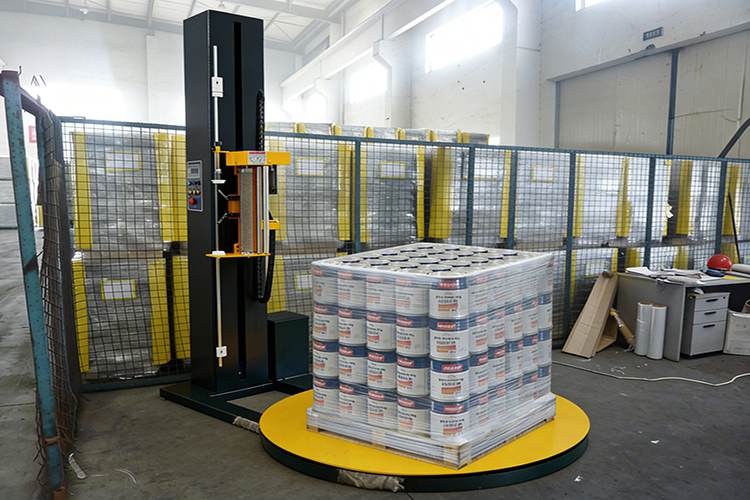
Pallet Stretch Wrapping Machine for Canned Goods
view more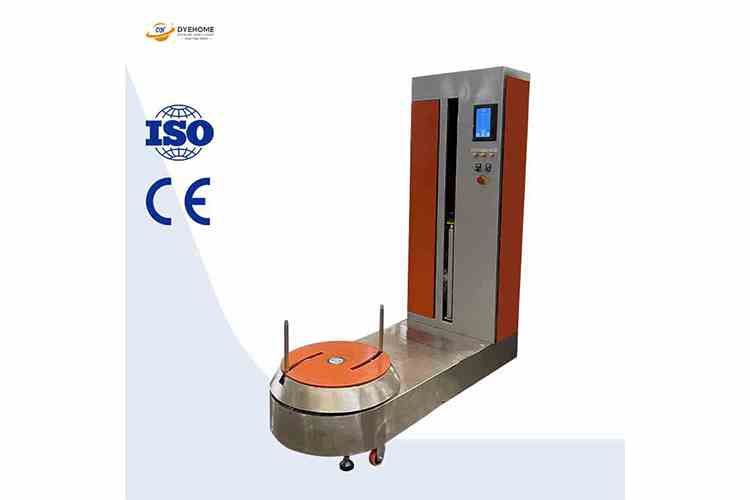
Airport Self-Service Luggage Wrapping Machine
view more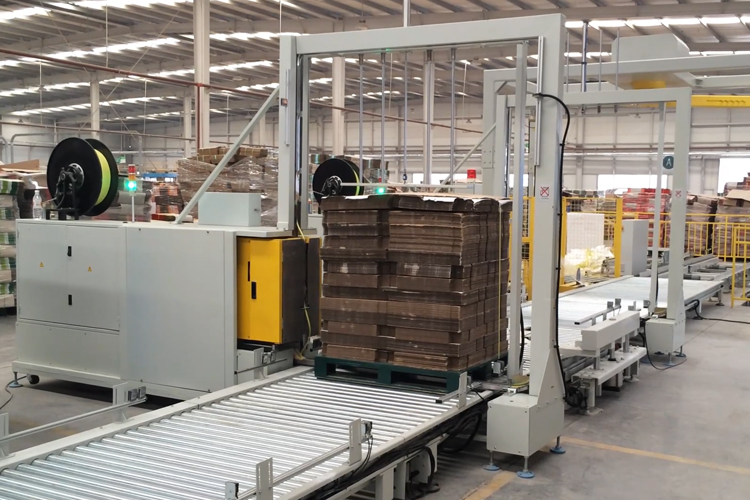
Automated film wrapping and packaging equipment
view more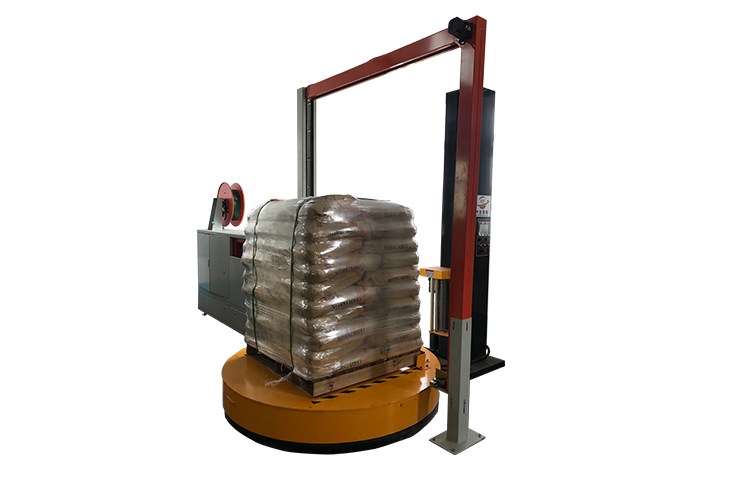
Sword-piercing baler and wrapping machine
view more
 Shandong Dyehome Intelligent Equipment Co.,Ltd
Phone:0086-17362172587
Whatsapp:+8617362172587
Email:machinedyehome@gmail.com
Add:Building 62, 3000 Meili East Road, DmiPark, Wujiapu Street, Huaiyin District, Jinan City,Shandong Province
Jinan Jiasen Packaging Equipment Co., LtdPhone:0086-15665802370
Add:High-end Equipment Manufacturing Industrial Park, East Industrial New Town, Ancheng Town, Pingyin County, Jinan City, Shandong Province
Shandong Golden Pack Intelligent Equipment Co.,LtdPhone:0086-15662690213
Add:High-end Equipment Manufacturing Industrial Park, East Industrial New Town, Ancheng Town, Pingyin County, Jinan City, Shandong Province
YoursIndustry
OurSolutions
OurServices
OurInformation