

Stretch Wrapper Speed Comparison:How Many Pallets Per Hour by Machine Type(2026)
When evaluating stretch wrapping machines,speed is often the first specification buyers compare—and for good reason.Throughput directly determines whether your end-of-line packaging keeps pace with production,avoids bottlenecks,and justifies the capital investment.
Yet stretch wrapper speed varies dramatically across machine types.A semi-automatic turntable wraps 15–25 pallets per hour,while a high-speed inline orbital system can exceed 120 pallets per hour—a nearly 8×difference.Choosing the wrong speed class means either wasted capacity or a production line that can't keep up during peak shifts.
This guide breaks down the real-world throughput of every major stretch wrapper type,explains the factors that affect actual speed,and provides a decision framework for matching machine capacity to your daily pallet volume.
What Determines Stretch Wrapper Speed?
Before comparing specific numbers,it's important to understand what"speed"actually means in stretch wrapping—and what variables cause real-world throughput to differ from published specifications.
Stretch wrapper speed refers to the number of complete pallet wrapping cycles a machine can perform in one hour,measured in pallets per hour(pph).This metric accounts for the full cycle:film clamping,wrapping,cutting,and film tail wipe—not just the rotation speed of the turntable or arm.
Key Speed Factors
Several variables directly affect how many pallets a stretch wrapper can process per hour:
Machine architecture—Turntable,rotary arm,orbital,or robotic design sets the baseline mechanical speed
Automation level—Semi-automatic machines require operator involvement for loading,film clamping,and unloading;automatic machines eliminate most manual steps
Wrap program complexity—A simple 3-layer base-to-top wrap completes faster than a 6-layer program with corner reinforcement and top sheet application
Film pre-stretch ratio—Higher pre-stretch(250%–300%)requires slower carriage travel to maintain tension control,slightly reducing cycle time
Load characteristics—Heavy,unstable,or irregular loads may require slower rotation speeds for safety
Operator efficiency—In semi-automatic systems,forklift positioning and film attachment time can account for 40–60%of total cycle time
Stretch Wrapper Speed by Machine Type:Complete Comparison
The following comparison covers all major stretch wrapper configurations available on the market,from entry-level semi-automatic machines to high-speed inline systems.
Comprehensive Speed Comparison Table
|
Machine Type |
Automation Level |
Pallets/Hour(Typical) |
Best Suited For |
|
Manual(hand wrapping) |
None |
8–12 |
Emergency backup,very low volume |
|
Semi-automatic turntable |
Semi-Auto |
20-40 |
Small warehouses,<50 pallets/day |
|
Automatic turntable |
Full Auto |
20–40 |
Standard manufacturing,50–150 pallets/day |
|
Semi-automatic rotary arm |
Semi-Auto |
20–30 |
Heavy/unstable loads,low-to-mid volume |
|
Automatic rotary arm(standalone) |
Full Auto |
30–45 |
Heavy loads,80–200 pallets/day |
|
Rotary arm(inline/conveyor) |
Full Auto |
40-60 |
High-speed production lines,200+pallets/day |
|
Robotic(mobile)wrapper |
Full Auto |
25–55 |
Multi-location,flexible deployment |
|
Orbital/ring wrapper |
Full Auto |
20-40 |
Ultra-high-volume FMCG,e-commerce fulfillment |
|
Stretch hood machine |
Full Auto |
20-40 |
Beverage,outdoor storage,weatherproofing |
|
Inline/online integrated system |
Full Auto |
20-30 |
Full end-of-line automation,conveyor-synced |
Speed Categories Explained
Entry-Level(Under 20 pph):Manual wrapping and basic semi-automatic turntable machines.Suitable for facilities wrapping fewer than 50 pallets per day,where labor cost is not the primary concern and throughput demands are modest.
Mid-Range(20–50 pph):Automatic turntable and standalone rotary arm systems.This is where most B2B manufacturing and distribution operations fall—handling 50–200 pallets per day across one or two shifts.
High-Speed(50–120 pph):Inline rotary arm,orbital,and robotic systems.Designed for facilities running 200+pallets daily,often with full conveyor integration and minimal operator involvement.
Ultra-High-Speed(100+pph):Stretch hood machines and specialized orbital ring systems.Reserved for the highest-volume operations—beverage distribution centers,large-scale FMCG production,and major e-commerce fulfillment hubs.
Turntable vs Rotary Arm vs Orbital:Speed Deep Dive
The three most common industrial stretch wrapper types—turntable,rotary arm,and orbital—account for the majority of speed-related purchasing decisions.Here's a deeper look at why their speeds differ and what that means for your operation.
Turntable Stretch Wrappers:The Standard Workhorse
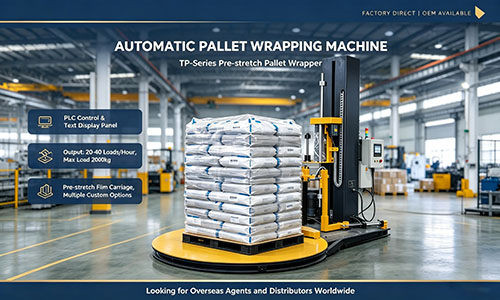
Turntable wrappers rotate the pallet on a motorized platform while the film carriage travels vertically.Speed is limited by:
Turntable rotation speed:Typically 10–15 RPM maximum
Film carriage vertical travel:10–20 m/min
Load stability constraints:Heavier or taller loads require slower rotation to prevent centrifugal shifting
A standard automatic turntable completes a full wrap cycle in 90–150 seconds,including load positioning,wrapping,and film cutting.With an experienced operator and standardized pallets,throughput reaches 35–40 pallets per hour in optimal conditions.
Real-world benchmark:A chemical plant wrapping 80 standardized 1,200×1,000 mm pallets per day on an automatic turntable runs approximately 2.5 hours of wrap time across a single shift—well within capacity.
Rotary Arm Wrappers:Speed Without Load Movement
Rotary arm machines keep the pallet stationary while a powered arm orbits around it.This design eliminates centrifugal forces on the load,enabling two speed advantages:
No load stability constraint—The arm can rotate faster because the pallet doesn't move,allowing speeds of 30–60 pallets per hour for standalone models
Inline compatibility—Conveyor-fed rotary arm systems bypass forklift loading entirely,reaching 45–95 pallets per hour in production line configurations
For facilities handling heavy loads(1,500+kg)or unstable products(chemical bags,loose cartons),rotary arm machines deliver higher throughput than turntables because they eliminate the speed-reducing caution required when rotating heavy loads.
Orbital/Ring Wrappers:The Speed Leader
Orbital wrappers use a fixed horizontal ring through which the film carriage travels at high speed while the pallet moves linearly.This design enables:
Continuous wrapping motion—No acceleration/deceleration cycles for rotation direction changes
Full 360°wrap symmetry—Consistent film application at high speed
Throughput of 20–40pallets per hour in fully integrated lines
Orbital systems are the fastest stretch wrapping technology available,but they require precise conveyor integration,significant ceiling height(3.1 m minimum),and dedicated floor space.They make economic sense only above 200+pallets per day.
How to Match Wrapper Speed to Your Production Volume
Selecting a machine based on speed alone leads to overspending or undersizing.Instead,use this volume-based framework to identify the right speed class for your operation.
Step 1:Calculate Your Daily Pallet Volume
Count the total number of pallets wrapped per day across all shifts.Include peak-day volumes,not just averages—your machine must handle busy days without creating a bottleneck.
Step 2:Apply the 80%Capacity Rule
Never select a machine that runs at more than 80%of its rated capacity during normal operations.This 20%buffer accounts for maintenance downtime,shift changes,film roll changes,and occasional rework.
Example:If you wrap 120 pallets per day across two 8-hour shifts,you need a machine rated for at least 150 pallets per day(120÷0.80).That translates to approximately 19 pallets per hour over two shifts—an automatic turntable handles this comfortably.
FAQ:Stretch Wrapper Speed Questions Answered
Q:How many pallets per hour can a standard turntable stretch wrapper handle?
A:A standard automatic turntable stretch wrapper handles 25–40 pallets per hour in typical conditions.Semi-automatic turntable models produce 15–25 pallets per hour,limited primarily by operator loading and unloading time rather than machine speed.
Q:What is the fastest type of stretch wrapping machine?
A:Stretch hood machines are the fastest,reaching 80–100+pallets per hour.For conventional stretch film wrapping,orbital ring systems are the fastest at 20–40 pallets per hour in fully integrated conveyor lines.
Q:Does a faster stretch wrapper use more film?
A:No.Faster machines typically use less film per pallet because they feature higher pre-stretch ratios(250–300%)and precise electronic tension control.Hand wrapping at slow speed uses 40–60%more film than a high-speed automatic machine due to inconsistent tension and overlapping.
Q:How do I calculate the stretch wrapper speed I need?
A:Divide your daily pallet volume by the number of available wrapping hours per shift,then apply an 80%capacity factor.For example:120 pallets/day÷6 wrapping hours=20 pallets/hour needed÷0.80=25 pph machine rating required.An automatic turntable meets this need.
products
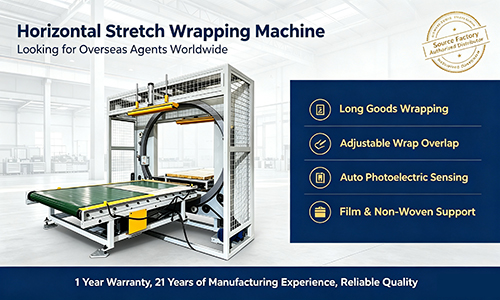
Horizontal Stretch Wrapping Machine SP1000 for Pipes
view more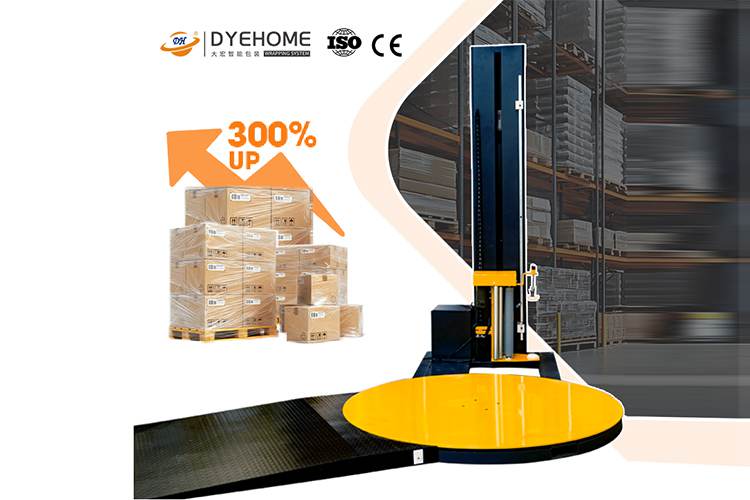
Pallet Stretch Wrapping Machine
view more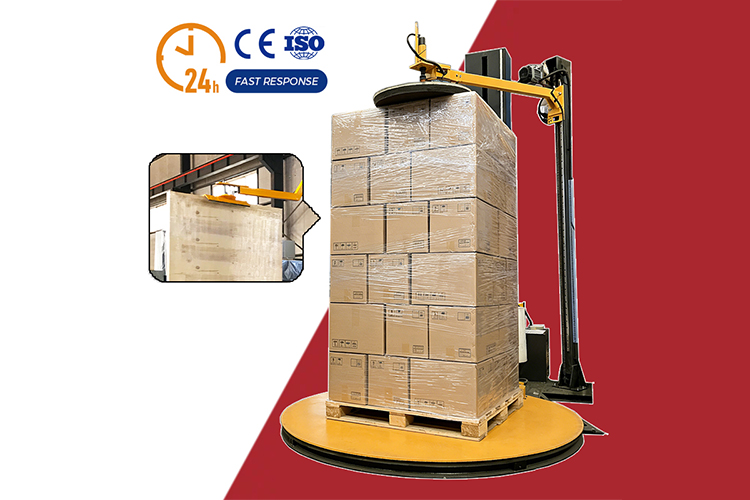
Top Press Pallet Stretch Wrapping Machine
view more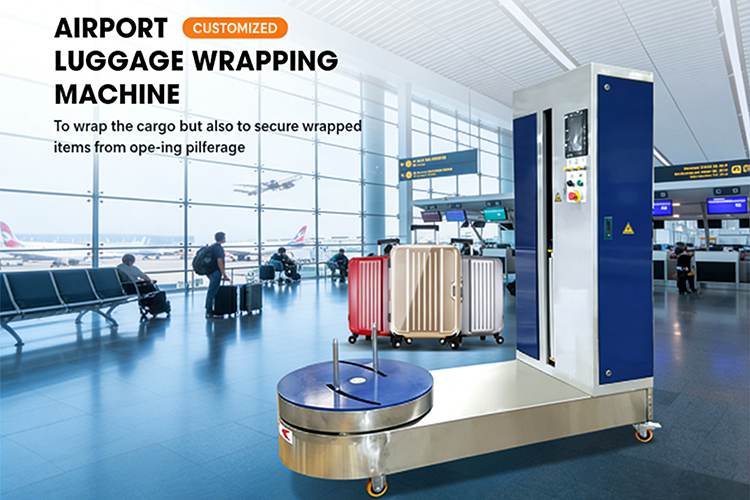
Luggage Wrapping Machine for Airports
view more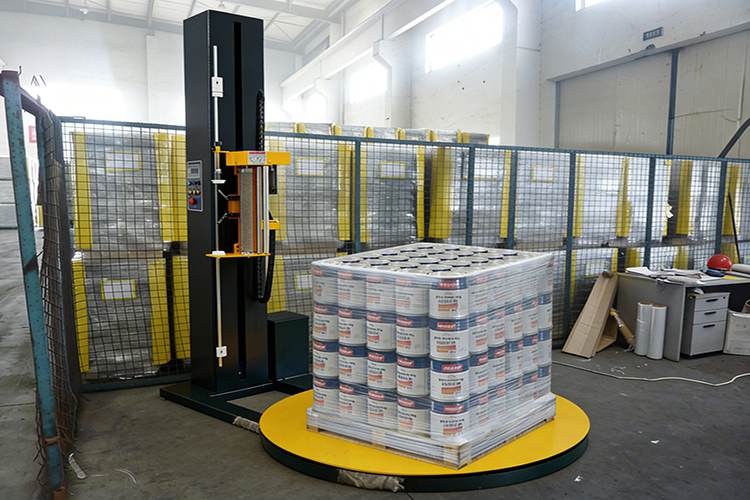
Pallet Stretch Wrapping Machine for Canned Goods
view more
Airport Self-Service Luggage Wrapping Machine
view more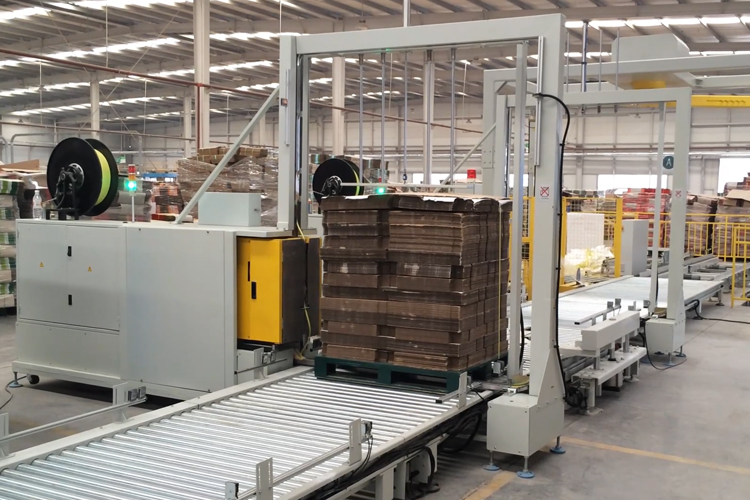
Automated film wrapping and packaging equipment
view more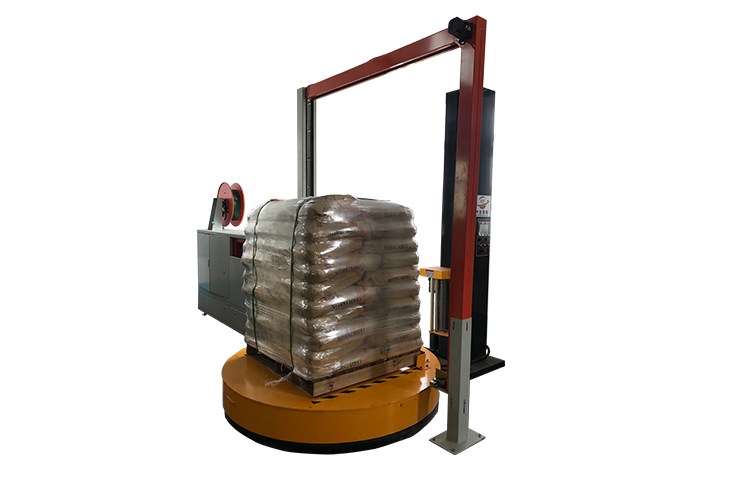
Sword-piercing baler and wrapping machine
view more
 Shandong Dyehome Intelligent Equipment Co.,Ltd
Phone:0086-17362172587
Whatsapp:+8617362172587
Email:machinedyehome@gmail.com
Add:Building 62, 3000 Meili East Road, DmiPark, Wujiapu Street, Huaiyin District, Jinan City,Shandong Province
Jinan Jiasen Packaging Equipment Co., LtdPhone:0086-15665802370
Add:High-end Equipment Manufacturing Industrial Park, East Industrial New Town, Ancheng Town, Pingyin County, Jinan City, Shandong Province
Shandong Golden Pack Intelligent Equipment Co.,LtdPhone:0086-15662690213
Add:High-end Equipment Manufacturing Industrial Park, East Industrial New Town, Ancheng Town, Pingyin County, Jinan City, Shandong Province
YoursIndustry
OurSolutions
OurServices
OurInformation