

Stretch Wrapper vs Hand Wrapping:Which Saves More Time and Money in 2026?
Every warehouse that ships palletized goods faces the same question:should we keep wrapping by hand,or invest in a stretch wrapping machine?The answer has real financial consequences—affecting labor budgets,film costs,load damage rates,and worker safety.
If you wrap more than 15 pallets per day,this comparison will likely change how you think about your end-of-line packaging.In this guide,we break down stretch wrapper vs hand wrapping across seven critical dimensions—with real data from industry sources—so you can make an informed,evidence-based decision for your operation.
Many warehouse managers we work with assume hand wrapping is"cheaper"because there is no machine to purchase.But when you account for the full cost picture—film waste,labor hours,injury claims,and transit damage—the economics tell a very different story.Let us examine the data.
What Is the Core Difference Between Machine and Hand Wrapping?
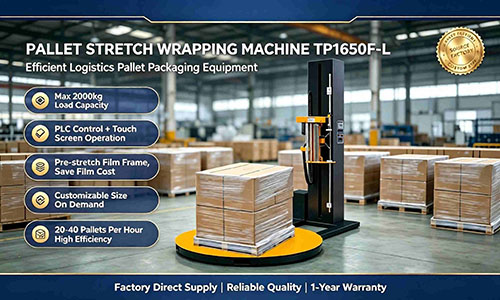
A stretch wrapper is an automated or semi-automatic machine that rotates the pallet(turntable type)or orbits a spinning film carriage around a stationary pallet(rotary arm type)to apply stretch film with controlled,consistent tension.Modern machines use pre-stretch rollers that elongate the film by 200–300%before it contacts the load.
Hand wrapping involves an operator walking around the pallet with a handheld roll of stretch film,applying it in overlapping layers while manually stretching the material.
Quick definition for decision-makers:A stretch wrapper automates film application with controlled pre-stretch and consistent tension;hand wrapping relies on manual labor with variable results.
Head-to-Head Comparison:6 Key Dimensions
1.Wrapping Speed and Throughput
|
Metric |
Hand Wrapping |
Fully Automatic Machine |
|
Time per pallet |
3–5 minutes |
1–2 minutes |
|
Pallets per hour |
12–20 |
20–40+ |
|
Operator involvement |
Full-time labor |
Push-button/conveyor-fed |
For a facility wrapping 50 pallets per day,hand wrapping consumes roughly 4–5 hours of labor.The same workload takes a semi-automatic machine about 90 minutes with minimal operator involvement.
A fully automatic inline stretch wrapper can process 20–40 pallets per hour—freeing your team for higher-value tasks like quality control,inventory management,or order fulfillment.
2.Film Consumption and Material Cost
This is where the savings compound quickly.
|
Factor |
Hand Wrapping |
Machine Wrapping |
|
Pre-stretch ratio |
100%(manual force) |
150—350%(powered rollers) |
|
Film gauge used |
80–120 gauge(thicker) |
50–80 gauge(thinner,engineered) |
|
Cost per pallet |
$0.45–$0.65 |
$0.25–$0.40 |
|
Film waste |
High(over-wrapping to compensate) |
Low(programmable,repeatable) |
Key data point:Machine wrapping consumes 30–50%less film per pallet compared to hand wrapping,thanks to powered pre-stretch technology that elongates film up to 300%before application.
Over 10,000 pallets per year,this translates to$2,000–$4,000 in film savings alone—and that number grows with higher volume.
3.Labor Cost and Productivity Impact
Manual pallet wrapping is one of the most labor-intensive packaging tasks in a warehouse.The hidden costs go far beyond the time spent walking around pallets:
Direct labor cost:At an average warehouse wage of$18–$22/hour,wrapping 50 pallets daily by hand costs$72–$110/day in labor alone
Opportunity cost:That same worker could be performing inventory counting,order picking,or quality inspection—tasks that directly generate revenue
Shift variability:Different operators wrap at different speeds and quality levels,creating inconsistency across shifts
A stretch wrapper reduces wrapping labor by 70–80%,allowing you to reallocate workers to value-added activities while maintaining consistent output quality.
4.Load Stability and Transit Damage
This dimension often gets overlooked until something goes wrong.
|
Metric |
Hand Wrapping |
Machine Wrapping |
|
Tension consistency |
Variable(operator-dependent) |
Controlled,repeatable |
|
Load retention after 24h |
Baseline |
15–25%better |
|
Transit damage rate |
Higher(inconsistent coverage) |
30–60%reduction in damage claims |
|
Pallet bonding quality |
Unreliable |
Consistent,measurable |
Machine-applied stretch film delivers uniform containment force across every wrap,every shift,every day.This consistency is critical for:
Long-haul shipments where loads face vibration,braking forces,and temperature changes
Heavy or dense loads(chemical pallets,building materials,metal parts)where failure means safety hazards
Retail and food distribution where damaged loads mean rejected deliveries and chargebacks
Industry data:Automated stretch wrapping can reduce transit damage claims by 30–60%compared to manual wrapping or unsecured loads.(Source:Robopac USA,2025)
5.Worker Safety and Injury Risk
Manual pallet wrapping is classified as a hazardous manual task in multiple jurisdictions due to its repetitive motion requirements.The injury data is compelling:
Overexertion injuries—including those from repetitive bending,twisting,and walking patterns inherent to hand wrapping—caused 241,900 days-away-from-work cases in the U.S.in 2022 alone
The average cost per overexertion injury(medical+lost productivity)is approximately$36,000(Source:National Safety Council,Injury Facts 2023)
Workers wrapping pallets by hand experience repetitive stress on backs,shoulders,and knees—the body parts most commonly cited in warehouse injury claims
In Australia,body stressing injuries—closely linked to tasks like manual pallet wrapping—account for 34.5%of all serious workers'compensation claims(Source:Safe Work Australia,2025)
The transport,postal,and warehousing sector alone accounts for 29%of all work-related traumatic fatalities nationwide,underscoring the broader risk environment(Source:Safe Work Australia)
A stretch wrapper eliminates physical wrapping labor entirely,removing the primary injury mechanism.For facilities tracking workers'compensation premiums,this alone can justify the investment.Consider that a single serious back-strain claim can cost$12,000–$40,000 depending on severity—often exceeding the annual cost of a semi-automatic wrapper in a single incident.
6.Environmental Impact and Sustainability
In an era of increasing ESG(Environmental,Social,and Governance)scrutiny,the environmental difference between hand and machine wrapping is significant:
|
Environmental Factor |
Hand Wrapping |
Machine Wrapping |
|
Film consumption per pallet |
Higher(100%baseline) |
30–50%less plastic used |
|
Film roll waste |
More rolls consumed |
Fewer rolls=less packaging waste |
|
Carbon footprint |
Higher material production |
Lower due to reduced material demand |
|
Recyclability impact |
Excess film complicates recycling |
Optimized layers=cleaner recycling stream |
A facility wrapping 50 pallets per day using hand methods may consume 30–50%more stretch film annually than the same facility using a pre-stretch machine.This translates to hundreds of kilograms of unnecessary LLDPE plastic entering the waste stream each year.
For companies with sustainability targets or customers requiring environmental compliance documentation,machine wrapping provides measurable,reportable reductions in material consumption—a growing competitive advantage in global supply chains.
7.Return on Investment(ROI)Timeline
When does a stretch wrapper pay for itself?
|
Scenario |
Annual Volume |
Machine Type |
Est.Investment |
Payback Period |
|
Small warehouse |
3,000 pallets/yr |
Semi-auto turntable |
$3,000–$8,000 |
12–18 months |
|
Mid-size operation |
10,000 pallets/yr |
Semi-auto/auto |
$8,000–$15,000 |
8–14 months |
|
High-volume facility |
30,000+pallets/yr |
Fully automatic inline |
$15,000–$30,000 |
6–12 months |
ROI calculation for a typical mid-size operation(10,000 pallets/year):
Film savings:$2,000–$4,000/year
Labor savings:$8,000–$15,000/year(reallocating 1+FTE)
Damage reduction:$3,000–$8,000/year(estimated 40%reduction in claims)
Total annual savings:$13,000–$27,000
Bottom line:For most facilities wrapping 20+pallets daily,a stretch wrapper delivers measurable ROI within 12–18 months—and generates net savings every year after that.
When Does Hand Wrapping Still Make Sense?
Hand wrapping is not always the wrong choice.Consider staying with manual wrapping if:
You wrap fewer than 10–15 pallets per day
Your loads are highly variable in size and shape,making machine setup impractical
Your budget is under$2,000 and you cannot justify capital expenditure
You operate a small,local workshop with minimal shipping volume
For these scenarios,hand wrapping remains a functional,low-cost solution.
When Should You Upgrade to a Stretch Wrapper?
Upgrade to machine wrapping when:
You wrap 20+pallets per day consistently
You are experiencing recurring transit damage complaints from customers
Your labor costs are rising and you need to improve throughput without hiring
You want to reduce your plastic footprint(machines use 30–50%less film)
You need consistent,auditable wrapping quality for carrier compliance or retailer requirements
Worker safety is a priority and you want to reduce injury-related costs
How to Choose the Right Stretch Wrapper for Your Operation
Once you decide to upgrade,match the machine type to your volume and load profile:
|
Machine Type |
Best For |
Price Range |
Throughput |
|
Semi-auto turntable |
15–40 pallets/day,standard loads |
$3,000–$8,000 |
20–40 pallets/hr |
|
Rotary arm(cantilever) |
Heavy,unstable,or fragile loads |
$8,000–$20,000 |
15–30 pallets/hr |
|
Fully automatic inline |
40+pallets/day,high-volume lines |
$15,000–$30,000 |
40–60 pallets/hr |
|
Horizontal(orbital) |
Long or irregular-shaped loads |
$10,000–$25,000 |
Varies by model |
Shandong Dyehome Intelligent Equipment Co.,Ltd.offers a complete range of stretch wrapping solutions—from semi-automatic turntable wrappers ideal for small-to-mid operations,to fully automatic inline systems for high-volume production lines.With 21 years of manufacturing experience and over 30 patents,Dyehome provides factory-direct pricing with full technical support for overseas buyers.
Real-World Scenario:A Mid-Size Chemical Plant's Switch
To illustrate the impact,consider a representative case:a mid-size chemical manufacturing plant wrapping 40 pallets per day(approximately 10,000 pallets per year),previously using two workers for hand wrapping.
Before(Hand Wrapping):
Two workers spending 3–4 hours daily on wrapping:$150–$180/day labor cost
Film consumption:approximately**$0.55/pallet**=$5,500/year
Transit damage claims:approximately 8–12 per year at$800–$1,500 each=$6,400–$18,000/year
One minor back injury per year:workers'comp cost$4,000–$8,000
After(Semi-Auto Turntable Stretch Wrapper):
One operator loading+starting machine:$30–$40/day labor cost
Film consumption:approximately**$0.32/pallet**=$3,200/year(with 250%pre-stretch)
Transit damage claims:reduced to 2–4 per year=$1,600–$6,000/year
No wrapping-related injuries
Annual savings:$14,000–$27,000 against a machine investment of$8,000–$12,000.
This scenario is representative based on published industry data from Robopac USA,Lantech,and the National Safety Council.Actual results depend on your specific volume,labor rates,and load profiles.
FAQ:Stretch Wrapper vs Hand Wrapping
Q:How much faster is a stretch wrapper than hand wrapping?
A:A semi-automatic stretch wrapper completes a pallet in 1–2 minutes,compared to 3–5 minutes for hand wrapping.That is a 60–75%time reduction per pallet.For a facility wrapping 50 pallets daily,this saves approximately 3–4 hours of labor per day.
Q:Does machine wrapping really use less stretch film?
A:Yes.Machine wrappers use powered pre-stretch rollers that elongate film by 200–300%,compared to the 100–150%achievable by hand.This reduces film consumption by 30–50%per pallet.At 10,000 pallets per year,savings typically reach$2,000–$4,000 in film costs alone.
Q:What is the break-even point for switching from hand to machine wrapping?
A:Most facilities wrapping 20+pallets per day see ROI within 12–18 months.The payback period shortens significantly at higher volumes—facilities wrapping 30,000+pallets annually often recover their investment in 6–12 months through combined film,labor,and damage savings.
Q:Is hand wrapping bad for workers'health?
A:Manual pallet wrapping involves repetitive bending,twisting,and circular walking—movements classified as hazardous manual tasks.Overexertion injuries from such tasks accounted for 241,900 days-away-from-work cases in the U.S.in 2022(Bureau of Labor Statistics).The average cost per injury is approximately$36,000(National Safety Council).A stretch wrapper eliminates this injury risk entirely.
Q:Can a small warehouse afford a stretch wrapper?
A:Semi-automatic turntable stretch wrappers start at approximately$3,000–$8,000.With annual savings of$10,000+in film and labor for a 10,000-pallet/year operation,most machines pay for themselves within the first year.Many suppliers,including Dyehome,offer factory-direct pricing and flexible payment terms for international buyers.
products
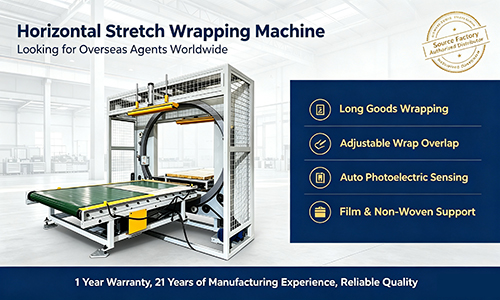
Horizontal Stretch Wrapping Machine SP1000 for Pipes
view more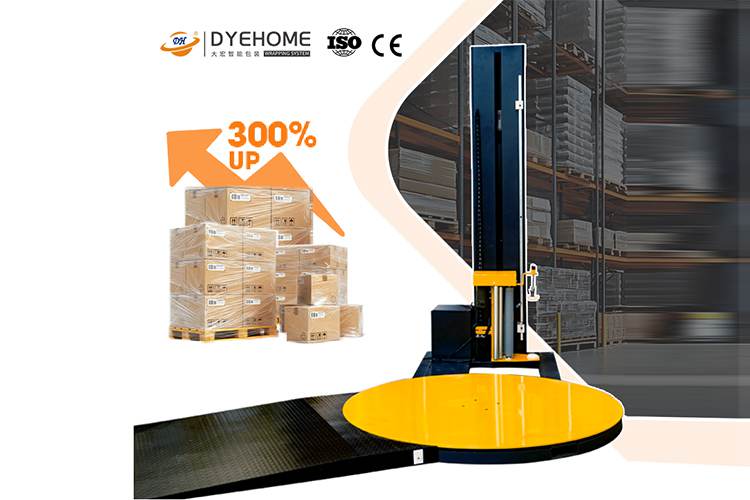
Pallet Stretch Wrapping Machine
view more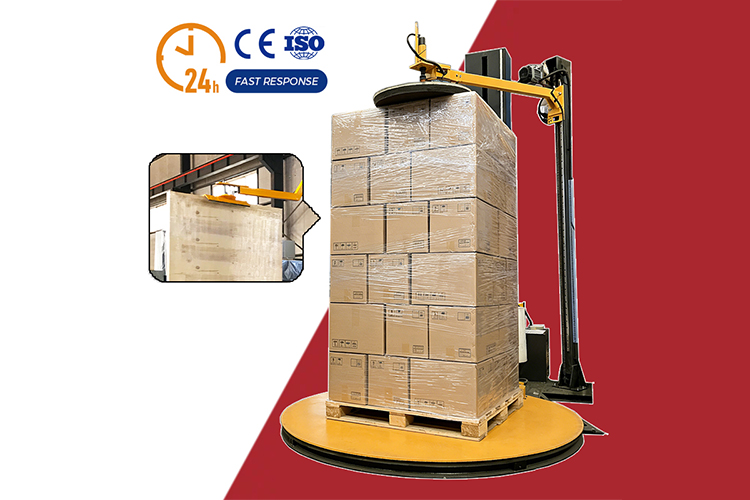
Top Press Pallet Stretch Wrapping Machine
view more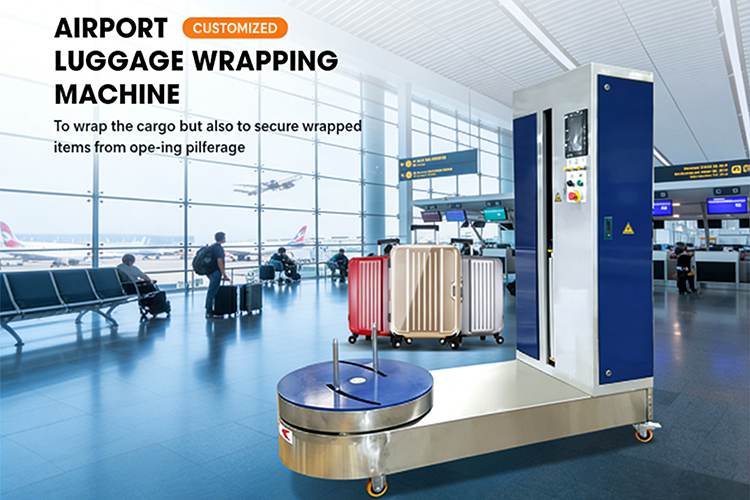
Luggage Wrapping Machine for Airports
view more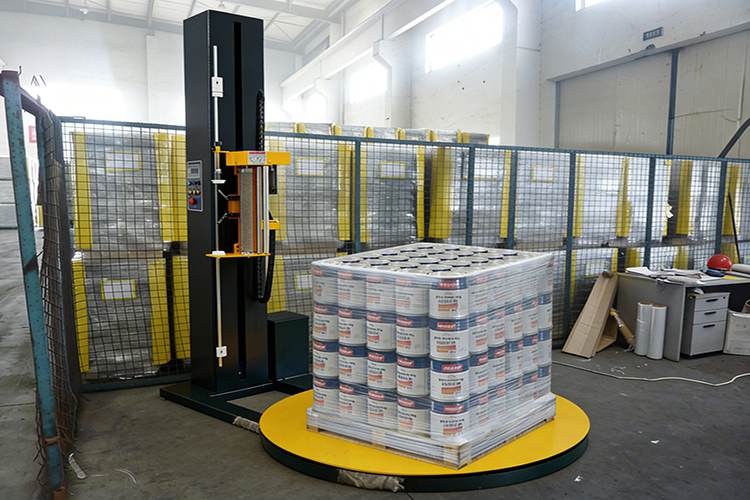
Pallet Stretch Wrapping Machine for Canned Goods
view more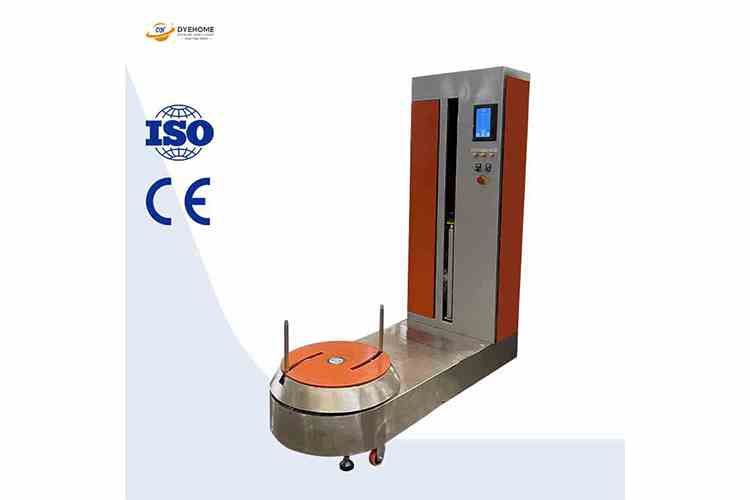
Airport Self-Service Luggage Wrapping Machine
view more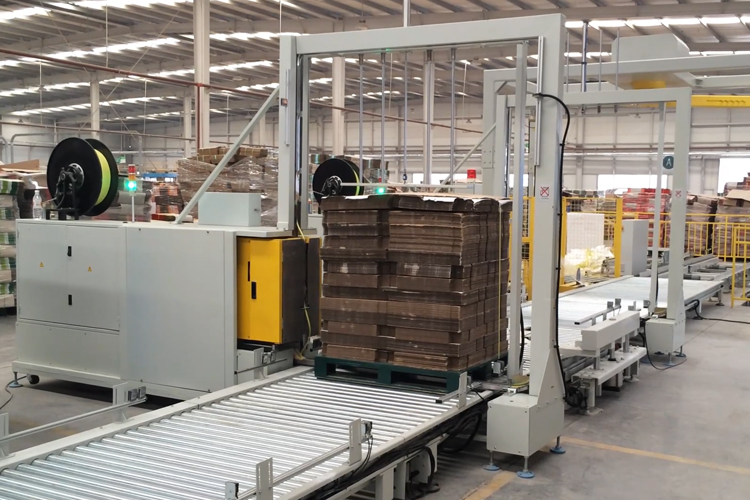
Automated film wrapping and packaging equipment
view more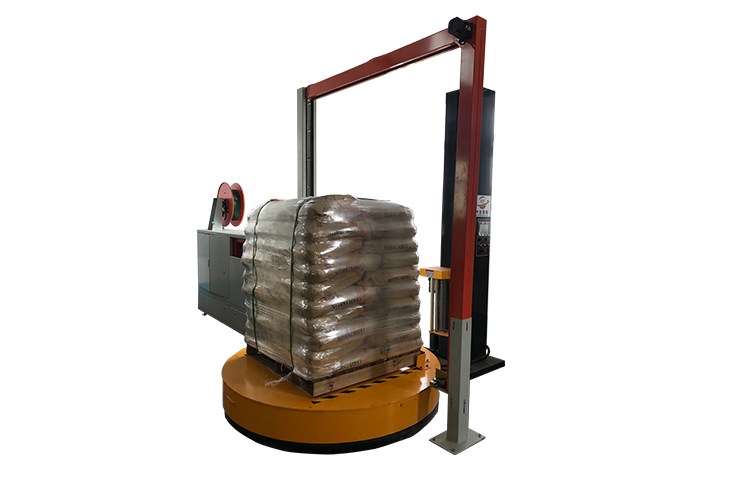
Sword-piercing baler and wrapping machine
view more
 Shandong Dyehome Intelligent Equipment Co.,Ltd
Phone:0086-17362172587
Whatsapp:+8617362172587
Email:machinedyehome@gmail.com
Add:Building 62, 3000 Meili East Road, DmiPark, Wujiapu Street, Huaiyin District, Jinan City,Shandong Province
Jinan Jiasen Packaging Equipment Co., LtdPhone:0086-15665802370
Add:High-end Equipment Manufacturing Industrial Park, East Industrial New Town, Ancheng Town, Pingyin County, Jinan City, Shandong Province
Shandong Golden Pack Intelligent Equipment Co.,LtdPhone:0086-15662690213
Add:High-end Equipment Manufacturing Industrial Park, East Industrial New Town, Ancheng Town, Pingyin County, Jinan City, Shandong Province
YoursIndustry
OurSolutions
OurServices
OurInformation