

Stretch Wrapper vs Hand Wrapping:Which Saves More in 2026?
Quick definition:A stretch wrapper is a powered machine that wraps stretch film around palletized loads automatically or semi-automatically.Hand wrapping is the manual process of applying stretch film by walking around the load with a handheld roll.The core difference:machines apply film at 250–300%pre-stretch in under 2 minutes;hand wrapping achieves only 10–20%pre-stretch and takes 3–10 minutes per pallet.
If your warehouse still wraps every pallet by hand,you're not alone—millions of facilities worldwide rely on manual stretch wrapping daily.But if you're shipping more than 20 pallets per day,the hidden costs of hand wrapping may be significantly higher than you realize.
This article breaks down the real cost,speed,film efficiency,safety,and load quality differences between stretch wrappers and hand wrapping—backed by 2026 industry data—so you can make an evidence-based decision for your operation.
1.Wrapping Speed:How Much Time Does Each Method Actually Take?
Speed is often the first thing operations notice after switching from hand to machine wrapping.Here's the real-world comparison per pallet:
|
Wrapping Method |
Time Per Pallet |
Output Per Hour |
Labor Per 30 Pallets |
|
Hand wrapping |
3–10 minutes |
6–20 pallets |
2.5–5 hours |
|
Semi-automatic turntable |
1–2 minutes |
30–60 pallets |
0.5–1 hour |
|
Fully automatic inline wrapper |
18–48 seconds |
75–200 pallets |
Near zero |
What this means in practice:For a facility wrapping 50 pallets per day,hand wrapping consumes 4–8 labor hours—essentially one full-time worker's shift dedicated solely to wrapping.A semi-automatic stretch wrapper cuts that to under 1 hour,freeing that operator for picking,quality checks,or other value-added tasks.
With a turntable stretch wrapper,the workflow is simple:a forklift driver places the load on the turntable,tucks the film edge,presses start,and moves to the next task.The machine completes the wrap cycle while the operator handles the next load.
2.Film Consumption:The Hidden Cost Most Operations Overlook
Film consumption is where the cost gap between hand wrapping and machine wrapping becomes dramatic—and it's a factor many buyers miss when evaluating the investment.
The Pre-Stretch Difference
The key metric is pre-stretch ratio:how much the film is elongated before it contacts the load.Higher pre-stretch means more coverage per meter of film,which directly translates to lower cost per pallet.
|
Pre-Stretch Level |
Film Yield From 6,000 ft Roll |
Typical Method |
|
10–20%(hand wrapping) |
6,600–7,200 ft |
Manual |
|
150%(basic machine) |
15,000 ft |
Entry-level wrapper |
|
250%(standard machine) |
21,000 ft |
Most turntable wrappers |
|
300%(high-performance) |
24,000 ft |
Advanced powered pre-stretch |
Key finding:At 250%pre-stretch,a single roll covers roughly 3×the pallets it would at hand wrapping stretch levels.
Grams Per Pallet:The Real Numbers
Independent testing confirms the gap:
Hand wrapping:250–400 grams of film per pallet(some sources report 146g with optimized technique)
Machine wrapping:90–130 grams per pallet(with powered pre-stretch at 250%+)
That's a 35–65%reduction in film per pallet when switching to a machine.
Cost Per Pallet Comparison
Based on 2026 LLDPE resin prices:
|
Metric |
Hand Wrapping |
Machine Wrapping |
Savings |
|
Film cost per pallet |
$0.45–$0.65 |
$0.25–$0.40 |
35–50% |
|
Film waste rate |
4–6% |
<2% |
~50%less waste |
|
Pallets per roll |
12–18 |
25–35 |
~2×more coverage |
For an operation shipping 10,000 pallets per year,machine wrapping saves$2,000–$4,000 annually on film alone—before counting labor savings.
3.Total Cost of Ownership:The 60-Month Picture
Looking at film cost alone tells only part of the story.A proper comparison requires a Total Cost of Ownership(TCO)analysis across a 3–5 year evaluation window.
The 6 Cost Drivers of Stretch Wrapping
Industry TCO analysis identifies six cost categories,ranked by weight:
Film consumable:60–75%of total cost
Equipment depreciation:10–15%(machine only)
Labor:8–12%of total cost
Film waste and rework:2–5%
Pallet damage and claims:2–6%
Energy:1–3%($0.01–$0.04 per pallet)
Real-World 60-Month Cost Example
For a mid-volume warehouse running 250 pallets per day over 60 months:
|
Cost Category |
Hand Wrapping |
Machine Wrapping |
Difference |
|
Film(70%of TCO) |
$270,000–$320,000 |
$110,000–$140,000 |
−$160,000 |
|
Labor(18%of TCO) |
$68,000–$81,000 |
$20,000–$30,000 |
−$50,000 |
|
Film waste(4%) |
$15,000–$18,000 |
$3,000–$5,000 |
−$12,000 |
|
Damage claims(3%) |
$15,000–$25,000 |
$5,000–$8,000 |
−$15,000 |
|
Equipment capex |
$0 |
$15,000–$25,000 |
+$20,000 |
|
Estimated Total |
$380,000–$450,000 |
$155,000–$210,000 |
−$200,000+ |
Bottom line:Over 5 years,switching from hand wrapping to a stretch wrapper can save a mid-volume operation over$200,000 in total costs—even after accounting for equipment purchase,installation,and maintenance.
4.ROI Calculator:When Does a Stretch Wrapper Pay for Itself?
Equipment Cost Ranges(2026)
|
Machine Type |
Price Range(USD) |
Best For |
|
Basic turntable wrapper |
$2,000–$8,000 |
20–50 pallets/day |
|
Semi-automatic with ramp |
$8,000–$25,000 |
Higher volume,heavier loads |
|
Rotary arm/cantilever |
$35,000–$90,000 |
High-mix,heavy,or unstable loads |
|
Fully automatic inline |
$50,000–$120,000+ |
200+pallets/day,unmanned operation |
Breakeven Analysis
The crossover point depends primarily on daily pallet volume:
|
Daily Pallet Volume |
Estimated Payback Period |
Annual Savings(Film+Labor) |
|
15–20 pallets |
24–36 months |
$3,000–$6,000 |
|
25–30 pallets |
12–18 months |
$8,000–$15,000 |
|
50 pallets |
6–12 months |
$18,000–$30,000 |
|
100+pallets |
4–8 months |
$40,000–$80,000 |
Rule of thumb:If you consistently wrap 20+pallets per day,it's time to run the numbers on a stretch wrapper.At 30+pallets per day,the ROI on a basic turntable wrapper is typically 12–18 months or less.
5.Load Quality&Safety:The Hidden Advantages of Machine Wrapping
Load Consistency
One of the most underappreciated advantages of machine wrapping is consistency.Every pallet gets the same tension,the same number of film passes,and the same wrap pattern—regardless of shift,operator fatigue,or time of day.
|
Quality Factor |
Hand Wrapping |
Machine Wrapping |
|
Film tension |
Varies by operator |
Consistent,programmable |
|
Wrap passes |
Inconsistent count |
Precise,repeatable |
|
Film usage when fatigued |
Increases significantly |
No operator fatigue variable |
|
Load stability(24-hr retention) |
Baseline |
15–25%better |
|
Quality at end of shift |
Degrades noticeably |
Same as start of shift |
Independent tests show machine-wrapped loads provide 15–25%better load retention over 24 hours,particularly important for sharp-edged boxes or mixed-SKU pallets.
Transit Damage Reduction
Average LTL freight claim:$3,777
Damage rates from manual wrapping are 3–5×higher than machine wrapping
0.05%of shipped products are unsellable due to damage(GMA/FMI/Deloitte study)
For a facility shipping$2M in product annually,switching to machine wrapping can reduce damage costs from~$4,000/year to~$1,000/year.
FAQ
Q: What is the breakeven point for switching from hand wrapping to a stretch wrapper?
A: Most operations see positive ROI at 20+ pallets per day. At 30+ pallets daily, a basic turntable wrapper typically pays for itself in 12–18 months through combined film savings (35–50%) and labor reduction (60–80%). Below 15 pallets per day, hand wrapping usually remains more cost-effective.
Q: How much film does a stretch wrapper save compared to hand wrapping?
A: A stretch wrapper with powered pre-stretch at 250% reduces film consumption by 35–65% per pallet. Hand wrapping uses 250–400 grams of film per pallet; machine wrapping uses 90–130 grams. For a facility wrapping 10,000 pallets annually, this translates to $2,000–$4,000 in annual film savings alone.
Q: Is machine wrapping really safer than hand wrapping?
A: Yes. Manual wrapping involves repetitive twisting, bending, and pulling — activities OSHA identifies as high-risk for musculoskeletal injuries. Industry data shows hand wrapping contributes to 34% of warehouse soft-tissue injuries. Machine wrapping eliminates these repetitive motion risks entirely, and preventing even one back injury (average workers' comp claim: $40,000+) can justify the entire equipment investment.
Q: What type of stretch wrapper should I choose as a first machine?
A: For most first-time buyers wrapping 20–50 pallets per day, a semi-automatic turntable stretch wrapper ($8,000–$25,000) offers the best balance of performance and investment. Key features to look for: powered pre-stretch carriage (250%+), adjustable wrap parameters, and variable speed turntable. If your loads exceed 1,200 kg or are unstable, consider a rotary arm model instead.
products
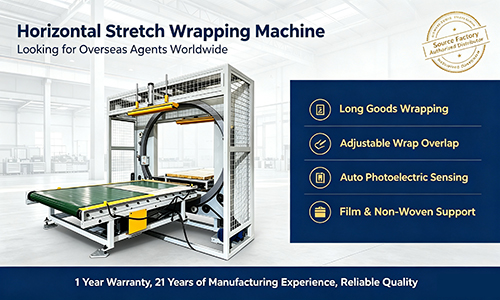
Horizontal Stretch Wrapping Machine SP1000 for Pipes
view more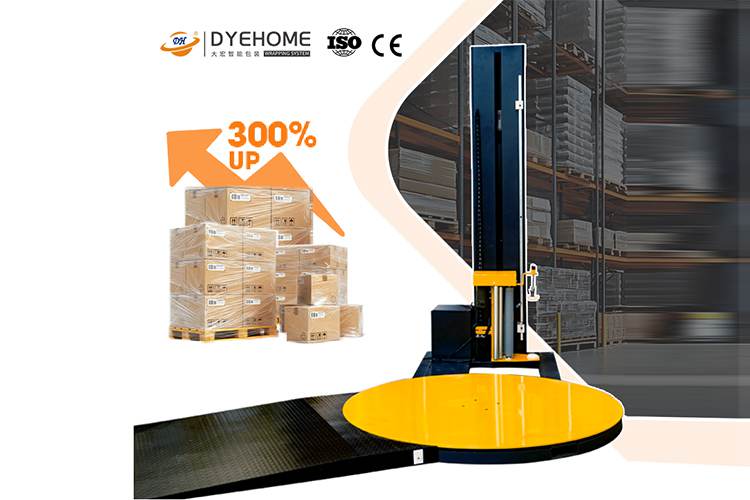
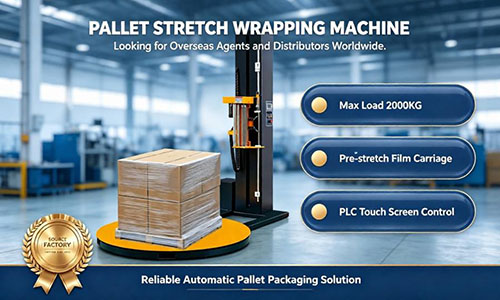
Pallet Stretch Wrapping Machine
view more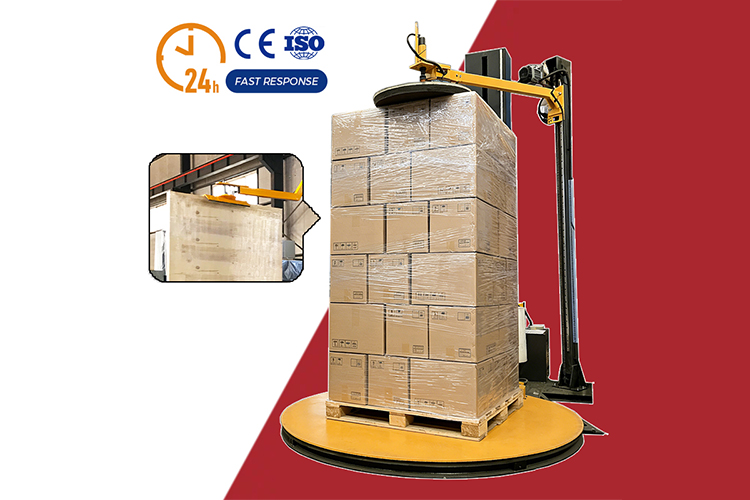
Top Press Pallet Stretch Wrapping Machine
view more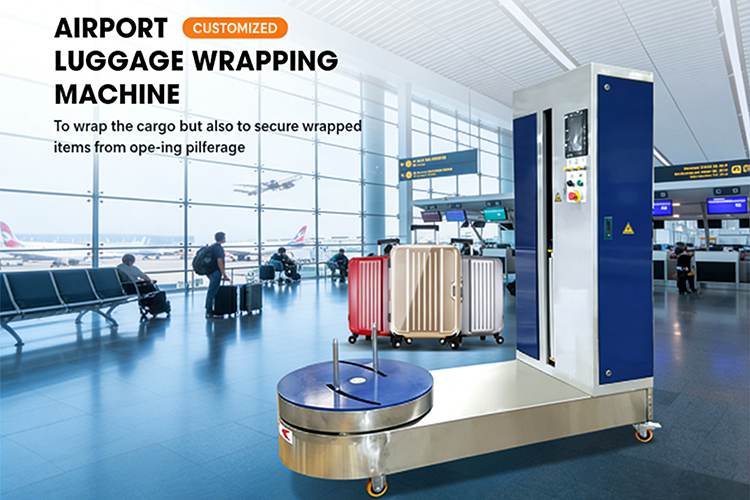
Luggage Wrapping Machine for Airports
view more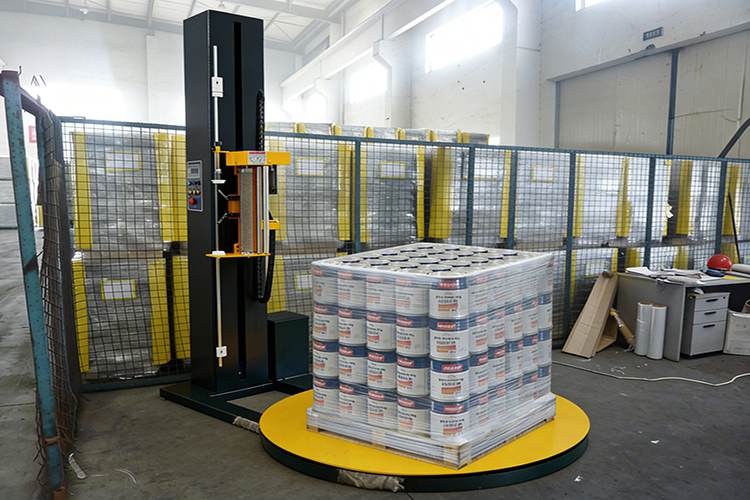
Pallet Stretch Wrapping Machine for Canned Goods
view more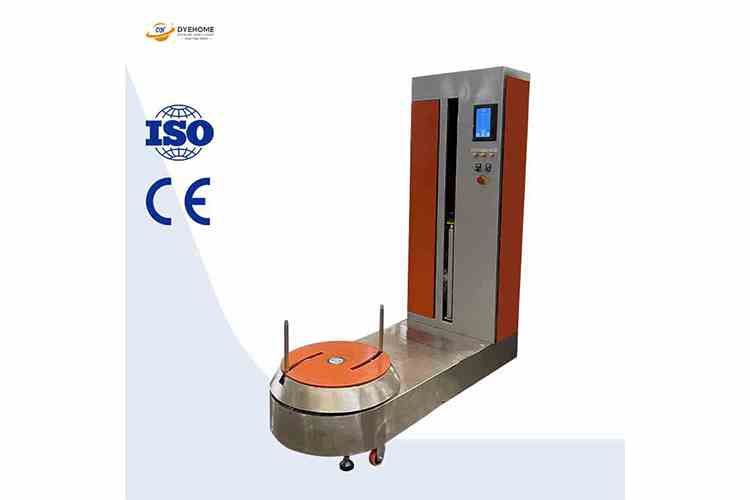
Airport Self-Service Luggage Wrapping Machine
view more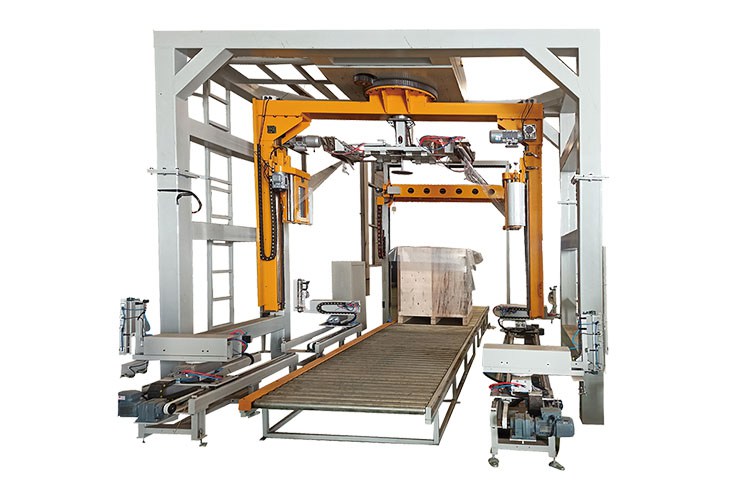
Cantilever wrapping film packaging machine
view more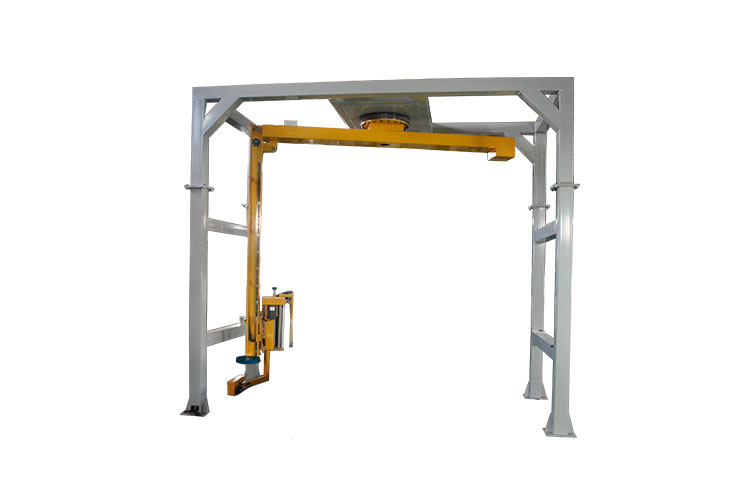
Gantry fully automatic cantilever wrapping machine
view more
 Shandong Dyehome Intelligent Equipment Co.,Ltd
Phone:0086-17362172587
Whatsapp:+8617362172587
Email:machinedyehome@gmail.com
Add:Building 62, 3000 Meili East Road, DmiPark, Wujiapu Street, Huaiyin District, Jinan City,Shandong Province
Jinan Jiasen Packaging Equipment Co., LtdPhone:0086-15665802370
Add:High-end Equipment Manufacturing Industrial Park, East Industrial New Town, Ancheng Town, Pingyin County, Jinan City, Shandong Province
Shandong Golden Pack Intelligent Equipment Co.,LtdPhone:0086-15662690213
Add:High-end Equipment Manufacturing Industrial Park, East Industrial New Town, Ancheng Town, Pingyin County, Jinan City, Shandong Province
YoursIndustry
OurSolutions
OurServices
OurInformation