

Stretch Wrapping Machine for Beverage Industry:Complete Selection Guide(2026)
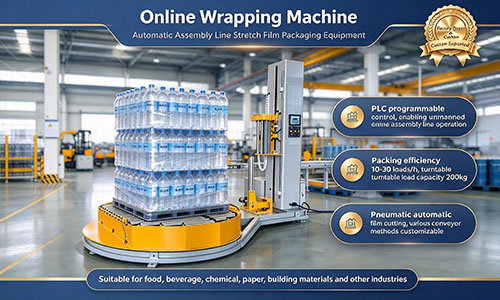
The beverage industry is the single largest end-use segment for stretch wrapping equipment globally.In 2025,food and beverage accounted for 36.3%of the worldwide stretch wrap machines market—approximately$319.82 million in revenue—making it the dominant application vertical.Another industry analysis from Future Market Insights puts the beverage share even higher at 39.3%.
Yet beverage pallets present unique challenges that generic stretch wrappers struggle to handle:extreme weight,tall unstable loads,condensation,and relentless throughput demands.Choosing the wrong machine leads to film breaks,load failures,product damage,and costly downtime.
This guide breaks down exactly what beverage operations need from a stretch wrapping machine—including the 5 critical challenges,the 3 machine types,key specifications,and how to calculate ROI.
5 Unique Challenges of Beverage Pallet Wrapping
Beverage pallets are fundamentally different from most other wrapped products.Here's why they demand specialized equipment:
1.Extreme Load Density and Weight
A standard beverage pallet carries 800–1,500 kg of product.Glass bottle loads can exceed 1,800 kg.That density means:
Higher inertial forces during forklift acceleration and braking
Greater stress on the bottom wrap layers
Increased risk of pallet separation if containment force is insufficient
2.High Center of Gravity
Bottles and cans stacked in multi-tier columns create tall,top-heavy loads.A typical beverage pallet stands 1,400–2,100 mm tall.The higher the center of gravity:
The more the load shifts during handling
The greater the risk of toppling on curves during transport
The more critical uniform wrap tension becomes from bottom to top
3.High-Throughput Demands
Beverage distribution operates on tight schedules.A mid-size distributor may wrap 100–300 pallets per day,while large operations exceed 500+pallets daily.Manual wrapping simply cannot keep pace:
|
Wrapping Method |
Pallets/Hour |
Film Cost/Pallet |
Labor Required |
|
Hand wrapping |
4–6 |
$1.80–$2.50 |
3 full-time worker |
|
Semi-automatic |
15–20 |
$1.00–$1.50 |
Operator attends machine |
|
Fully automatic |
30–60 |
$0.60–$1.00 |
Minimal supervision |
4.Consistency Across Shifts and SKUs
Beverage distributors handle dozens of SKUs—water bottles,soda cans,juice cartons,beer cases—each with different dimensions,weights,and stacking patterns.Inconsistent wrapping between shifts leads to:
Load failures during transport(product damage,returns)
Film waste from over-wrapping
Operator frustration and workarounds that compromise safety
3 Stretch Wrapper Types for Beverage Operations
Not all stretch wrappers handle beverage loads effectively.Based on industry requirements,these three types deliver the results:
1.Rotary Arm Stretch Wrapper(for Heavy/Unstable Loads)
How it works:The pallet stays stationary on the floor while a rotating arm orbits around it,dispensing film from top to bottom.
Why it suits beverage operations:
Handles loads up to 2,000+kg without moving the pallet
Ideal for heavy glass bottles and tall,unstable columns
Can integrate with conveyor lines for automatic infeed/outfeed
No turntable weight limit constraints
for:Large distributors,bottling plants with 200+pallets/day,heavy glass bottle operations
Recommended specs:
Arm height:2,500–3,000 mm(accommodates tall beverage pallets)
Pre-stretch ratio:250–300%(balances film savings vs.containment)
Capacity:2,000 kg minimum
Powered pre-stretch with variable speed control
2.Automatic Turntable Stretch Wrapper(for Mid-Volume Lines)
How it works:The pallet sits on a rotating turntable while the film carriage moves vertically along a mast.
Why it suits beverage operations:
Cost-effective solution for 50–200 pallets/day
Consistent wrap patterns with programmable recipes
Good for water bottles,canned drinks,and carton packs
Smaller footprint than rotary arm systems
for:Small-to-mid distributors,craft beverage producers,warehouse operations
Recommended specs:
Turntable diameter:1,500–1,800 mm
Turntable load capacity:1,500–2,000 kg
Pre-stretch:200–300%powered pre-stretch
Automatic film clamp,cut,and wipe
PLC control with recipe storage(10+programs for different SKUs)
3.Online/Inline Stretch Wrapper(for Fully Automated Lines)
How it works:Integrated directly into the conveyor line—pallets are wrapped automatically as they pass through,with no operator intervention needed.
Why it suits beverage operations:
Enables"lights-out"overnight operation
Eliminates manual dependency in high-throughput facilities
Consistent quality across every shift
Can wrap 40–60+pallets/hour synchronized with filling/palletizing
for:Large bottling plants,3PL beverage distribution centers,facilities pursuing full end-of-line automation
Recommended specs:
Conveyor integration with automatic infeed/outfeed
Photoelectric height sensor for automatic load detection
Remote monitoring and diagnostics
Compatibility with palletizing robots and AMR systems
Beverage Industry Application Scenarios
Scenario 1:Bottled Water Distribution Center
Challenge:300 pallets/day of 1,500 kg water bottle pallets,cold storage condensation issues,high damage rate during transport.
Solution:Rotary arm automatic wrapper with IP54 protection,3,000 mm arm height,and programmable bottom-reinforced wrap pattern.
Result:Film consumption reduced by 26%per load,damage claims decreased by 52%,and overnight unmanned operation eliminates the need for a dedicated night-shift wrapper operator.
Scenario 2:Craft Beverage Multi-SKU Warehouse
Challenge:Small distributor handling 80 pallets/day across 30+SKUs—beer,cider,juice,sparkling water—with inconsistent wrap quality between shifts.
Solution:Automatic turntable wrapper with 10+recipe storage programs,one per SKU family.Operators load the recipe by scanning the product barcode.
Result:Wrap consistency improved from 72%to 98%across shifts,film waste cut by 18%,and operator training time reduced from 2 weeks to 2 days.
Scenario 3:Large-Scale Canned Beverage Bottling Plant
Challenge:600+pallets/day,fully automated palletizing line,need lights-out wrapping capability to match upstream robotics.
Solution:Inline automatic wrapper integrated with conveyor system,PLC-synchronized with palletizing robot,AMR-compatible output for driverless transport to docks.
Result:Full end-of-line automation achieved,wrapping capacity matches 60 pallets/hour,zero manual intervention required,and real-time monitoring alerts maintenance teams before issues escalate.
Conclusion
The beverage industry demands more from stretch wrapping equipment than most other sectors.Heavy loads,tall stacks,moisture exposure,and relentless throughput create an unforgiving operating environment.Choosing the right machine—whether rotary arm,automatic turntable,or inline system—depends on your daily volume,heaviest SKUs,and integration needs.
The key specification to prioritize is containment force control,particularly at the base of the load where beverage pallets experience the most stress.Combined with powered pre-stretch for film savings and PLC recipe storage for shift consistency,the right wrapper delivers measurable ROI through reduced film costs,fewer damage claims,and lower labor requirements.
For operations wrapping 200+pallets daily,the investment in an automatic rotary arm or inline system typically pays for itself within 12–24 months through combined savings across labor,film,and damage reduction.
FAQ
Q:What is the stretch wrapping machine for a beverage distribution center?
A:For mid-volume distributors(50–200 pallets/day),an automatic turntable stretch wrapper with 2,000 kg capacity and PLC recipe storage offers the balance of performance and investment.For higher volumes(200+pallets/day),a rotary arm automatic wrapper handles heavy loads more reliably and integrates with conveyor systems for continuous operation.
Q:How much film does a beverage pallet wrapper use per pallet?
A:With a powered pre-stretch system at 250–300%ratio,a typical beverage pallet(1,200–1,500 kg)uses 300–500 grams of stretch film.Hand wrapping uses 600–900 grams.That represents a 40–50%film savings per pallet,which translates to significant cost reduction at scale.
products
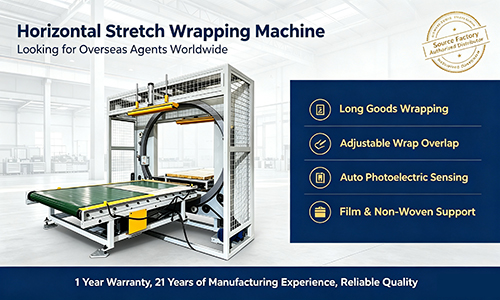
Horizontal Stretch Wrapping Machine SP1000 for Pipes
view more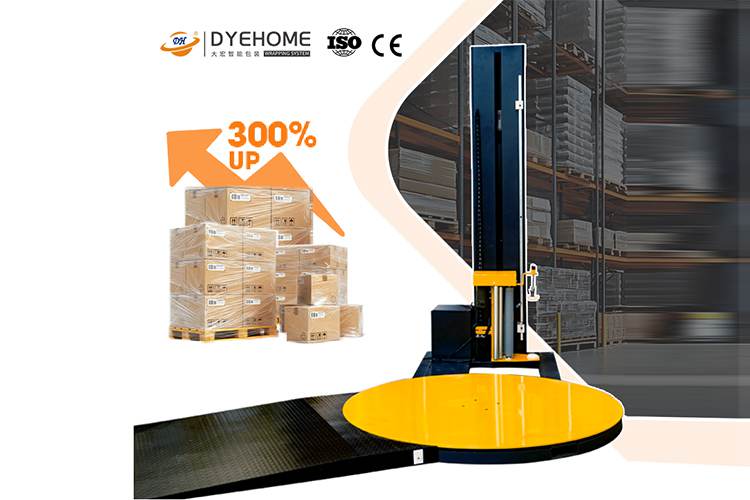
Pallet Stretch Wrapping Machine
view more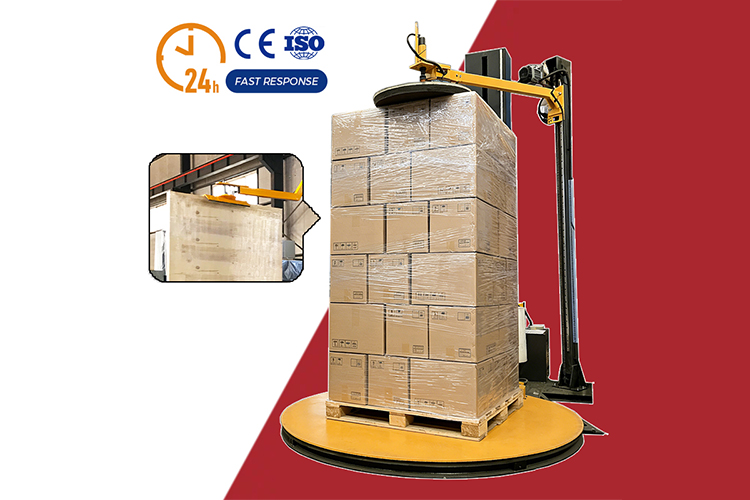
Top Press Pallet Stretch Wrapping Machine
view more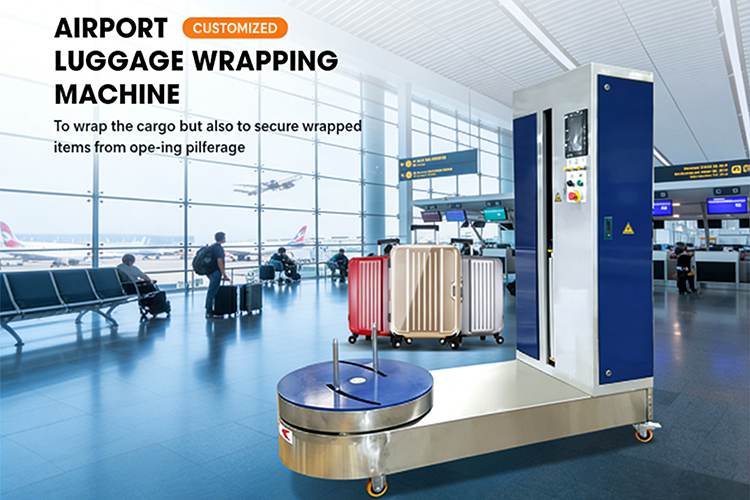
Luggage Wrapping Machine for Airports
view more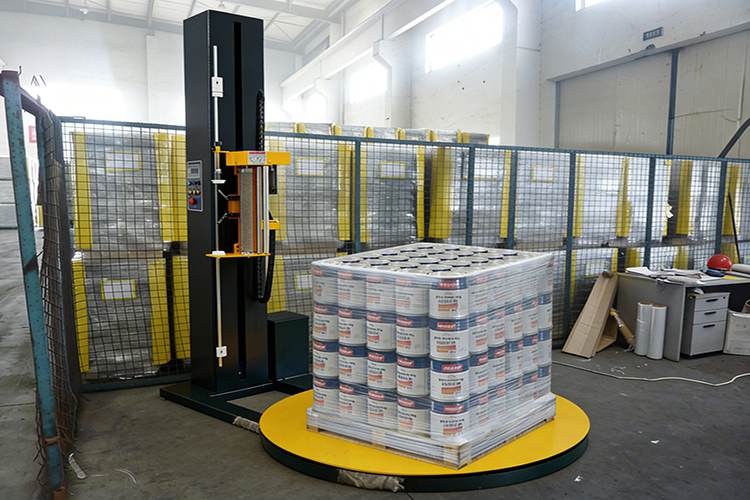
Pallet Stretch Wrapping Machine for Canned Goods
view more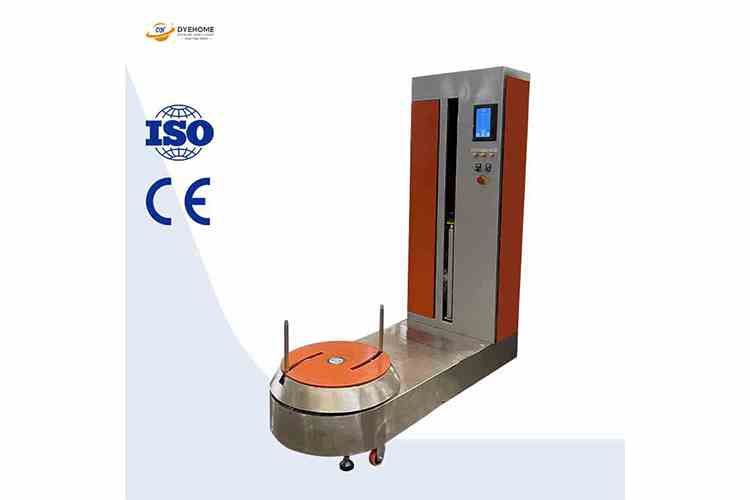
Airport Self-Service Luggage Wrapping Machine
view more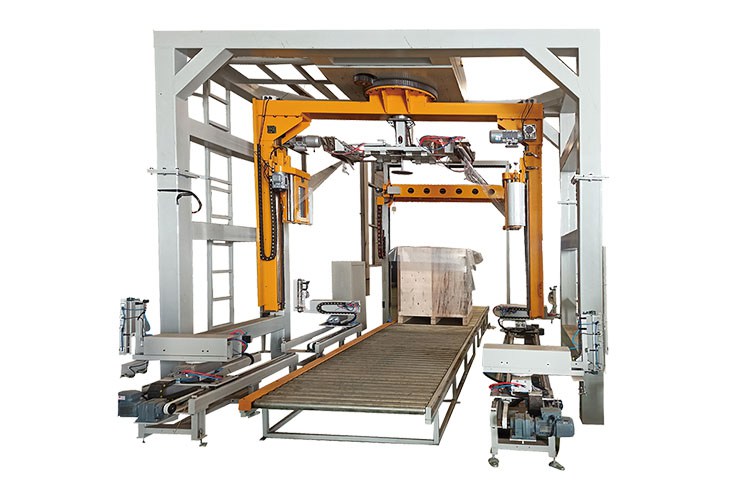
Cantilever wrapping film packaging machine
view more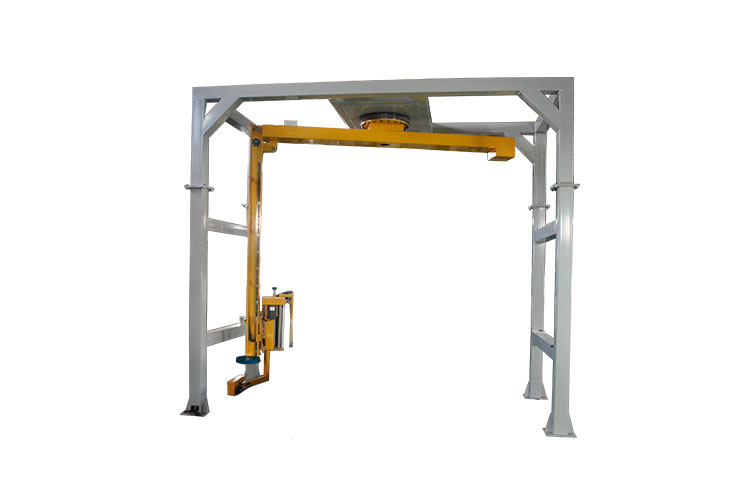
Gantry fully automatic cantilever wrapping machine
view more
 Shandong Dyehome Intelligent Equipment Co.,Ltd
Phone:0086-17362172587
Whatsapp:+8617362172587
Email:machinedyehome@gmail.com
Add:Building 62, 3000 Meili East Road, DmiPark, Wujiapu Street, Huaiyin District, Jinan City,Shandong Province
Jinan Jiasen Packaging Equipment Co., LtdPhone:0086-15665802370
Add:High-end Equipment Manufacturing Industrial Park, East Industrial New Town, Ancheng Town, Pingyin County, Jinan City, Shandong Province
Shandong Golden Pack Intelligent Equipment Co.,LtdPhone:0086-15662690213
Add:High-end Equipment Manufacturing Industrial Park, East Industrial New Town, Ancheng Town, Pingyin County, Jinan City, Shandong Province
YoursIndustry
OurSolutions
OurServices
OurInformation