

Stretch Wrapping Machine for Building Materials:Complete Selection Guide 2026
Building materials face some of the harshest packaging challenges in industrial manufacturing.Heavy,abrasive,and often stored outdoors—products like tiles,steel profiles,insulation boards,lumber,and cement bags demand wrapping solutions that go beyond basic pallet stabilization.A stretch wrapping machine for building materials must deliver moisture protection,UV resistance,load containment on irregular shapes,and the throughput to keep up with high-volume production lines.
This guide breaks down the 5 key building material segments that require stretch wrapping,the specific machine types best suited for each,and the critical specifications you need to evaluate before purchasing.Whether you operate a brick kiln,a steel service center,or an insulation manufacturing plant,this article will help you select the right wrapping technology for your operation.
Why Building Materials Need Specialized Stretch Wrapping
Building materials differ from standard consumer goods packaging in several fundamental ways:
Extreme weight:A single pallet of clay bricks can weigh 2,000–3,000 kg;tile pallets often exceed 1,500 kg
Sharp edges and abrasive surfaces:Steel profiles,aluminum extrusions,and cut tiles can slice through standard stretch film in transit
Outdoor storage exposure:Cement bags,lumber,and insulation materials are frequently stored in open yards,requiring waterproof,UV-resistant wrapping
Irregular load geometry:Long profiles,oversized panels,and bundled pipes don't fit standard turntable wrapper dimensions
Brand visibility requirements:Many building material manufacturers use printed stretch film to display company logos—turning every wrapped pallet into a mobile billboard
According to industry data from BEUMER Group,switching from shrink hood to cold stretch wrapping in brick manufacturing can reduce film consumption by over 30%and save up to 90%in energy costs—making stretch wrapping not just a protective measure but a significant cost optimization.
5 Building Material Segments and Their Wrapping Requirements
1.Tiles,Bricks&Ceramics
Key challenges:High weight,sharp corners,fragile edges,outdoor storage
Tiles and bricks are among the most demanding products to wrap.The combination of extreme pallet weight and abrasive surfaces means the wrapping system must deliver:
High containment force to prevent load shift during transport
Puncture-resistant film(typically 30–50 micron)to survive sharp tile edges
Waterproof sealing for outdoor yard storage
Recommended machines:
Rotary arm stretch wrapper—ideal for heavy,unstable loads because the product stays stationary while the arm rotates around it.No turntable rotation means no risk of toppling heavy brick pallets.
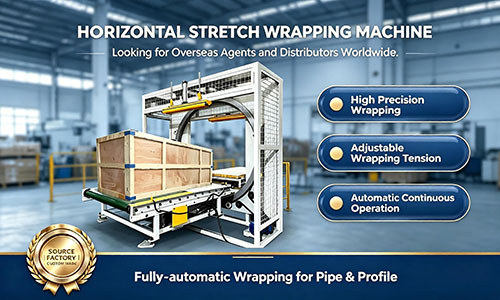
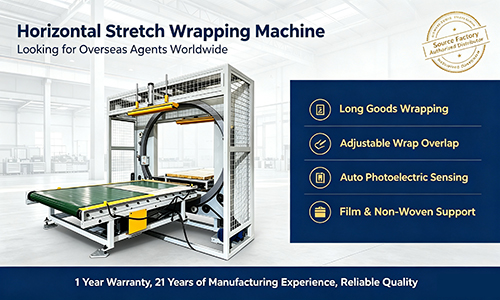
Horizontal orbital wrapper—for long-format tile bundles and panel stacks that exceed turntable size limits
2.Steel Profiles,Aluminum Extrusions&Metal Building Components
Key challenges:Sharp edges,very long format,corrosion risk,high value
Steel and aluminum building profiles(door frames,window frames,structural beams,metal roofing panels)require wrapping that prevents edge cuts through film while providing corrosion protection during storage and shipping.
Recommended machines:
Horizontal orbital stretch wrapper—the continuous-feed design handles long profiles(up to 6+meters)without size restrictions.The product feeds through the center of the rotating ring.
Ring diameter options:450mm for small profiles up to 2,170mm for oversized bundles
3.Insulation Materials(Mineral Wool,EPS,XPS Foam Boards)
Key challenges:Lightweight but bulky,compression sensitivity,moisture-critical,irregular dimensions
Insulation products are lightweight yet occupy large volumes.They are extremely sensitive to compression damage and moisture absorption—wet insulation loses most of its thermal performance.The wrapping must be tight enough to hold the load but gentle enough to avoid crushing.
Recommended machines:
Turntable stretch wrapper with soft-start film carriage—for standard pallet loads of insulation boards
Stretch hood machine—for high-volume insulation production lines requiring top-to-bottom full encapsulation(waterproof from all 6 sides)
4.Lumber,Wood Panels&Engineered Wood Products
Key challenges:Variable dimensions,moisture protection,surface scratching,long format
Building lumber,plywood sheets,MDF panels,and engineered wood products(LVL,I-joists)require wrapping that protects against moisture warping,surface scratches,and bundle separation during transport.
Recommended machines:
Horizontal orbital wrapper—for bundled lumber and long-format wood products
Rotary arm stretch wrapper—for palletized wood panels and sheet goods
5.Cement,Mortar&Bagged Building Materials
Key challenges:Very high pallet weight(up to 2,500 kg),bag stacking instability,dust contamination,outdoor storage
Bagged building materials(cement,mortar mix,sand,aggregates)are typically stacked 50–70 bags per pallet.The primary wrapping objectives are load unitization(preventing bag shift)and moisture barrier protection.
Recommended machines:
Rotary arm stretch wrapper with top sheet dispenser—provides both side wrap and top cover in one cycle
Stretch hood system—for highest-volume cement plants requiring 100+pallets/hour throughput with full waterproof encapsulation
How to Choose the Right Stretch Wrapper for Your Building Material Operation
Follow this 5-step decision framework:
Step 1:Identify your product format
Palletized goods(bricks,cement bags,tile boxes)→Turntable or rotary arm
Long/bundled products(steel profiles,lumber,pipes)→Horizontal orbital
High-volume standardized production→Stretch hood or inline system
Step 2:Calculate your throughput requirement
<30 pallets/hour→Semi-automatic or single-station automatic
30–80 pallets/hour→Fully automatic rotary arm or conveyorized system
80–180 pallets/hour→Stretch hood or multi-station inline line
Step 3:Assess load stability
Stable,uniform loads→Turntable is sufficient
Tall,heavy,or unstable loads→Rotary arm(product doesn't rotate)
Extremely heavy(>2,500 kg)→Reinforced rotary arm with heavy-duty turntable
Step 4:Evaluate environmental exposure
Indoor storage only→Standard LLDPE film,basic wrapper
Outdoor storage→Waterproof top seal required(top sheet or stretch hood)
UV exposure→Consider white opaque or UV-inhibitor film options
Step 5:Budget and integration needs
Standalone operation→Semi-automatic wrapper($5,000–$15,000)
Production line integration→Conveyorized system with PLC control($30,000+)
Full end-of-line automation→Wrapper+strapper+labeler+conveyor($80,000+)
AQ
Q:What is the best stretch wrapping machine for building materials?
A:The best machine depends on your product format.For palletized goods like bricks,tiles,and cement bags,a rotary arm stretch wrapper is ideal because the product stays stationary during wrapping.For long products like steel profiles and lumber,a horizontal orbital wrapper handles unlimited length materials.For high-volume bagged material production(100+pallets/hour),a stretch hood machine provides full waterproof encapsulation.
A:Yes.Rotary arm stretch wrappers can handle pallet loads up to 3,000+kg because the product remains stationary on the floor while the wrapping arm rotates around it.This eliminates the risk of toppling that exists with turntable wrappers when wrapping very heavy or unstable loads like brick stacks or cement bag pallets.
products
Horizontal Stretch Wrapping Machine SP1000 for Pipes
view more
Pallet Stretch Wrapping Machine
view more
Top Press Pallet Stretch Wrapping Machine
view more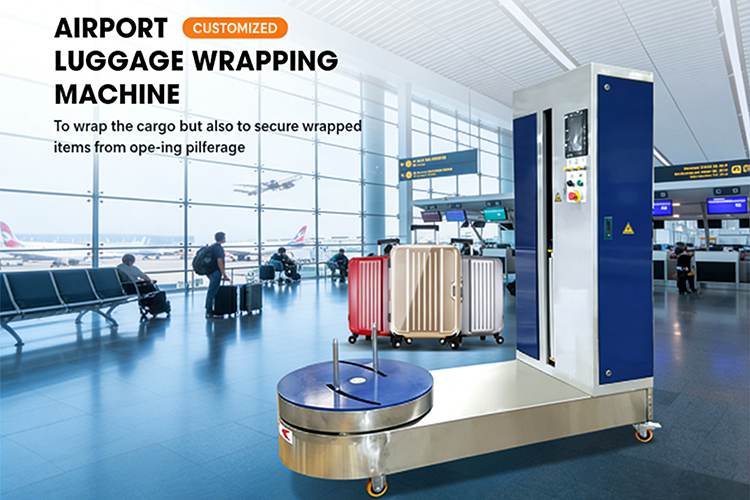
Luggage Wrapping Machine for Airports
view more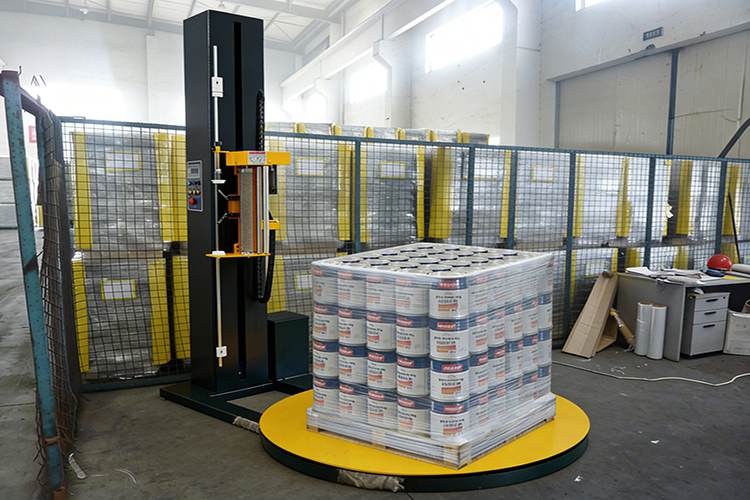
Pallet Stretch Wrapping Machine for Canned Goods
view more
Airport Self-Service Luggage Wrapping Machine
view more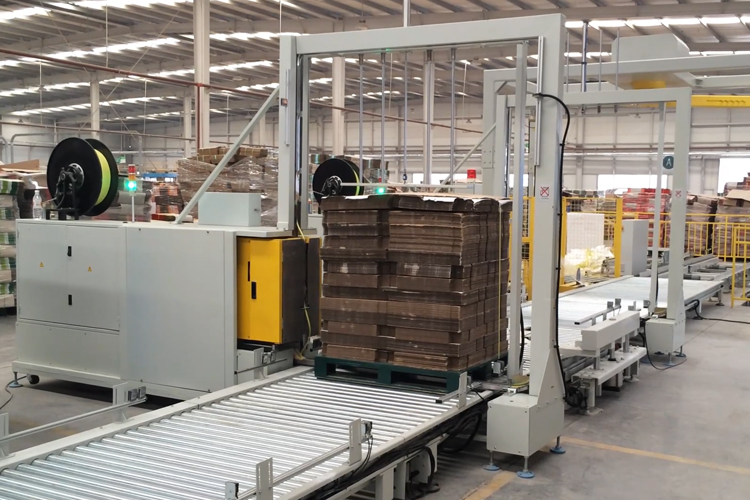
Automated film wrapping and packaging equipment
view more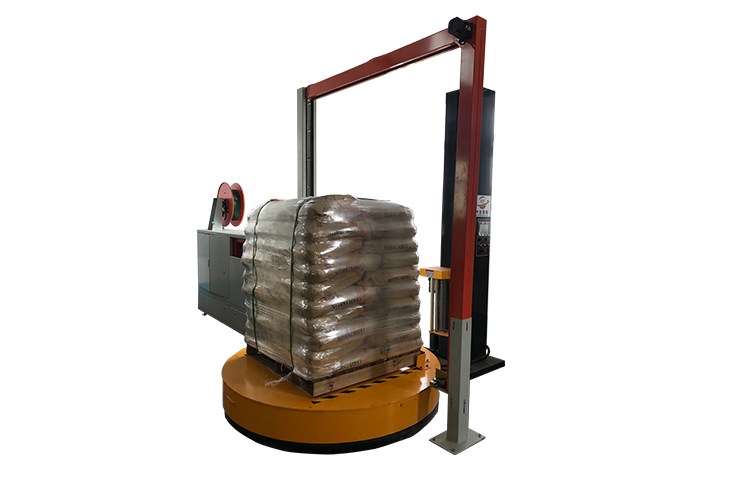
Sword-piercing baler and wrapping machine
view more
 Shandong Dyehome Intelligent Equipment Co.,Ltd
Phone:0086-17362172587
Whatsapp:+8617362172587
Email:machinedyehome@gmail.com
Add:Building 62, 3000 Meili East Road, DmiPark, Wujiapu Street, Huaiyin District, Jinan City,Shandong Province
Jinan Jiasen Packaging Equipment Co., LtdPhone:0086-15665802370
Add:High-end Equipment Manufacturing Industrial Park, East Industrial New Town, Ancheng Town, Pingyin County, Jinan City, Shandong Province
Shandong Golden Pack Intelligent Equipment Co.,LtdPhone:0086-15662690213
Add:High-end Equipment Manufacturing Industrial Park, East Industrial New Town, Ancheng Town, Pingyin County, Jinan City, Shandong Province
YoursIndustry
OurSolutions
OurServices
OurInformation