

Stretch Wrapping Machine for Chemical Industry:Complete Selection Guide 2026
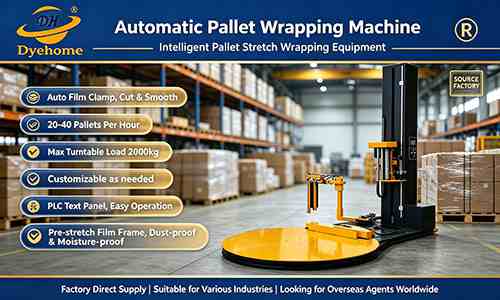
What Is a Chemical-Grade Stretch Wrapping Machine?
A chemical-grade stretch wrapping machine is an industrial pallet wrapping system built to operate safely in facilities where flammable vapors,corrosive chemicals,heavy drum loads,and strict regulatory compliance are daily realities.Unlike standard warehouse wrappers,these machines feature corrosion-resistant frames,explosion-proof motors,high containment force,and safety interlocks designed for hazardous environments rated under ATEX or NEC zone standards.
Chemical manufacturers and distributors face packaging challenges most industries never encounter.A single pallet might hold four 500-lb drums of flammable solvent,stacked 50-lb powder bags that shift easily,or an IBC of corrosive liquid.Standard stretch wrappers—engineered for uniform boxed goods—simply cannot handle these conditions reliably.
The global pallet stretch wrapping machine market is projected to reach USD 7.29 billion by 2036,growing at a 6.1%CAGR(Source:Future Market Insights,2026).Within this growth,chemical and construction materials represent stable,high-value niches where equipment specifications matter more than ever.
This guide covers what chemical plant managers,procurement engineers,and packaging integrators need to know before selecting a stretch wrapping machine for chemical industry use.
Why Chemical Plants Need Specialized Stretch Wrapping Equipment
1.Static Discharge and Ignition Risk
In facilities handling flammable solvents,aerosols,and petrochemicals,a single static spark from an ungrounded wrapper motor can ignite vapor-air mixtures.NFPA research documents roughly 90 static electricity fire incidents in industrial facilities since 2001,many during packaging operations in classified areas(Source:John Maye Company,2026).
Standard electric motors on commodity wrappers generate sparks during startup and commutation.In Zone 1 or Zone 2 classified areas,this creates an unacceptable explosion hazard.
2.Accelerated Corrosion
Chemical plant atmospheres expose equipment to acidic vapors,alkaline mists,aggressive cleaning agents,and high humidity.Standard powder-coated steel frames on generic stretch wrappers typically corrode within 18–24 months in these environments,causing structural degradation,higher maintenance costs,and potential safety failures.
3.Load Instability with Heavy Drums and IBCs
Drums and IBCs shift during wrapping on standard turntables,creating tip-over hazards that can rupture containers.A 55-gallon drum of chemical product weighs 400–500 lbs—and four drums on one pallet means over 1,600 lbs of liquid mass that can shift in transit if not properly contained.
4.Regulatory Compliance Burden
Equipment in classified areas must meet ATEX(European)or NEC Class I Division 1/2(North American)standards.In the U.S.,OSHA 1910.212 machine guarding requirements add another layer of scrutiny.Non-compliant equipment doesn't just risk fines—it can shut down an entire production line during inspections.
Key Selection Criteria for Chemical Industry Stretch Wrappers
When evaluating a stretch wrapping machine for your chemical facility,these five criteria should drive your decision:
Criterion 1:Explosion-Proof/ATEX Certification
|
Classification |
Zone Requirement |
Typical Application |
|
ATEX Zone 1 |
Continuous or frequent explosive atmosphere |
Explosion-proof motors,sealed electrical components—solvent mixing areas,drum filling stations |
|
ATEX Zone 2 |
Occasional explosive atmosphere |
Equipment that produces no sparks during normal operation—storage warehouses with ventilated flammable materials |
|
NEC Class I Div 1 |
Explosive concentration present during normal operations |
Fully enclosed,explosion-proof design—indoor drum filling,open chemical processing areas |
|
NEC Class I Div 2 |
Explosive concentration only during abnormal conditions |
Non-incendive equipment,sealed enclosures—outdoor storage,well-ventilated warehouses |
Key question to ask your supplier:Is ATEX/NEC certification standard or available as an upgrade?Many manufacturers only offer this on specific models.
Criterion 2:Corrosion-Resistant Construction
Standard carbon steel frames with powder coating fall short in most chemical environments.Specify:
Stainless steel frames(304 or 316 grade)for high-corrosion areas
IP54 or higher rated electrical enclosures
Corrosion-resistant fasteners on all exposed components
Sealed bearings to prevent chemical ingress
Some manufacturers,such as Robopac,offer dedicated stainless steel variants(e.g.,Rotoplat 708 SS)designed for pharmaceutical and chemical applications.
Criterion 3:High Containment Force&Pre-Stretch Capability
Chemical loads—especially drum pallets and IBCs—need significantly higher containment force than standard boxed goods:
Minimum pre-stretch capability:250%(ideally 300%for film cost optimization)
High-tension film carriage rated for heavy-gauge film(80–115 gauge)
Powered pre-stretch rollers(not gravity-based)for consistent film tension
According to industry data,300%pre-stretch reduces film costs by$3,000–$5,000 annually for facilities wrapping 50+loads daily(Source:John Maye Company,2026).
Criterion 4:Machine Type Matched to Load Profile
|
Load Type |
Recommended Machine Type |
Why |
|
55-gallon drums(2 or 4 per pallet) |
Rotary arm/cantilever stretch wrapper |
Load stays stationary—no tipping risk from spinning |
|
IBC containers(1 per pallet) |
Rotary arm with straddle frame |
Accommodates tall,narrow loads with high center of gravity |
|
Chemical powder bags(stacked) |
Turntable with low-profile deck |
Stable,uniform loads;standard turntable works well |
|
Mixed drum+box pallets |
Rotary arm with variable speed |
Handles irregular weight distribution safely |
|
Hazardous material pallets(classified area) |
Conveyorized inline wrapper with ATEX rating |
Eliminates operator exposure to hazardous zones |
Critical insight:Rotary arm stretch wrappers are generally preferred over turntable models for chemical drum applications because the load remains stationary on the floor while the film carriage rotates around it—eliminating the tipping hazard of heavy,liquid-filled drums spinning on a turntable.
Criterion 5:Safety Features for Hazardous Environments
Chemical plants require safety systems beyond standard machine guarding:
Perimeter safety guarding meeting OSHA 1910.212 requirements
Light curtains or safety mats triggering automatic stop when operators enter the wrap zone
Film break detection with immediate cycle termination
Anti-fall devices preventing film carriage from dropping during operation
Emergency stop buttons within 6 feet of all operator positions
CE or UL certification for third-party verification of safety system design
Top 3 Chemical Industry Applications and Recommended Solutions
Application 1:Flammable Solvent&Petrochemical Drum Wrapping
Pain point:Four 55-gallon drums of flammable solvent per pallet,wrapped in a Zone 2 classified area.Standard turntable wrappers create static discharge risk and drum tipping during rotation.
Solution:Rotary arm stretch wrapper with:
ATEX Zone 2 certified motor and electrical system
Stainless steel or heavily powder-coated frame
Powered pre-stretch carriage at 250–300%ratio
Anti-fall safety device on film carriage
Puncture-resistant film(80–90 gauge blown film)
Throughput:15–25 pallets per hour depending on wrap pattern and film layers.
Estimated cost:$25,000–$60,000 for semi-automatic rotary arm with ATEX upgrade.
Application 2:Chemical Powder&Granulate Bag Palletizing
Pain point:50-lb bags of chemical powder(titanium dioxide,calcium carbonate,polymer resins)stacked 40–60 per pallet.Bags shift during wrapping,and fine dust contaminates machine components.
Solution:Low-profile turntable stretch wrapper with:
Sealed bearings and IP54+electrical enclosures to resist dust ingress
Powered pre-stretch at 200–250%for consistent containment
Variable turntable speed to accommodate different bag stack heights
Optional top sheet dispenser for dust containment on the top layer
Throughput:20–30 pallets per hour(bag loads are stable and uniform).
Estimated cost:$12,000–$30,000 for semi-automatic turntable with dust protection upgrades.
Application 3:IBC Container Wrapping for Corrosive Liquids
Pain point:IBC containers(275–330 gallon)filled with corrosive acids,alkalis,or oxidizers.Tall,narrow profile creates high center of gravity.Corrosive vapors degrade standard equipment rapidly.
Solution:Rotary arm wrapper with:
Extra-tall mast(minimum 84 inches clearance for IBC+pallet)
316 stainless steel construction for maximum corrosion resistance
Straddle-frame design to stabilize tall loads during wrapping
High containment force carriage with 115-gauge film compatibility
Sealed NEMA 12 or NEMA 4X electrical enclosures
Throughput:10–15 IBC pallets per hour(heavier film wraps for maximum protection).
Estimated cost:$35,000–$80,000 for fully configured IBC-rated rotary arm system.
Conclusion:Choosing the Right Chemical Industry Stretch Wrapper
Selecting a stretch wrapping machine for chemical operations is not a commodity purchase—it's a safety-critical infrastructure decision.The right equipment prevents workplace accidents,ensures regulatory compliance,protects product integrity during transit,and delivers measurable cost savings through film optimization and labor reduction.
The key is matching your machine type to your specific load profile(drums→rotary arm,bags→turntable,IBCs→tall rotary arm),verifying hazardous area certifications(ATEX/NEC),and insisting on corrosion-resistant construction built for your chemical environment.
products
Horizontal Stretch Wrapping Machine SP1000 for Pipes
view more
Pallet Stretch Wrapping Machine
view more
Top Press Pallet Stretch Wrapping Machine
view more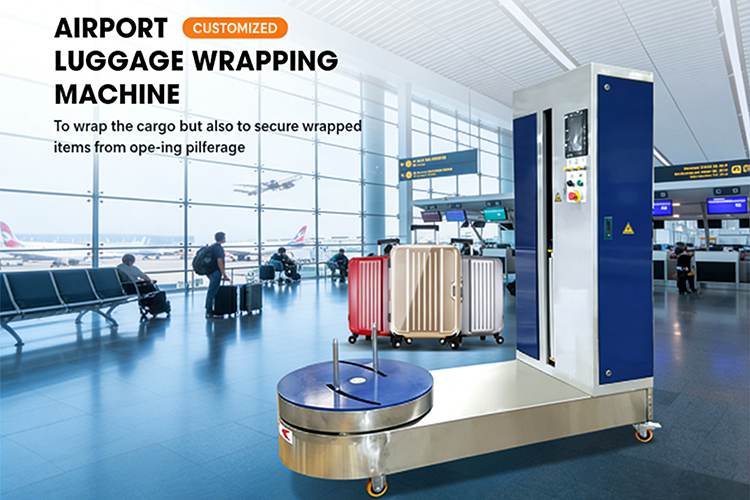
Luggage Wrapping Machine for Airports
view more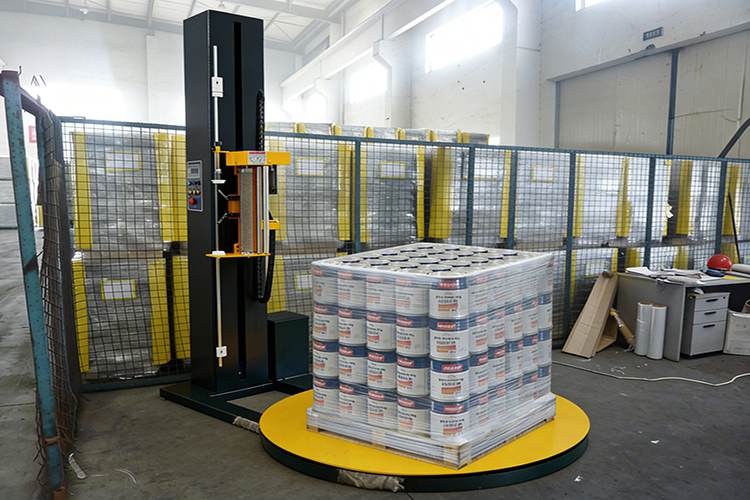
Pallet Stretch Wrapping Machine for Canned Goods
view more
Airport Self-Service Luggage Wrapping Machine
view more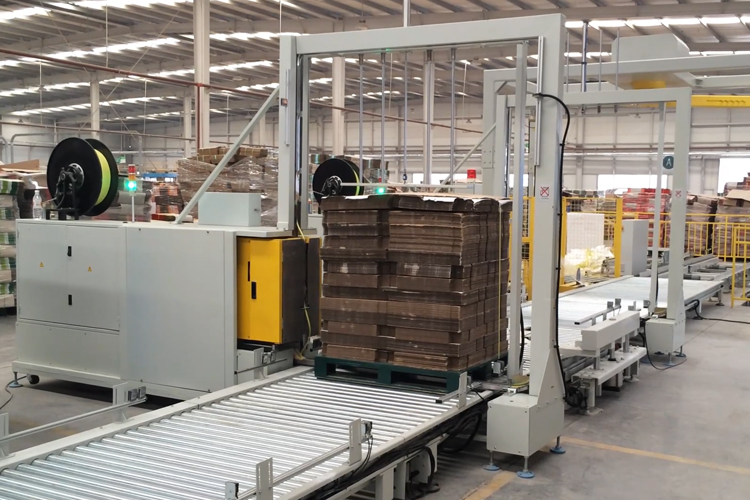
Automated film wrapping and packaging equipment
view more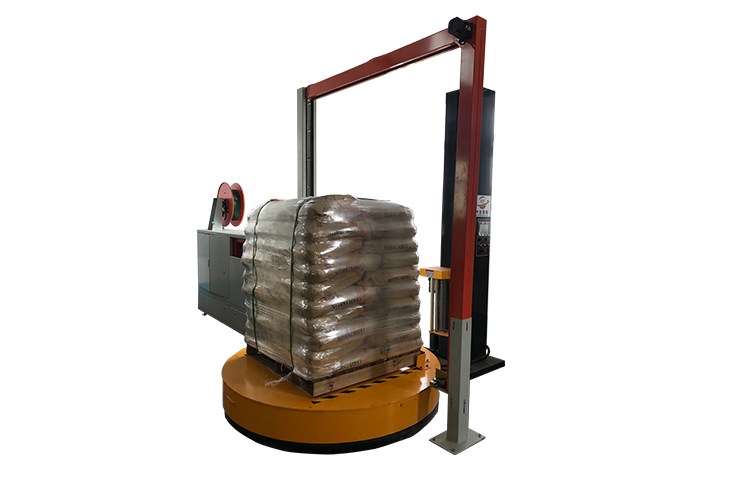
Sword-piercing baler and wrapping machine
view more
 Shandong Dyehome Intelligent Equipment Co.,Ltd
Phone:0086-17362172587
Whatsapp:+8617362172587
Email:machinedyehome@gmail.com
Add:Building 62, 3000 Meili East Road, DmiPark, Wujiapu Street, Huaiyin District, Jinan City,Shandong Province
Jinan Jiasen Packaging Equipment Co., LtdPhone:0086-15665802370
Add:High-end Equipment Manufacturing Industrial Park, East Industrial New Town, Ancheng Town, Pingyin County, Jinan City, Shandong Province
Shandong Golden Pack Intelligent Equipment Co.,LtdPhone:0086-15662690213
Add:High-end Equipment Manufacturing Industrial Park, East Industrial New Town, Ancheng Town, Pingyin County, Jinan City, Shandong Province
YoursIndustry
OurSolutions
OurServices
OurInformation