

Tire Stretch Wrapping Machine Standardizes Tire Protection for Dispatch
Date: 2026-01-08Id:491Views:
Common Packaging Issues in Tire Dispatch
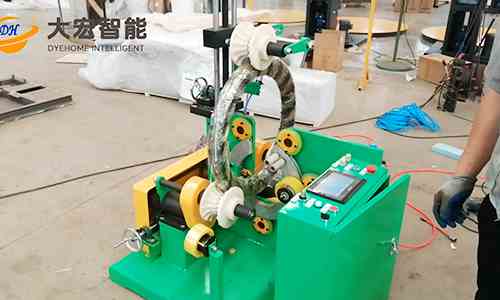
During tire production and circulation, finished tires require external packaging to reduce dust accumulation, friction, and surface damage during transportation and storage. Traditional manual wrapping relies heavily on operator experience, often resulting in uneven film tension, inconsistent overlap, and insufficient stability—especially in batch shipments or continuous dispatch scenarios where efficiency and consistency are difficult to balance.
Structure and Working Principle
The tire stretch wrapping machine adopts a ring-type structural design. The wrapping ring rotates around the outer circumference of the tire, applying stretch film evenly. The tire remains relatively stationary during the process, while the film is released uniformly from the film carriage and adheres closely to the tire surface. Wrapping parameters and ring dimensions can be adjusted to accommodate tires of different diameters and widths.
Benefits of Standardized Tire Wrapping
Machine-based standardized wrapping ensures uniform film distribution and consistent tightness, improving overall protection. The stretch film provides dust and moisture resistance while reducing friction between tires during stacking and handling. This helps maintain tire appearance and provides a more reliable packaging foundation for warehouse management and logistics transportation.
Suitable for Multiple Tire Packaging Scenarios
The tire stretch wrapping machine can be used at the end of tire production lines, in finished goods warehouses, or in centralized dispatch areas. Depending on site layout, it can operate as a standalone unit or in combination with conveying equipment. For companies handling frequent size changes and high-volume packaging, the machine improves throughput while reducing manual labor and standardizing packaging processes.
Stable Performance in Practical Applications
With a robust mechanical structure and adjustable wrapping parameters, the tire stretch wrapping machine supports long-term, repetitive operation. Film tension, ring rotation speed, and wrapping cycles can be set according to tire specifications, ensuring consistent packaging results across different batches. As packaging standards in the tire industry continue to rise, this equipment provides a stable and controllable solution for tire packaging needs.
Related
products
Pallet Stretch Wrapping Machine
view more
Top Press Pallet Stretch Wrapping Machine
view more
Luggage Wrapping Machine for Airports
view more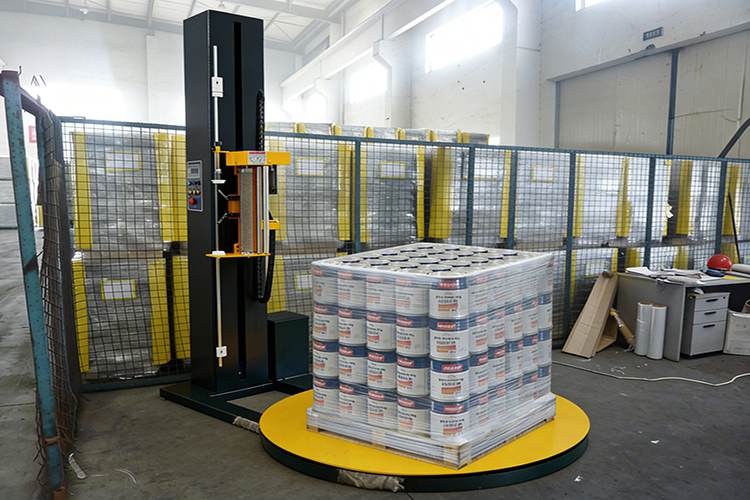
Pallet Stretch Wrapping Machine for Canned Goods
view more
Airport Self-Service Luggage Wrapping Machine
view more
Cantilever wrapping film packaging machine
view more
Gantry fully automatic cantilever wrapping machine
view more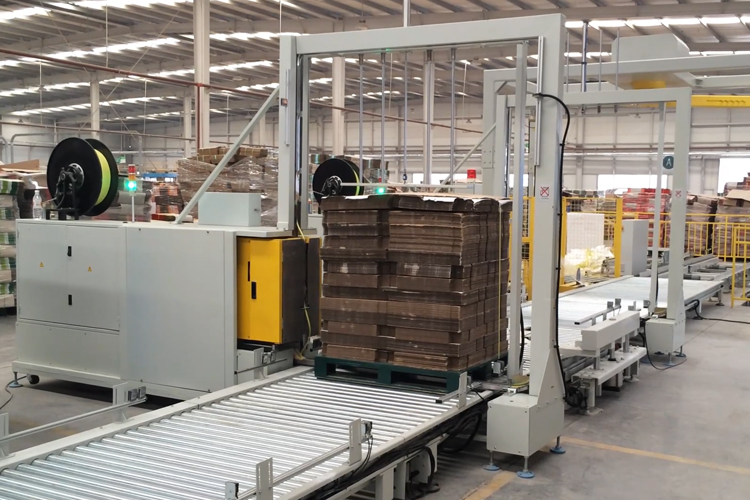
Automated film wrapping and packaging equipment
view more
 Shandong Dyehome Intelligent Equipment Co.,Ltd
Phone:0086-17362172587
Whatsapp:+8617362172587
Email:machinedyehome@gmail.com
Add:Building 62, 3000 Meili East Road, DmiPark, Wujiapu Street, Huaiyin District, Jinan City,Shandong Province
Jinan Jiasen Packaging Equipment Co., LtdPhone:0086-15665802370
Add:High-end Equipment Manufacturing Industrial Park, East Industrial New Town, Ancheng Town, Pingyin County, Jinan City, Shandong Province
Shandong Golden Pack Intelligent Equipment Co.,LtdPhone:0086-15662690213
Add:High-end Equipment Manufacturing Industrial Park, East Industrial New Town, Ancheng Town, Pingyin County, Jinan City, Shandong Province
YoursIndustry
OurSolutions
OurServices
OurInformation