

Unstable Packaging of Long Materials? Horizontal Stretch Wrapping Equipment Enables Continuous and Secure Protection
Date: 2025-12-31Id:481Views:

Challenges in long material packaging limit manual efficiency
In industries such as construction materials, profiles, pipes, and aluminum extrusion, products are typically long, varied in specifications, and prone to surface scratches. Traditional manual wrapping often leads to uneven coverage, unstable tension, and low efficiency. During peak shipping periods, manual packaging can easily become a bottleneck affecting overall dispatch speed. In addition, imprecise film usage control increases packaging costs.
Horizontal structure adapts to continuous packaging of long products
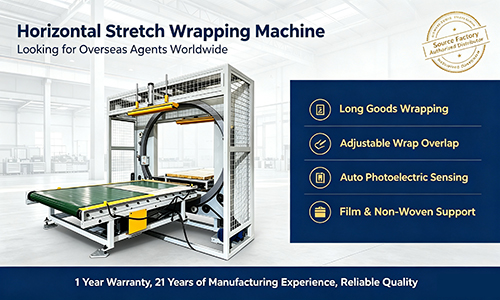
The equipment adopts a horizontal ring wrapping structure. Materials move in a straight line on the conveyor while the rotating ring wraps the film spirally around the product. This process does not require flipping or stacking, making it especially suitable for long products that are difficult to handle vertically. The continuous operation minimizes instability caused by human intervention.
Pre-stretch film system balances tightness and material savings
Equipped with a pre-stretch film carriage, the machine pre-stretches the film before wrapping. This ensures tight packaging while significantly reducing film consumption. The film adheres evenly, improving appearance consistency and enhancing protection against dust, moisture, and surface abrasion—particularly important for products with high surface quality requirements.
Automated control improves continuous operation capability
Horizontal stretch wrapping equipment is typically equipped with a PLC control system and touch-screen interface. Wrapping turns, overlap ratio, and operating speed can be adjusted according to product size. Photoelectric detection and automated logic enable continuous operation, reducing frequent stops and repeated setup, making it suitable for medium to high-volume packaging scenarios.
Wide industry applicability for diverse packaging needs
The equipment is widely used in construction materials, aluminum profiles, steel pipes, plastic profiles, boards, and wire products. It can be integrated with roller or belt conveyors to connect packaging with production and outbound processes. Depending on protection requirements, different packaging materials such as stretch film, composite paper, or nonwoven fabric can be used.
Reduced labor dependence and optimized packaging costs
By replacing manual wrapping with horizontal stretch wrapping equipment, companies can reduce labor input while maintaining better control over material consumption and packaging consistency. With stable operation and simple maintenance, the equipment supports standardized and scalable packaging processes, providing a solid foundation for future production line upgrades.
Related
products
Horizontal Stretch Wrapping Machine SP1000 for Pipes
view more
Pallet Stretch Wrapping Machine
view more
Top Press Pallet Stretch Wrapping Machine
view more
Luggage Wrapping Machine for Airports
view more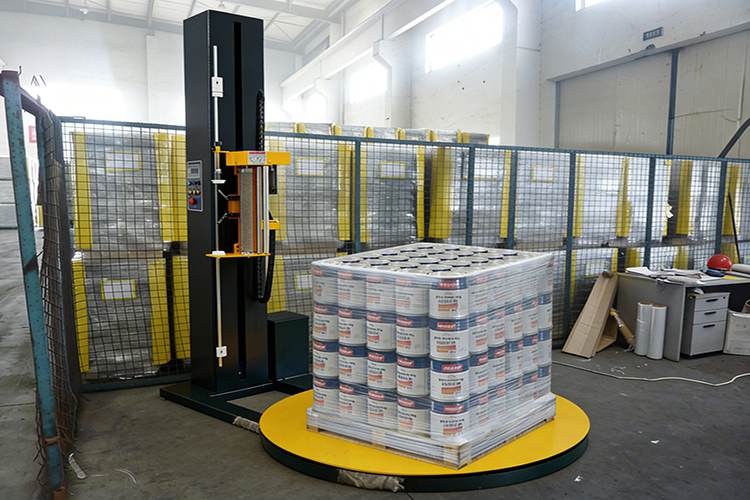
Pallet Stretch Wrapping Machine for Canned Goods
view more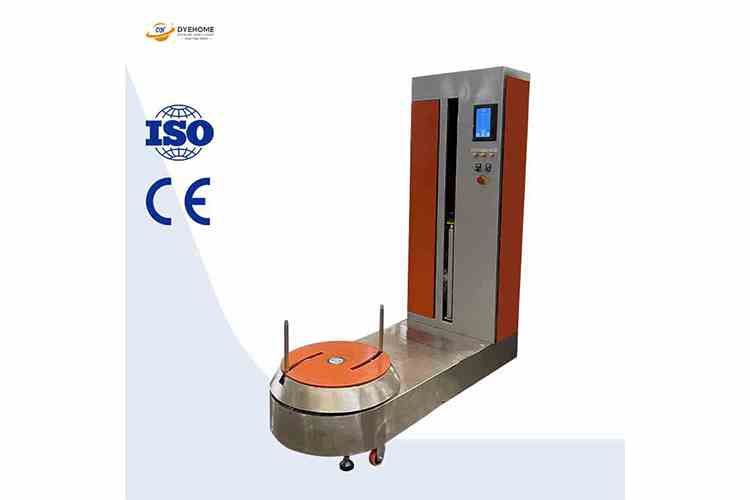
Airport Self-Service Luggage Wrapping Machine
view more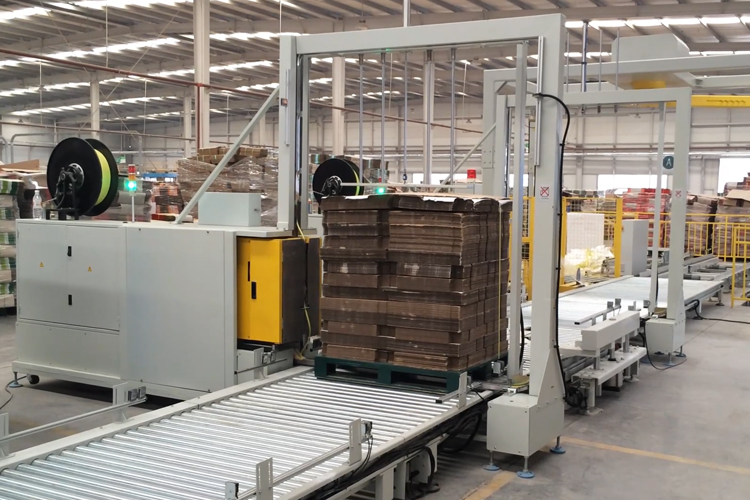
Automated film wrapping and packaging equipment
view more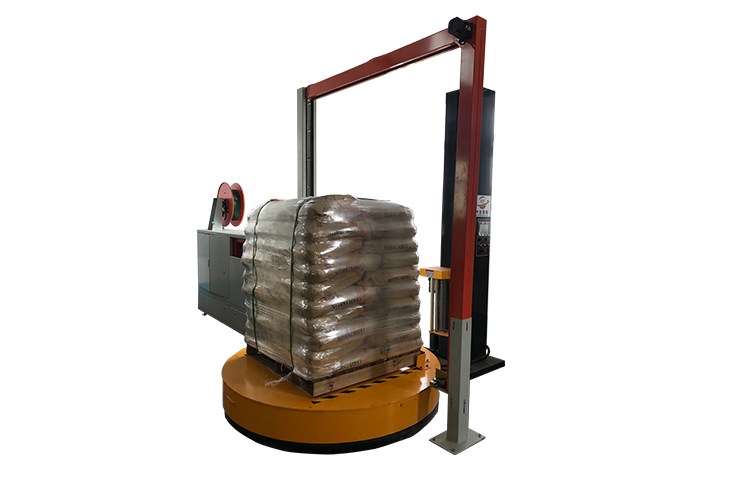
Sword-piercing baler and wrapping machine
view more
 Shandong Dyehome Intelligent Equipment Co.,Ltd
Phone:0086-17362172587
Whatsapp:+8617362172587
Email:machinedyehome@gmail.com
Add:Building 62, 3000 Meili East Road, DmiPark, Wujiapu Street, Huaiyin District, Jinan City,Shandong Province
Jinan Jiasen Packaging Equipment Co., LtdPhone:0086-15665802370
Add:High-end Equipment Manufacturing Industrial Park, East Industrial New Town, Ancheng Town, Pingyin County, Jinan City, Shandong Province
Shandong Golden Pack Intelligent Equipment Co.,LtdPhone:0086-15662690213
Add:High-end Equipment Manufacturing Industrial Park, East Industrial New Town, Ancheng Town, Pingyin County, Jinan City, Shandong Province
YoursIndustry
OurSolutions
OurServices
OurInformation