

Why Are More Large Pallets Using Rotary Arm Stretch Wrapping Machines? Packaging Stability and Automation Efficiency Are Improving Together
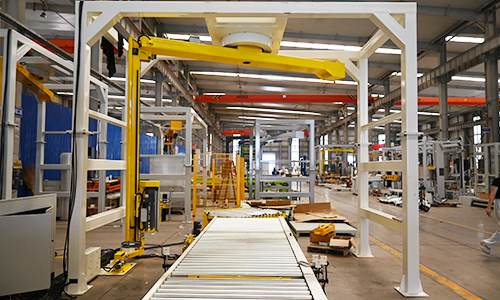
Why More Large Cargo Loads Are No Longer Suitable for Traditional Turntable Wrapping Machines
Today, many industries such as building materials, chemicals, home appliances, and新能源 manufacturing are encountering an obvious issue during pallet shipment: standard turntable wrapping machines perform adequately for regular pallets, but packaging stability becomes increasingly poor when dealing with oversized, overweight, or extra-high loads.
Large bulk bags, heavy machinery, and high-stacked pallets are especially vulnerable during high-speed turntable rotation, where inertia can cause the load to sway or shift.
Many companies once believed that adding more layers of stretch film would improve transportation stability. However, after actual shipping experience, they realized the problem is not simply whether enough film is applied, but whether the cargo has already shifted during the wrapping process itself.
For pallets exceeding two meters in height, the upper section often swings during turntable acceleration and deceleration. High-center-of-gravity products become increasingly vulnerable to tipping risks during forklift handling and long-distance transportation if the load is already unstable during packaging.
As a result, more large-scale factories are now adopting rotary arm stretch wrapping machines that use a stationary load with a rotating wrapping arm to improve overall packaging stability for large pallets.
Why Heavy Pallets Are More Vulnerable to “Movement During Wrapping”
Many companies only realize after transportation issues occur that the biggest risk for large cargo is not film breakage, but changes in the load’s center of gravity during packaging.
The following products typically require higher packaging stability:
Chemical bulk bags, bagged raw materials, palletized home appliances, building materials, heavy machinery, and新能源 materials. These products are often extremely heavy with elevated centers of gravity. Under traditional turntable rotation, inertia can easily cause load displacement.
Bagged materials and jumbo bags are especially vulnerable because the internal materials remain fluid and movable. During rotation, the bags can sway significantly, and in severe cases the entire pallet may lean.
The greatest advantage of a rotary arm stretch wrapper is that the load remains stationary while the overhead arm rotates around it. For heavy-duty pallets, this structure significantly reduces movement during packaging and is far more suitable for continuous heavy-load wrapping operations.
As a result, more companies are beginning to focus not only on wrapping speed but also on packaging structure stability itself.
Why Automated Factories Are Paying More Attention to Rotary Arm Structures
As automated logistics systems and unmanned workshops continue to expand, many factories are redesigning their packaging operations. In the past, companies focused mainly on whether a wrapping machine could complete basic film wrapping. Today, however, the key concern has become:
Can the packaging system integrate directly with automated conveyor lines?
This is especially important in beverage, food, chemical, and warehouse logistics industries where production lines already operate continuously. If pallet wrapping still relies on manual forklift loading and unloading, shipping efficiency can be heavily affected.
Rotary arm stretch wrapping machines are better suited for integration with roller conveyors, chain conveyors, and automated warehouse systems, enabling automatic pallet conveying, positioning, and continuous wrapping operations.
For large automated factories, the real concern today is no longer whether the machine can operate, but whether the entire shipping line can run continuously and reliably.
Why More Companies Are Reducing Manual Involvement in Packaging
In the past, many factories still relied heavily on manual assistance during packaging operations, including manual film attachment, manual film cutting, and forklift pallet transfer. However, as shipping volumes continue to increase, the disadvantages of these methods have become increasingly obvious.
First, packaging consistency becomes difficult to control. Different workers may apply film tension differently, causing some pallets to be wrapped too loosely while others become overly tight in certain areas. Secondly, labor scheduling pressure increases significantly during peak shipping periods. Large pallets are already difficult to handle, and delays during wrapping can easily interrupt overall logistics flow.
For this reason, more companies are now introducing automatic rotary arm stretch wrapping machines equipped with automatic film attachment, automatic film cutting, and conveyor integration functions to improve packaging continuity and stability.
For many large manufacturers, the real goal of packaging automation is no longer simply reducing labor, but minimizing transportation damage and improving shipping stability.
Why Rotary Arm Stretch Wrapping Machines Are Becoming an Important Direction for Large Pallet Packaging
As large-scale manufacturing and automated logistics continue to develop, more companies are realizing that traditional small turntable wrapping machines can no longer meet the requirements of heavy-duty packaging applications.
High-stacked pallets, oversized cargo, and heavy-load products all demand increasingly higher packaging stability. If packaging integrity cannot be ensured during wrapping, transportation risks rise significantly afterward.
As a result, more companies in building materials, chemicals,新能源, and large-scale warehousing industries are adopting rotary arm stretch wrapping machines to improve transportation safety and automated shipping efficiency through more stable packaging methods.
products
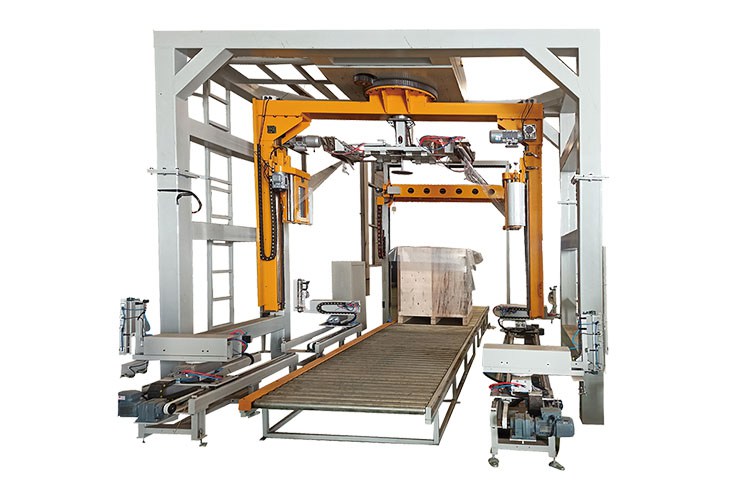
Cantilever wrapping film packaging machine
view more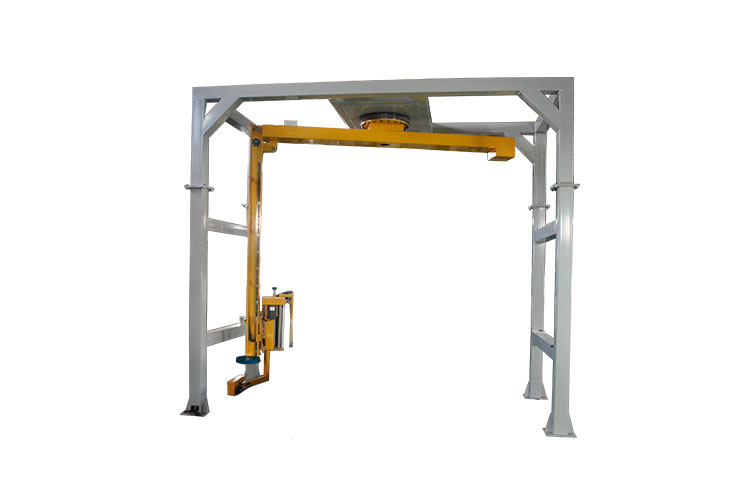
Gantry fully automatic cantilever wrapping machine
view more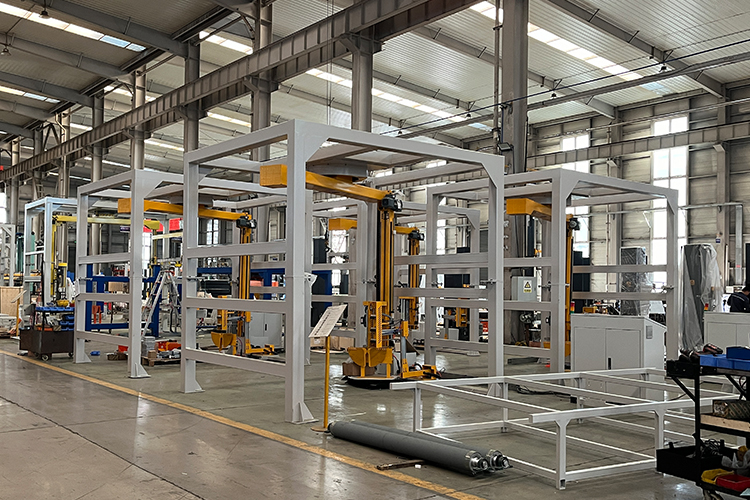
Cantilever wrapping packaging machine
view more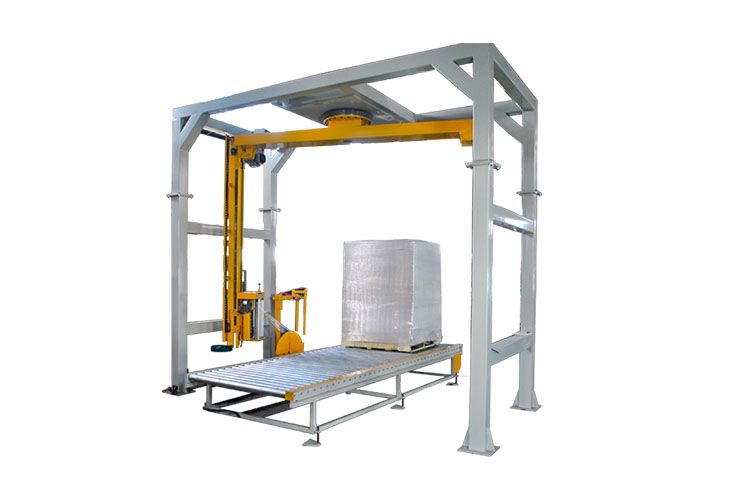
Rocker-type online wrapping machine
view more
Stretch film wrapping machine
view more
Pallet wrapping packaging equipment
view more
Turntable wrapping machine with top pressure
view more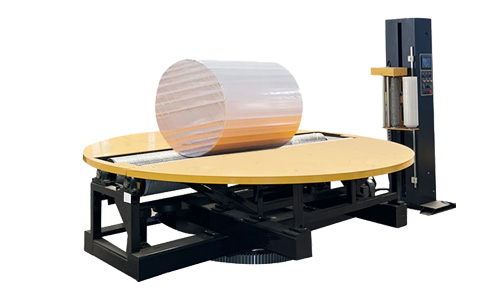
Pallet paper tube wrapping machine
view more
 Shandong Dyehome Intelligent Equipment Co.,Ltd
Phone:0086-17362172587
Whatsapp:+8617362172587
Email:machinedyehome@gmail.com
Add:Building 62, 3000 Meili East Road, DmiPark, Wujiapu Street, Huaiyin District, Jinan City,Shandong Province
Jinan Jiasen Packaging Equipment Co., LtdPhone:0086-15665802370
Add:High-end Equipment Manufacturing Industrial Park, East Industrial New Town, Ancheng Town, Pingyin County, Jinan City, Shandong Province
Shandong Golden Pack Intelligent Equipment Co.,LtdPhone:0086-15662690213
Add:High-end Equipment Manufacturing Industrial Park, East Industrial New Town, Ancheng Town, Pingyin County, Jinan City, Shandong Province
YoursIndustry
OurSolutions
OurServices
OurInformation