

Why Are More and More Large Pallet Loads Using Rotary Arm Stretch Wrapping Machines?
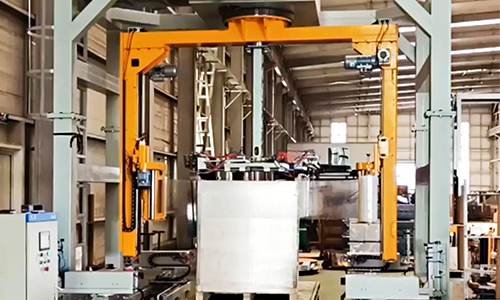
Why Large Pallet Loads Are Becoming Harder to Wrap with Traditional Turntable Machines
When many factories first purchased wrapping equipment, price was often the primary concern, so traditional turntable wrapping machines became the preferred choice. However, after years of use, many companies realized one issue:
The cargo keeps getting larger, while ordinary turntables struggle more and more.
Especially in industries such as building materials, home appliances, chemical bulk bags, and heavy machinery, pallet loads are becoming increasingly heavier and oversized. Some products are not only extra wide but also have unstable centers of gravity. When using traditional turntable machines, pallets can easily shake or shift during rotation.
For very tall loads, high-speed turntable rotation often causes the upper section of the cargo to sway. If the load is unstable, the pallet may begin tilting before transportation even starts.
As a result, more and more large-scale factories are adopting rotary arm stretch wrapping machines. By allowing the film carriage to rotate while the cargo remains stationary, packaging stability for large pallets is significantly improved.
Why Heavy and Tall Loads Fear “Turntable Rotation”
Many customers only realize the problem after experiencing it firsthand:
It is not that the wrapping film is ineffective — the cargo itself simply should not rotate.
This is especially true for:
Large household appliances, jumbo bags, chemical drums, building panels, ultra-tall pallets, and heavy machinery.
These products are heavy and often have high centers of gravity. Once the turntable spins at high speed, inertia can cause severe swaying.
Bulk bag products are particularly vulnerable because their outer packaging is soft. As soon as the turntable starts rotating, the entire load may begin shifting sideways.
The biggest advantage of a rotary arm stretch wrapping machine is that:
The cargo remains fixed in place, while the overhead rotary arm drives the film carriage around the load.
For heavy pallets, this structure provides greater stability and is more suitable for continuous large-load packaging.
After switching to rotary arm equipment, many factories notice a clear reduction in:
Pallet shifting, upper-load swaying, leaning packages, turntable slipping, and unstable heavy-load rotation.
Why More Automated Factories Are Choosing Rotary Arm Wrapping Machines
Today, many large factories are no longer only concerned about whether packaging can be completed.
What they care about is:
“Can the machine integrate directly into an automated production line?”
Industries such as food, beverage, chemicals, and warehouse logistics are increasingly adopting automated conveyor systems.
Traditional turntable machines often require forklifts to load and unload pallets manually, making continuous automated operation difficult.
Rotary arm stretch wrapping machines are better suited for automated conveying systems. Pallets can move directly into the wrapping area through conveyor lines and complete the wrapping process automatically.
For companies with high shipping volumes, the real priority is no longer the speed of a single machine, but whether the entire shipping line can run continuously and efficiently.
That is why more automated factories are making rotary arm wrapping machines an important part of their packaging lines.
Why Many Companies Eventually Realize That Cargo Damage Is More Expensive Than Equipment
In the past, many customers focused mainly on machine pricing during procurement.
But after long-term operation, they discovered that transportation damage is often far more costly than the machine itself.
Once tall pallets collapse during transportation, companies may not only lose packaging materials but also entire pallet loads that require rework.
This is especially critical in:
Beverage, chemical, building material, and home appliance industries.
These industries often handle high-value cargo. Once pallet collapse occurs during transportation, it can result in product loss, delayed delivery, and damaged customer relationships.
As a result, more companies are now paying closer attention to packaging stability instead of simply pursuing low equipment costs.
For many heavy-load manufacturers, rotary arm stretch wrapping machines are not mainly about increasing wrapping speed — they are about improving overall transportation stability before shipment.
Why Rotary Arm Stretch Wrapping Machines Are Becoming More Suitable for Large Pallet Packaging
As manufacturing continues moving toward larger-scale and automated production, pallet sizes and weights continue to increase.
Traditional turntable machines are better suited for medium-sized standard pallets, while rotary arm structures provide greater stability for oversized, extra-tall, and heavy-duty loads.
At the same time, many factories are building unmanned packaging workshops, making continuous operation and future conveyor integration increasingly important.
For this reason, more large manufacturing enterprises are adopting rotary arm stretch wrapping machines to improve transportation safety and automated shipping efficiency through more stable packaging methods.
products
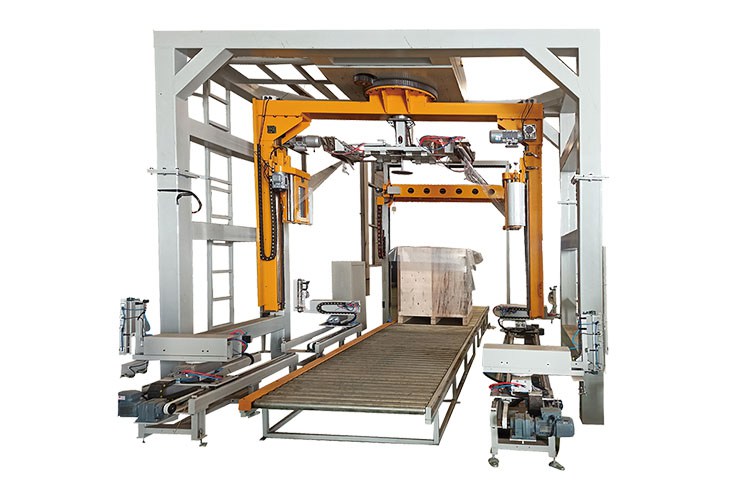
Cantilever wrapping film packaging machine
view more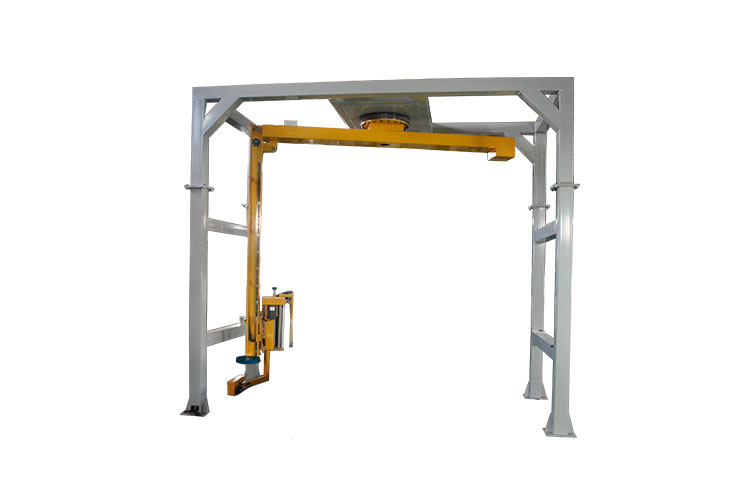
Gantry fully automatic cantilever wrapping machine
view more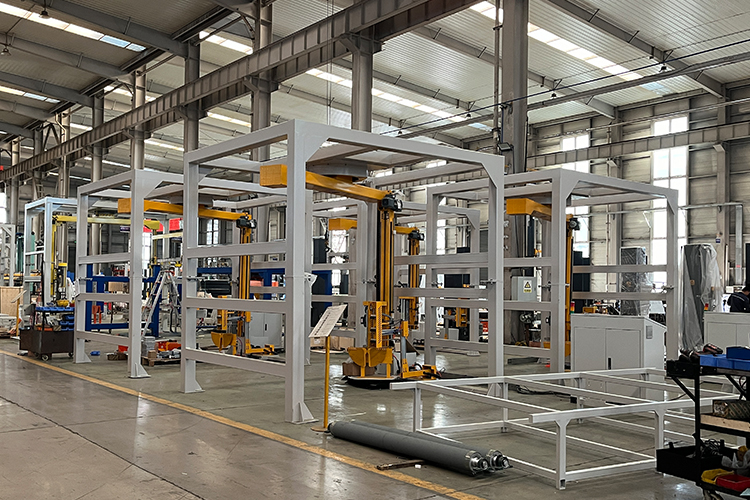
Cantilever wrapping packaging machine
view more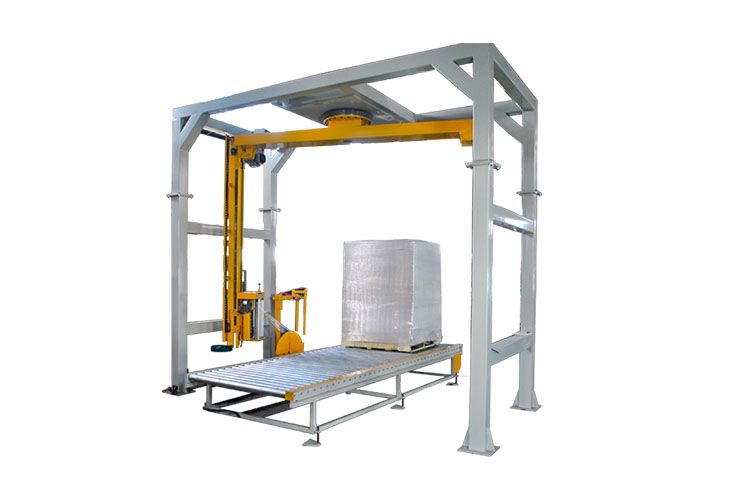
Rocker-type online wrapping machine
view more
Stretch film wrapping machine
view more
Pallet wrapping packaging equipment
view more
Turntable wrapping machine with top pressure
view more
Pallet paper tube wrapping machine
view more
 Shandong Dyehome Intelligent Equipment Co.,Ltd
Phone:0086-17362172587
Whatsapp:+8617362172587
Email:machinedyehome@gmail.com
Add:Building 62, 3000 Meili East Road, DmiPark, Wujiapu Street, Huaiyin District, Jinan City,Shandong Province
Jinan Jiasen Packaging Equipment Co., LtdPhone:0086-15665802370
Add:High-end Equipment Manufacturing Industrial Park, East Industrial New Town, Ancheng Town, Pingyin County, Jinan City, Shandong Province
Shandong Golden Pack Intelligent Equipment Co.,LtdPhone:0086-15662690213
Add:High-end Equipment Manufacturing Industrial Park, East Industrial New Town, Ancheng Town, Pingyin County, Jinan City, Shandong Province
YoursIndustry
OurSolutions
OurServices
OurInformation